Datura metel
Linn.
Warty Thornapple, Angel’s Trumpet, Horn-of-plenty
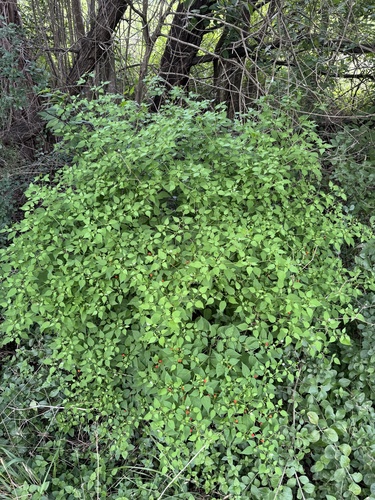
no rights reserved, uploaded by 葉子
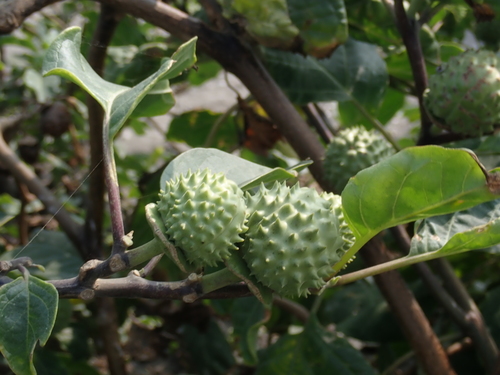
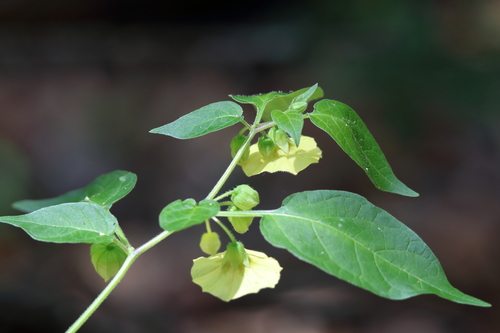
(c) Kuan-Chieh (Chuck) Hung, some rights reserved (CC BY-NC-SA), uploaded by Kuan-Chieh (Chuck) Hung

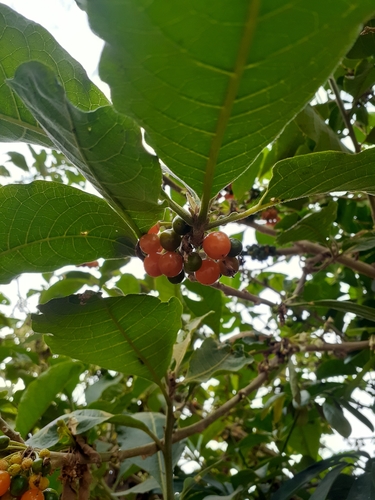
(c) Fodié camara, some rights reserved (CC BY-NC), uploaded by Fodié camara
What to Eat
Edible parts: Leaves - drink, POISONOUS
The leaves and roots are bruised, mixed with water, and left to stand for several hours. The liquid is then drawn off and drunk. This produces a highly narcotic, stupefying effect that is not easily reversed. Caution is advised given the plant's toxicity.
Known Hazards
Where to Find It
A tropical plant. In XTBG Yunnan.
Africa, Asia, Australia, China, East Africa, Guiana, Guianas, India, Indochina, Laos, Malaysia, Marquesas, Nepal, Pacific, SE Asia, South America, Suriname, Thailand, Vietnam, Zambia,
How to Identify
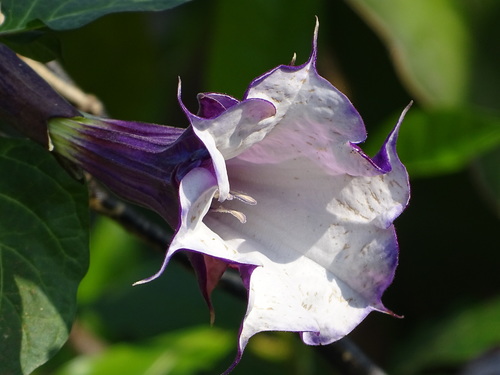
A herb or short lived shrub. The leaves are large and oval. They have irregular edges. The flowers are long and trumpet shaped. They are light yellow or white. The fruit are rounded and have short thorns. POISONOUS.
How to Grow
Prefers a rich light sandy soil and an open sunny position. Grows best in a fertile calcareous soil. This species is extremely susceptible to the various viruses that afflict the potato family (Solanaceae), it can act as a centre of infection so should not be grown near potatoes or tomatoes. There are a number of named varieties selected for their ornamental value. The flowers have an exotic fragrance, though the bruised leaves have an unpleasant smell. This species is closely related to D. innoxia.
Propagation: Sow seed in individual pots in early spring in a greenhouse, placing 3 or 4 seeds per pot and thinning to the strongest plant if needed. Seed usually germinates in 3–6 weeks at 15°C. Plant out in late spring or early summer after the last expected frosts. In areas with hot summers, an outdoor sowing in situ in mid to late spring is also worth trying.
Medicinal Uses
The whole plant, particularly the leaves and seed, is anaesthetic, anodyne, antiasthmatic, antispasmodic, antitussive, bronchodilatory, hallucinogenic, hypnotic, and mydriatic. In India it is used in a wide range of applications including treatment of epilepsy, hysteria, insanity, heart diseases, fever with catarrh, diarrhoea, and skin diseases. A poultice of crushed leaves is applied to relieve pain. In China the plant is used to treat asthma, and in Vietnam dried flowers and leaves are cut into small pieces and used in antiasthmatic cigarettes. The plant contains the alkaloids hyoscyamine, hyoscine, and atropine. Total alkaloid content of the leaves is 0.426%, composed mainly of atropine. The seeds contain 0.426% alkaloids, mainly hyoscyamine. The roots contain 0.35% hyoscyamine. An extract of the flowers is used as an anaesthetic — 3–5g taken orally produces general anaesthesia within 5 minutes, lasting 5–6 hours. Atropine dilates the pupils and is used in eye surgery. Excess doses cause hallucinations, severe intoxication, and death; the toxic dose is very close to the medicinal dose, so this plant should only be used under the guidance of a qualified practitioner.
Other Uses
None known.
Wikipedia
Source ↗Datura metel is a shrub-like annual (zone 5–7) or short-lived, shrubby perennial (zone 8–10), commonly known in Europe as Indian thornapple, Hindu datura, or metel and in the United States as devil's trumpet or angel's trumpet. Datura metel is naturalised in all the warmer countries of the world. It is found notably in India, where it is known by the ancient, Sanskrit-derived, Hindi name dhatūra (धतूरा), from which the genus name Datura is derived. The plant is cultivated worldwide, both as an ornamental and for its medicinal properties, the latter being due to its tropane alkaloid content. Like its hardier and smaller-flowered relative Datura stramonium, it is now of widespread occurrence, although showing a preference for warmer, humid climates.
Other Information
It is cultivated.
Notes
There are 10 Datura species.
Names & Synonyms
Dhaturo, Lampong
References (18)
- Ambasta, S.P. (Ed.), 2000, The Useful Plants of India. CSIR India. p 163
- Blamey, M and Grey-Wilson, C., 2005, Wild flowers of the Mediterranean. A & C Black London. p 406
- Bodkin, F., 1991, Encyclopedia Botanica. Cornstalk publishing, p 326
- Burkill, I.H., 1966, A Dictionary of the Economic Products of the Malay Peninsula. Ministry of Agriculture and Cooperatives, Kuala Lumpur, Malaysia. Vol 1 (A-H) p 780
- Dashorst, G.R.M., and Jessop, J.P., 1998, Plants of the Adelaide Plains & Hills. Botanic Gardens of Adelaide and State Herbarium. p 128
- Fowler, D. G., 2007, Zambian Plants: Their Vernacular Names and Uses. Kew. p 61
- Grivetti, L. E., 1980, Agricultural development: present and potential role of edible wild plants. Part 2: Sub-Saharan Africa, Report to the Department of State Agency for International Development. p 47
- Hedrick, U.P., 1919, (Ed.), Sturtevant's edible plants of the world. p 264
- Hussey, B.M.J., Keighery, G.J., Cousens, R.D., Dodd, J., Lloyd, S.G., 1997, Western Weeds. A guide to the weeds of Western Australia. Plant Protection Society of Western Australia. p 218
- Kenneally, K.E., Edinger, D. C., and Willing T., 1996, Broome and Beyond, Plants and People of the Dampier Peninsula, Kimberley, Western Australia. Department of Conservation and Land Management. p 185
- Lazarides, M. & Hince, B., 1993, Handbook of Economic Plants of Australia, CSIRO. p 77
- Llamas, K.A., 2003, Tropical Flowering Plants. Timber Press. p 351
- McMakin, P.D., 2000, Flowering Plants of Thailand. A Field Guide. White Lotus. p 101
- Mot So Rau Dai an Duoc O Vietnam. Wild edible Vegetables. Ha Noi 1994, p 258
- Paczkowska, G . & Chapman, A.R., 2000, The Western Australian Flora. A Descriptive Calatogue. Western Australian Herbarium. p 535
- Vickery, M.L. and Vickery, B., 1979, Plant Products of Tropical Africa, Macmillan. p 91
- World Checklist of Useful Plant Species 2020. Royal Botanic Gardens, Kew
- Zeven, A. C. & de West, J. M. J., 1982, Dictionary of cultivated plants and their regions of diversity. Wageningen. p 79