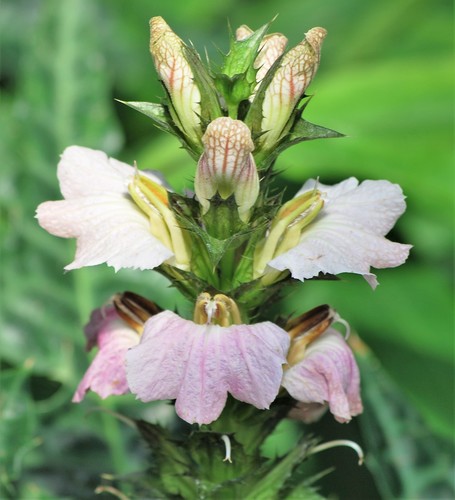
Dicliptera verticillata

(Forsk.) C. Christens.
AcanthaceaeLeaves
Dicliptera verticillata
iNaturalist · cc-by-nc
(c) Umar Musa, some rights reserved (CC BY-NC), uploaded by Umar Musa
Dicliptera verticillata
iNaturalist · cc0
no rights reserved
Dicliptera verticillata
iNaturalist · cc0
no rights reserved

What to Eat

Edible parts: Leaves

Where to Find It

A tropical plant.

Africa, Asia, Botswana, Burkina Faso, Cape Verde, Central Africa, Congo, East Africa, India, Middle East, Pakistan, Sao Tome and Principe, Senegal, Sierra Leone, West Africa, Yemen, Zambia,

Countries: United Arab Emirates, Afghanistan, Armenia, Angola, Azerbaijan, Bangladesh, Burkina Faso, Bahrain, Burundi, Benin, Brunei, Bhutan, Botswana, Congo (DRC), Central African Republic, Congo (Republic), Cote d'Ivoire, Cameroon, China, Cape Verde, Djibouti, Algeria, Egypt, Eritrea, Ethiopia, Gabon, Georgia, Ghana, Gambia, Guinea, Equatorial Guinea, Guinea-Bissau, Indonesia, Israel, India, Iraq, Iran, Jordan, Japan, Kenya, Kyrgyzstan, Cambodia, Comoros, North Korea, South Korea, Kuwait, Kazakhstan, Laos, Lebanon, Sri Lanka, Liberia, Lesotho, Libya, Morocco, Madagascar, Mali, Myanmar, Mongolia, Mauritania, Mauritius, Maldives, Malawi, Malaysia, Mozambique, Namibia, Niger, Nigeria, Nepal, Oman, Philippines, Pakistan, Qatar, Rwanda, Saudi Arabia, Seychelles, Sudan, Singapore, Sierra Leone, Senegal, Somalia, South Sudan, Sao Tome & Principe, Syria, Eswatini, Chad, Togo, Thailand, Tajikistan, Timor-Leste, Turkmenistan, Tunisia, Turkey, Taiwan, Tanzania, Uganda, Uzbekistan, Vietnam, Yemen, South Africa, Zambia, Zimbabwe

How to Identify

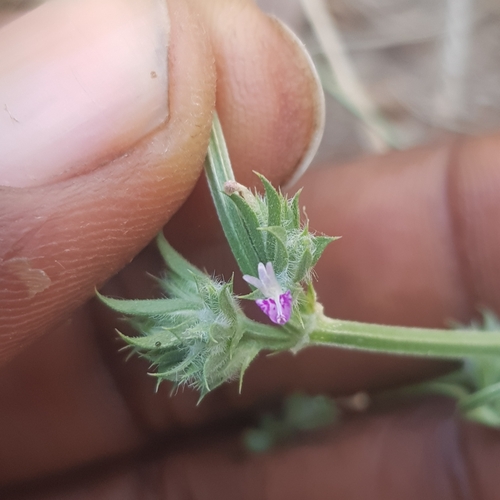
An annual herb. It has many branches. It can be slightly erect or lie along the ground. The twigs are hairy on the angles. The leaf stalks are 2-3 cm long. The leaves are oval and 4-8 cm long by 2-4 cm wide. They are rounded at the base and taper to the tip. The flowers are pink spotted with purple. They are 5 mm long. They are in dense groups in the axils of leaves with bracts attached that wrap around the flower. The fruit is a narrowly oval capsule 4 mm long and with 4 seeds. The seeds are 1 mm across. They have lines on them.

Names & Synonyms
Adhatoda hyssopifolia Medik.Dianthera verticillata Forssk.Diapedium cuspidatum KuntzeDiapedium umbellatum (Juss.) KuntzeDiapedium verticillatum (Forssk.) KuntzeDicliptera maculata var. senegambica NeesDicliptera micranthes NeesDicliptera ocymoides (Lam.) Juss.Dicliptera senegambica (Nees) BenoistDicliptera senegambica R. Benoist EDicliptera umbellata (Vahl) Juss.Hypoestes umbellata F. Dietr.Justicia cuspidata Vahl [Illegitimate]Justicia ocymoides Lam.Justicia patula E. Mey. ex NeesJusticia umbellata Vahl
References (4)
  • Grivetti, L. E., 1980, Agricultural development: present and potential role of edible wild plants. Part 2: Sub-Saharan Africa, Report to the Department of State Agency for International Development. p 70
  • Jardin, C., 1970, List of Foods Used In Africa, FAO Nutrition Information Document Series No 2.p 74
  • Martin, F.W. & Ruberte, R.M., 1979, Edible Leaves of the Tropics. Antillian College Press, Mayaguez, Puerto Rico. p 171 (As Dicliptera umbellata)
  • World Checklist of Useful Plant Species 2020. Royal Botanic Gardens, Kew

More from Acanthaceae