Dipsacus japonicus
Miq.
Xu duan
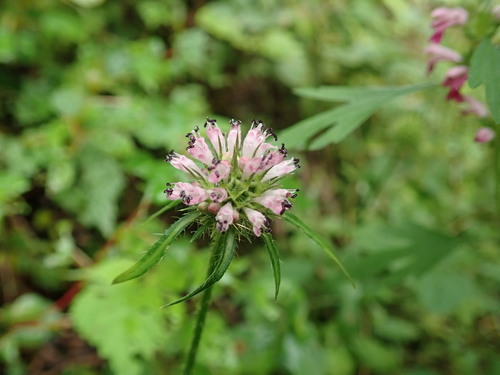
(c) Mizuki Shimoda, some rights reserved (CC BY-NC), uploaded by Mizuki Shimoda
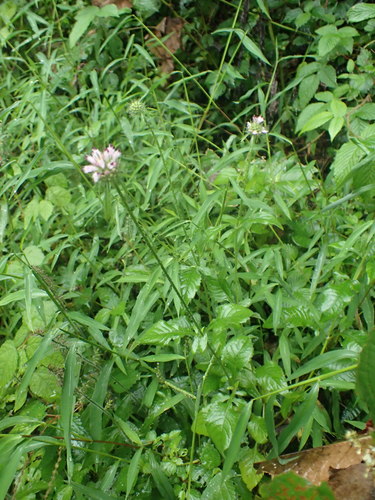
(c) Keita Watanabe, some rights reserved (CC BY-NC), uploaded by Keita Watanabe
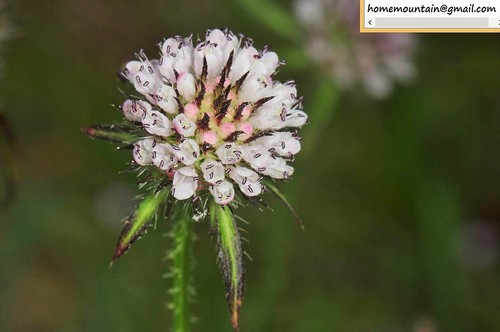
(c) Homemountain/Shan Gui, some rights reserved (CC BY-NC), uploaded by Homemountain/Shan Gui
What to Eat
Edible parts: Leaves
Young leaves are edible when cooked. This plant is considered a famine food, used only when other options are unavailable.
Where to Find It
It is a temperate plant. It grows on grassy slopes below 2,00 m above sea level in China.
Asia, China, Japan, Korea,
How to Identify
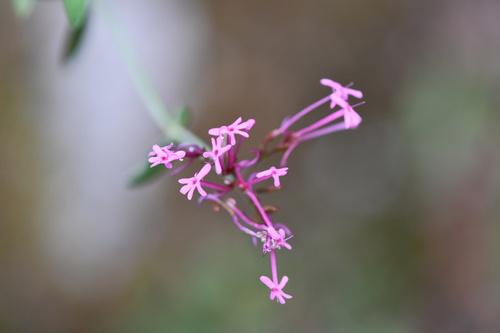
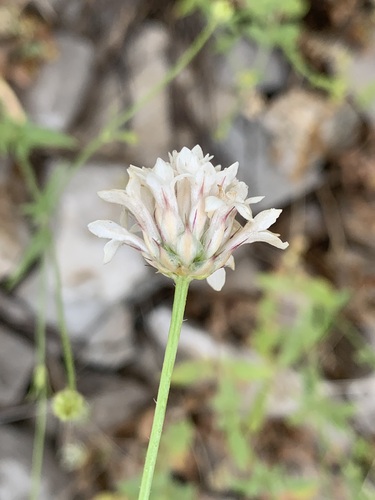
A herb. It can complete its life-cycle over 2 years but may live longer. It grows 1.5 m tall. The stems are branched and have ridges along them. There are spines on the ridges. The leaves at the base are in a ring. The leaves on the stem are opposite and 8-25 cm long by 3-10 cm wide. There are spiny hairs underneath. The leaves often have lobes. The flowers are pink, purple or red.
How to Grow
We have very little information on this species and do not know if it will be hardy in Britain, though judging by its native range it should succeed outdoors in many parts of this country. The following notes are based on the general needs of the genus. Prefers a well-drained humus-rich soil in sun or semi-shade.
Propagation: Sow seed in a greenhouse in early spring. Prick seedlings out into individual pots once large enough to handle, and grow them on under glass through at least their first winter. Plant out into permanent positions in late spring or early summer, after the last expected frosts.
Medicinal Uses
The roots contain alkaloids, tannins and sugars and are considered antirheumatic, emmenagogue, galactofuge, haemostatic, hepatic and tonic. The root is used as a kidney tonic, and a decoction of it is taken to treat rheumatoid arthralgia, traumatic injuries, backache, weak knees, seminal emissions and polyuria, and it has also been used to induce abortion. The seed is diuretic. The plant is used in the treatment of rheumatism and has a long folk history of use against breast cancer.
Other Uses
None known.
Wikipedia
A biennial or perennial herb reaching 0.8 m tall with hermaphrodite flowers appearing from August to September. Grows in light sandy, medium loamy, or heavy clay soils with mildly acid to basic pH. Tolerates semi-shade and prefers consistently moist conditions.
Notes
There are 15 Dipsacus species. Also put in the family Dipsacaceae.
References (3)
- Bremness, L., 1994, Herbs. Collins Eyewitness Handbooks. Harper Collins. p 248
- Plants for a Future database, The Field, Penpol, Lostwithiel, Cornwall, PL22 0NG, UK. http://www.scs.leeds.ac.uk/pfaf/
- Verslagen Meded. Afd. Natuurk. Kon. Akad. Wetensch. ser. 2, 2:83; Ann. Mus. Bot. Lugduno-Batavum 3:114. 1867