Echinops dahuricus
Fischer ex DC.
Dahurian Globe Thistle, Chinese globe thistle

Stanislav Murashkin

Denis Ivanov

Denis Ivanov
What to Eat
Edible parts: Leaves
The leaves are eaten with oil and salt. Young plants are used as an emergency food.
Where to Find It
It is a temperate plant. It grows at altitudes or 900-1400 m in Mongolia. It will grow in most well-drained soils. It is best in a sunny position. It is resistant to frost but damaged by drought.
Asia, Australia, China*, Korea, Manchuria, Mongolia,
How to Identify
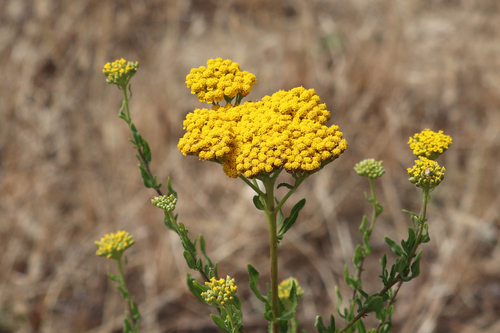
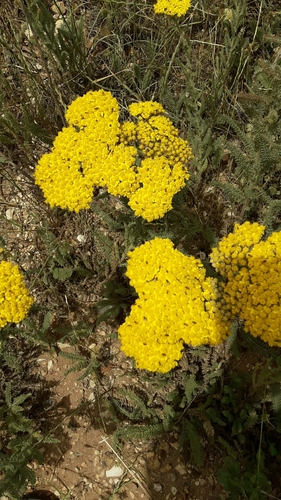
A thistle plant that keeps growing from year to year. It grows 1 m high and spreads 75 cm wide. The stem is stout and ridged. The leaves are dark green and clasp the stem. The flower heads are round like a ball. All the flowers grow from a common point.
Other Information
The young plants are used as an emergency food.
Notes
There are about 120 Echinops species.
Names & Synonyms
References (6)
- Bodkin, F., 1991, Encyclopedia Botanica. Cornstalk publishing, p 373
- Famine foods
- Hu, Shiu-ying, 2005, Food Plants of China. The Chinese University Press. p 728 (As Echinops latifolius)
- Morley, B. & Everard, B., 1970, Wild Flowers of the World. Ebury press. Plate 106
- Prodr. 6:523. 1838 (Fischer, Cat. jard. Gorenki ed. 1812:37. 1812, nom. nudum)
- READ