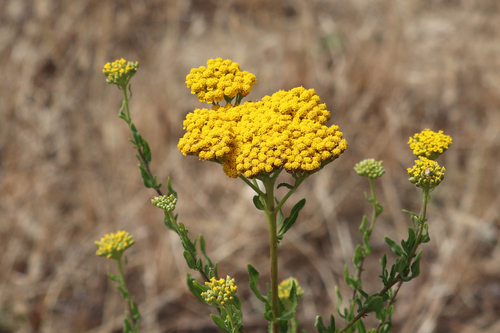
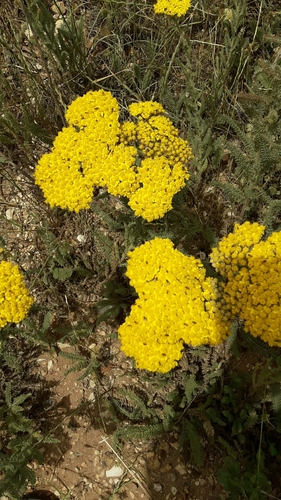
Ericameria parishii
(Greene) H. M. Hall.
Heath goldenrod

(c) possiblybuddha, some rights reserved (CC BY-NC), uploaded by possiblybuddha
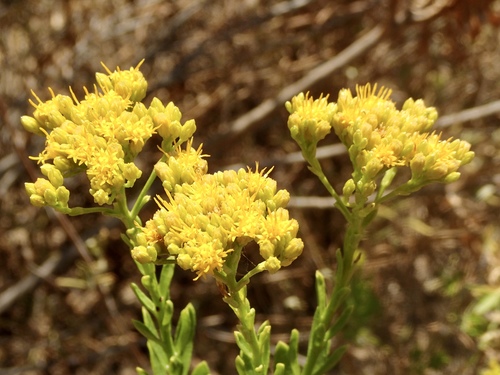
(c) Ron Vanderhoff, some rights reserved (CC BY-NC), uploaded by Ron Vanderhoff

(c) Carol Blaney, some rights reserved (CC BY-NC), uploaded by Carol Blaney
What to Eat
Edible parts: Seeds
The seeds are edible, though no further details are available.
Where to Find It
It is a temperate plant.
Mexico, North America, USA,
How to Identify
A shrub or small tree. It grows 3.7 m tall. The leaves are narrow and heath-like. They are 5 cm long. They have resin glands dotted over them. It produces small flower heads with up to 12 golden yellow disc florets.
How to Grow
Plants can be grown from seed or hardwood cuttings.
Propagation: Sow seed in spring in a greenhouse. Prick seedlings into individual pots once large enough to handle and grow them on under glass for their first winter. Plant out in late spring or early summer after the last expected frosts. Cuttings of half-ripe wood can be taken in July or August and rooted in a frame.
Medicinal Uses
The plant has been used for medicinal purposes, but the details are not known.
Other Uses
None known.
Wikipedia
Source ↗Ericameria parishii, or Parish's rabbitbrush, is a western North American species of flowering plants in the family Asteraceae.
Notes
There are 27 Ericameria species.
Names & Synonyms
References (4)
- Beckstrom-Sternberg, Stephen M., and James A. Duke. "The Foodplant Database." http://probe.nalusda.gov:8300/cgi-bin/browse/foodplantdb.(ACEDB version 4.0 - data version July 1994) (As Aplopappus parishii)
- http://www.stoller-eser.com/Flora/ethnobotany_table.htm (As Haplopappus spp.)
- Moerman, D. F., 2010, Native American Ethnobotany. Timber Press. p 217
- Plants for a Future database, The Field, Penpol, Lostwithiel, Cornwall, PL22 0NG, UK. http://www.scs.leeds.ac.uk/pfaf/