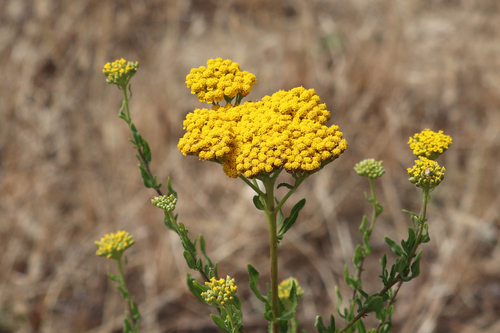
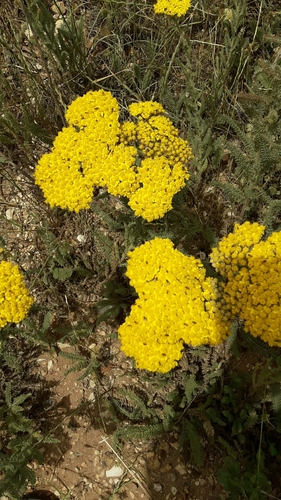
Erigeron bulbosa
Nutt.

Wikimedia Commons

Wikimedia Commons - Georgius Jacobus Johannes van Os
What to Eat
Edible parts: Root
The root is edible, though no further details are available.
Where to Find It
It is a temperate plant.
North America, USA,
How to Identify
Hermaphroditic flowers pollinated by butterflies, moths, and bees. Adapts to light sandy, medium loamy, and heavy clay soils with preference for well-drained conditions. Grows across mildly acidic to mildly alkaline pH ranges. Requires full sun and cannot tolerate shade. Prefers consistently moist soil.
How to Grow
We have almost no information on this species and do not even know if it is perennial or annual, let alone whether it will grow in Britain. It probably prefers a moderately fertile well-drained soil in a sunny position. Very few members of this genus will hybridise with other members of the genus.
Propagation: Sow seed in spring in situ. Germination usually occurs within four weeks.
Medicinal Uses
None known.
Other Uses
None known.
Wikipedia
Hermaphroditic flowers pollinated by butterflies, moths, and bees. Adapts to light sandy, medium loamy, and heavy clay soils with preference for well-drained conditions. Grows across mildly acidic to mildly alkaline pH ranges. Requires full sun and cannot tolerate shade. Prefers consistently moist soil.
Notes
There are about 200 Erigeron species.
References (1)
- Plants for a Future database, The Field, Penpol, Lostwithiel, Cornwall, PL22 0NG, UK. http://www.scs.leeds.ac.uk/pfaf/