Conyza sumatrensis
(Retz.) E. Walker
Tall fleabane

(c) Богданович Светлана, some rights reserved (CC BY-NC)

(c) Богданович Светлана, some rights reserved (CC BY-NC)

(c) Богданович Светлана, some rights reserved (CC BY-NC)
What to Eat
Edible parts: Leaves
The leaves have been recorded as eaten.
Where to Find It
A tropical plant. It grows in warm temperate and subtropical regions. In Argentina it grows from sea level to 3,500 m above sea level.
Africa, Argentina, Asia, Australia, Benin, Botswana, Brazil, Central Africa, Chile, Congo DR, East Africa, Eswatini, Fiji, India, Indonesia*, Malaysia, Mozambique, Myanmar, Norfolk Island, Pacific, Papua New Guinea, PNG, Paraguay, SE Asia, South Africa, Southern Africa, South America, Swaziland, Tasmania, Thailand, Tonga, Uganda, Uruguay, West Africa, Zimbabwe,
How to Identify
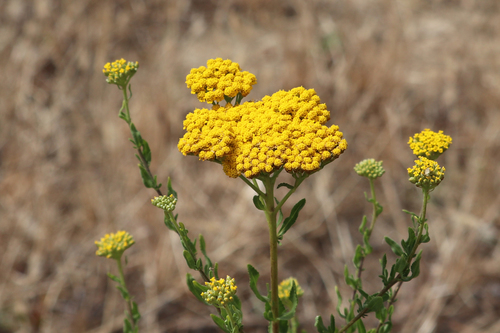
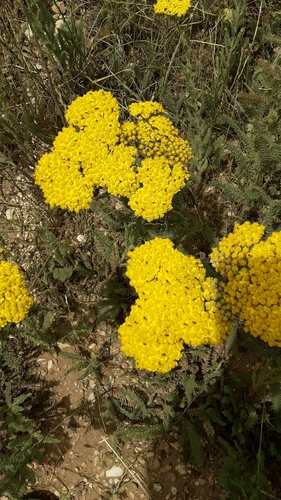
A stiff erect herb. It grows for 1 or 2 years. It grows 1-2 m tall. The whole plant has grey hairs. The stem is grooved and angular. The leaves are long and narrow. They are 5-16 cm long by 0.5-1.7 cm wide. The leaves are narrowed at the base. The lower leaves have coarse teeth. The branched flower arrangement is 30-60 cm long. It forms a fairly dense arrangement. The heads are like a cylinder and 7-9 mm long and pale yellow. There are dirty grey bristles. Possibly now Erigeron floribundus
Notes
There are about 50 Conyza species.
Names & Synonyms
Fumu di kiula, Kayala
References (15)
- Burkill, I.H., 1966, A Dictionary of the Economic Products of the Malay Peninsula. Ministry of Agriculture and Cooperatives, Kuala Lumpur, Malaysia. Vol 1 (A-H) p 952 (As Erigeron sumatrensis)
- Cooper, W. and Cooper, W., 2004, Fruits of the Australian Tropical Rainforest. Nokomis Editions, Victoria, Australia. p 80
- Flora of Australia Volume 49, Oceanic Islands 1, Australian Government Publishing Service, Canberra. (1994) p 380
- Franklin, J., Keppel, G., & Whistler, W., 2008, The vegetation and flora of Lakeba, Nayau and Aiwa Islands, Central Lau Group, Fiji. Micronesica 40(1/2): 169–225, 2008
- Glover, et al, 1969, (As Conyza albida)
- Henty, E.E., & Pritchard, G.S., 1973, Weeds of New Guinea and their control. Botany Bulletin No 7, Division of Botany, Lae, PNG. p 77 (As Erigeron sumatrensis)
- J. Jap. Bot. 46:72. 1971
- Latham, P., 2004, Useful Plants of Bas-Congo province. Salvation Army & DFID p 92
- Leon-Lobos, P., et al, 2022, Patterns of Traditional and Modern Uses of Wild Edible Native Plants of Chile: Challenges and Future Perspectives. Plants (Basel) v 11 (6) Table S1
- Martin, F.W. & Ruberte, R.M., 1979, Edible Leaves of the Tropics. Antillian College Press, Mayaguez, Puerto Rico. p 185 (As Erigeron sumatrensis)
- Peekel, P.G., 1984, (Translation E.E.Henty), Flora of the Bismarck Archipelago for Naturalists, Division of Botany, Lae, PNG. p 557, 556 (As Erigeron sumatrensis)
- Peters, C. R., O'Brien, E. M., and Drummond, R.B., 1992, Edible Wild plants of Sub-saharan Africa. Kew. p 89 (As Conyza albida)
- Swaziland's Flora Database http://www.sntc.org.sz/flora (As Conyza albida)
- Yuncker, T.G., 1959, Plants of Tonga, Bernice P. Bishop Museum, Hawaii, Bulletin 220. p 267 (As Erigeron sumatrensis)
- Zon, A. P. M. van der, Grubben, G.J.H., 1976, Les legumes-feuilles spontanes et cultives du Sud-Dahomey, Communication 65, Royal Tropical Institute, Amsterdam, p 62 (As Erigeron floribundus)