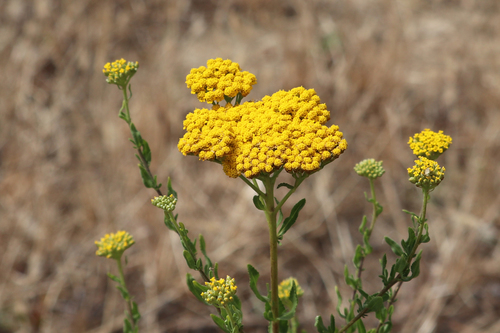
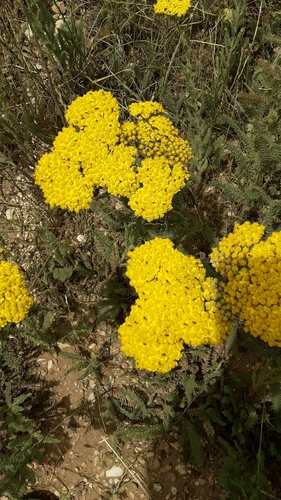
Senecio nemorensis
L.

(c) Li-peng Hsu, some rights reserved (CC BY-NC), uploaded by Li-peng Hsu

no rights reserved, uploaded by 葉子

no rights reserved, uploaded by 葉子
What to Eat
Edible parts: Stem
Young stems - pickled. Some caution is advised, see the notes above on toxicity.
Known Hazards
Where to Find It
Europe to W. Asia.
TEMPERATE ASIA: Turkey, Russian Federation (Altay, Buryatia, Chita, Gorno-Altay, Irkutsk, Kemerovskaja oblast, Krasnoyarsk, Kurganskaja oblast, Novosibirsk, Omsk, Tomsk, Tyumen, Tyva, Respublika, Yakutia-Sakha), Kazakhstan, Kyrgyzstan, Mongolia, Russian Federation (Kurile Islands, Habarovskij kraj, Primorye, Amur, Magadanskaja oblast, Sakhalin), China (Anhui Sheng, Fujian Sheng, Gansu Sheng, Guizhou Sheng, Hebei Sheng, Henan Sheng, Hubei Sheng, Jilin Sheng, Shaanxi Sheng, Shandong Sheng, Shanxi Sheng, Sichuan Sheng, Xinjiang Uygur Zizhiqu, Zhejiang Sheng), Korea, Japan (Hokkaidô, Honshu, Kyushu, Shikoku), Taiwan EUROPE: Austria, Switzerland, Czech Republic, Germany, Hungary, Netherlands, Poland, Slovakia, Russian Federation-European part (European part (north & east)), Belarus, Ukraine, Bulgaria, Bosnia and Herzegovina, Greece, Croatia, Italy, North Macedonia, Montenegro, Romania, Serbia, Slovenia, Spain
How to Identify
Senecio nemorensis is a PERENNIAL growing to 2 m (6ft 7in). See above for USDA hardiness. It is hardy to UK zone 6. It is in flower from July to August. The species is hermaphrodite (has both male and female organs) and is pollinated by Insects. Suitable for: light (sandy), medium (loamy) and heavy (clay) soils and can grow in heavy clay and nutritionally poor soils. Suitable pH: mildly acid, neutral and basic (mildly alkaline) soils. It can grow in semi-shade (light woodland) or no shade. It prefers moist soil.
How to Grow
Succeeds in a sunny position in most well-drained moderately fertile soils. The sub-species S. nemorensis fuchsii. (Gmel.)Celak. is the form used for food in Asia.
Propagation: Seed - sow spring in a greenhouse and only just cover the seed. Make sure the compost does not dry out. Prick out the seedlings into individual pots when they are large enough to handle and plant them out in early summer if they have grown sufficiently. Otherwise, grow them on in the greenhouse or cold frame for their first winter and plant them out the following year after the last expected frosts. Division in spring. Root cuttings in early spring.
Medicinal Uses
Hypoglycaemic Urinary. Uninary tract infections, gout, rheumatism and stone formation in the urinary tract. Lowers blood sugar. The herb is contraindicated in pregnancy and nursing and children under 12. Recommended only for external use. Do not appy to broken skin.