Fedia cornucopiae
(L.) Gaertn.
African Valerian
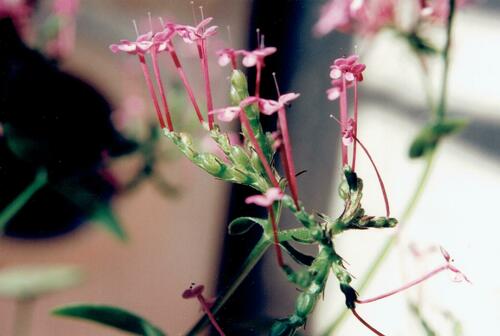
(c) zebedeugalinha, some rights reserved (CC BY)
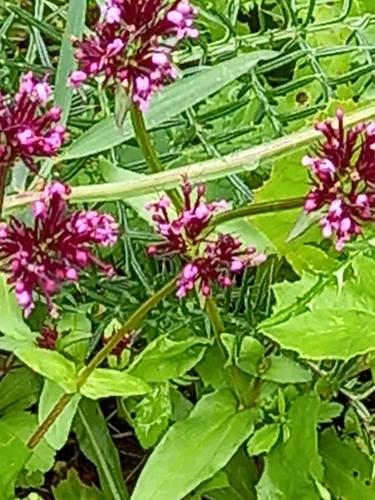
(c) lone_d, some rights reserved (CC BY-NC)
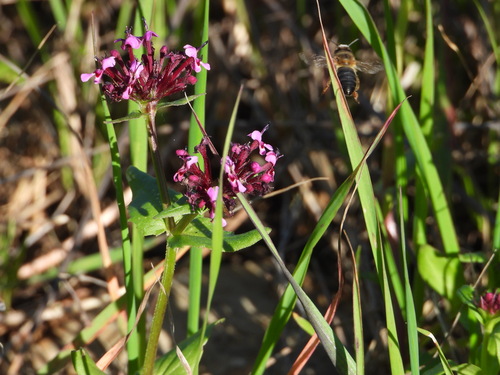
(c) Duarte Frade, some rights reserved (CC BY)
What to Eat
Edible parts: Leaves
The leaves can be eaten raw or cooked and have a mild flavour. The plant quickly forms rosettes of leaves in hot weather, making it a useful option when corn salad is not available.
Where to Find It
It is a Mediterranean climate plant. They grow on rocky and stony places and waste land. They are often on sandy soils.
Africa, Algeria, Australia, Europe, France, Greece, Italy, Mediterranean*, North Africa, Portugal, Sicily, Spain,
How to Identify
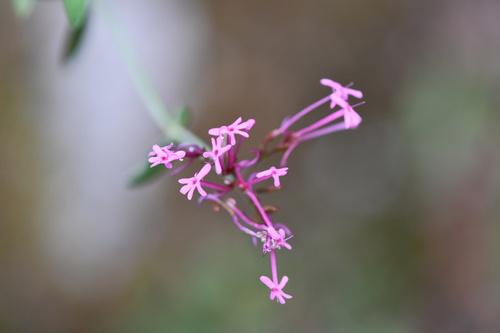
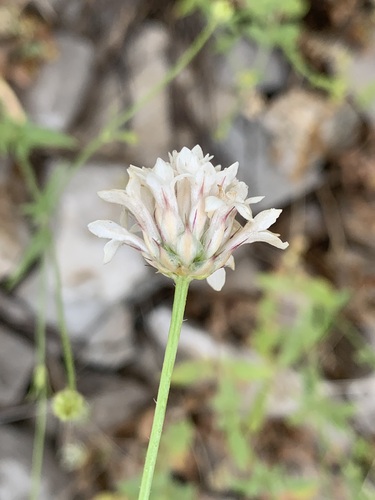
A short herb. It is regularly branched. It does not have hairs. It is an annual plants and somewhat succulent. The leaves are spoon shaped and narrowly oval. The lower leaves have stalks and no teeth while the upper leaves have no stalks but have teeth. The flowers are purple with pink markings. They are 8-16 mm long. They are in clusters without stalks.
How to Grow
Propagation: Sow seed in early spring in a greenhouse. Once large enough to handle, prick seedlings into individual pots and plant out in late spring. Where seed is plentiful, it can be sown in situ in mid-spring. In areas that experience few frosts, an outdoor sowing in situ in early autumn will produce larger plants.
Medicinal Uses
None known.
Other Uses
None known.
Wikipedia
Fedia cornucopiae is a frost-hardy annual reaching 0.2 m tall. Flowers appear in July with seeds ripening August through September. The hermaphrodite flowers are insect-pollinated. It grows in light sandy, medium loamy, and heavy clay well-drained soils across mildly acid, neutral, and basic pH ranges. Requires full sun and tolerates both dry and moist soils.
Other Information
It is cultivated.
Names & Synonyms
Fedia, Horn
References (15)
- Biscotti, N. et al, 2018, The traditional food use of wild vegetables in Apulia (Italy) in the light of Italian ethnobotanical literature. Italian Botanist 5:1-24
- Blamey, M and Grey-Wilson, C., 2005, Wild flowers of the Mediterranean. A & C Black London. p 424
- Facciola, S., 1998, Cornucopia 2: a Source Book of Edible Plants. Kampong Publications, p 243
- Fruct. sem. pl. 2:37. 1790
- Hanelt, P. et al, (Eds.), 2001, Mansfield's encyclopedia of agricultural and horticultural crops. p 1704
- Hedrick, U.P., 1919, (Ed.), Sturtevant's edible plants of the world. p 306
- Jardin, C., 1970, List of Foods Used In Africa, FAO Nutrition Information Document Series No 2.p 78
- Lazarides, M. & Hince, B., 1993, Handbook of Economic Plants of Australia, CSIRO. p 113
- Lentini, F. and Venza, F., 2007, Wild food plants of popular use in Sicily. J Ethnobiol Ethnomedicine. 3: 15
- Licata, M., et al, 2016, A survey of wild plant species for food use in Sicily (Italy) – results of a 3-year study in four Regional Parks. Journal of Ethnobiology and Ethnomedicine 12:12
- Martin, F.W. & Ruberte, R.M., 1979, Edible Leaves of the Tropics. Antillian College Press, Mayaguez, Puerto Rico. p 224
- Morley, B.D., & Toelken, H.R., (Eds), 1983, Flowering Plants in Australia. Rigby. p 246
- Plants for a Future database, The Field, Penpol, Lostwithiel, Cornwall, PL22 0NG, UK. http://www.scs.leeds.ac.uk/pfaf/
- Seidemann J., 2005, World Spice Plants. Economic Usage, Botany, Taxonomy. Springer. p 155
- Zeven, A. C. & de West, J. M. J., 1982, Dictionary of cultivated plants and their regions of diversity. Wageningen. p 119