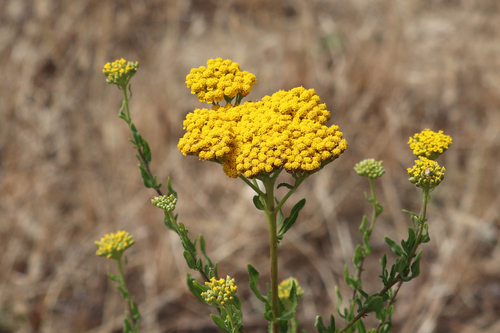
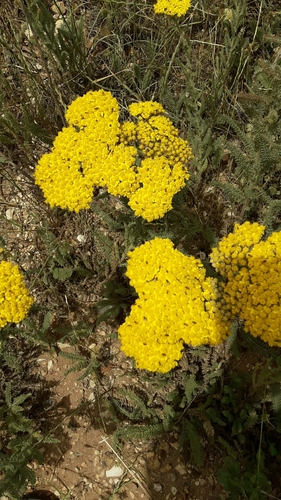
Gnaphalium indicum
L.
Many Stem Cudweed
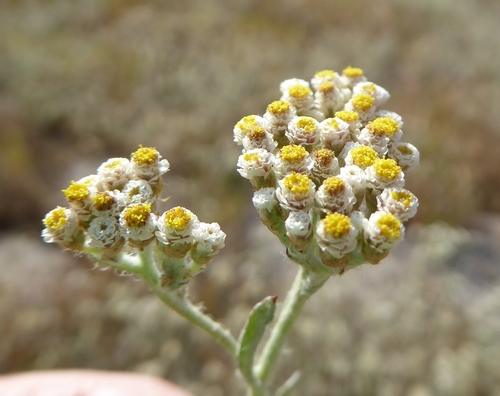
(c) Andrew Massyn, some rights reserved (CC BY-NC)
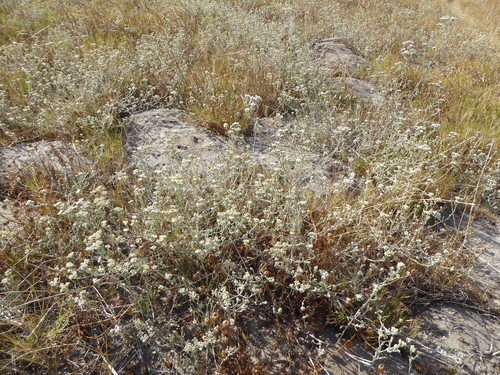
(c) Andrew Massyn, some rights reserved (CC BY-NC)
(c) Andrew Massyn, some rights reserved (CC BY-NC)
What to Eat
Edible parts: Leaves
Leaves are edible cooked.
Where to Find It
A tropical plant.
Asia, Australia, China, India, Indochina, Myanmar, Northeastern India, SE Asia, Vietnam,
How to Identify
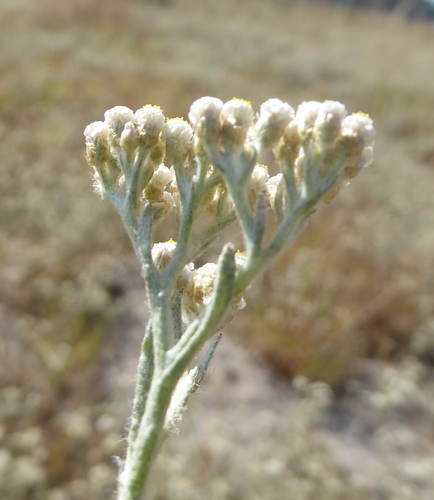
A herb. It grows each year from seed. The flower heads are smaller than Jersey cudweed and more leafy. The leaves are soft and limp.
How to Grow
We have very little information on this species but it should succeed as a spring-sown annual in Britain. The following notes are based on the general needs of the genus. Requires a well-drained soil in a sunny position.
Propagation: Sow seed in late spring directly in situ, covering only just barely.
Medicinal Uses
None known
Other Uses
None known
Wikipedia
A compact annual herb growing to 0.2 m (6 in) with hermaphroditic insect-pollinated flowers. Suitable for sandy and loamy soils with good drainage. Tolerates mildly acidic, neutral, and basic soil pH. Can grow in semi-shade or full sun and adapts to dry or moist soil.
Notes
There are about 200 Gnaphalium species.
Names & Synonyms
Byaing-che, Phunil, Taw-dawna
References (7)
- Ambasta, S.P. (Ed.), 2000, The Useful Plants of India. CSIR India. p 241
- Jain et al, 2011, Dietary Use and Conservation Concern of Edible Wetland Plants at Indo-Burma Hotspot: A Case Study from Northeast India. Journal of Ethnobiology and Ethnomedicine 7:29 p 7 (? As Nephalium indicum)
- Konsam, S., et al, 2016, Assessment of wild leafy vegetables traditionally consumed by the ethnic communities of Manipur, northeast India. Journal of Ethnobiology and Ethnomedicine, 12:9
- Lamp, C & Collet F., 1989, Field Guide to Weeds in Australia. Inkata Press. p 131
- Mot So Rau Dai an Duoc O Vietnam. Wild edible Vegetables. Ha Noi 1994, p 88
- Plants for a Future database, The Field, Penpol, Lostwithiel, Cornwall, PL22 0NG, UK. http://www.scs.leeds.ac.uk/pfaf/
- Seidemann J., 2005, World Spice Plants. Economic Usage, Botany, Taxonomy. Springer. p 170