Helenium puberulum
DC.
Rosilla
(c) nathantay, some rights reserved (CC BY-NC)
(c) nathantay, some rights reserved (CC BY-NC)
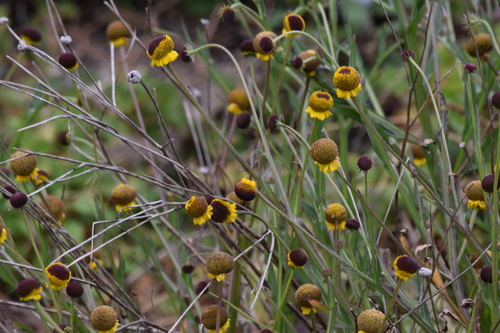
(c) Chris Evers, some rights reserved (CC BY-NC), uploaded by Chris Evers
What to Eat
Edible parts: Leaves
The leaves and flowering heads can be eaten raw.
Where to Find It
It is a temperate plant.
North America, USA,
How to Identify
A vigorous annual or perennial reaching 1.5 m (5 ft) tall with hermaphroditic flowers blooming from August to October. Hardy to UK zone 8. Grows in light sandy, medium loamy, and heavy clay soils with neutral to mildly alkaline pH. Requires full sun and prefers moist soil. Attracts bees, moths, butterflies, and other wildlife.
How to Grow
Grows well in ordinary garden soil, succeeding in most conditions other than boggy soils. It prefers a fertile moisture retentive soil in a sunny position. Dislikes dry soil. An annual or short-lived perennial, this species is not hardy in the colder areas of the country, it tolerates temperatures down to between -5 and -10°c. Plants seem to be immune to the predations of rabbits. A good bee and butterfly plant.
Propagation: Sow seed in spring in a greenhouse. Prick seedlings into individual pots when large enough to handle and plant out in early summer. If sufficient seed is available, a direct sowing outdoors in mid to late spring is worth attempting.
Medicinal Uses
The plant is antiscorbutic and tonic. The dried, powdered plant has been applied to wounds and rubbed onto the forehead and nose to treat colds, and has also been used as a snuff. It has additionally been used in the treatment of venereal disease.
Other Uses
None known.
Wikipedia
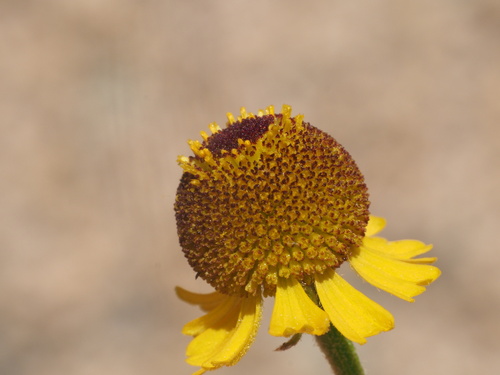
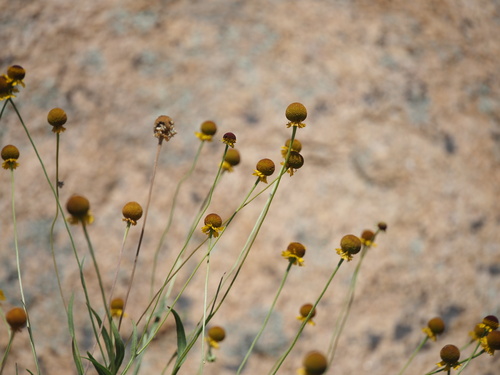
Source ↗Helenium puberulum is a North American species of flowering plants in the daisy family known by the common name rosilla. It is native to California and Baja California, where it can be found in moist habitats such as riverbanks and meadows. It has also been found in Oregon, although these might possibly be naturalized populations. Helenium puberulum is an annual or perennial herb sometimes as much as 160 cm tall though other times much smaller. Most of the leaves are on the lower part of the plant. Stems are winged, meaning that they have flaps of tissue running down the sides. One plant can produce as many as 30 flower heads in a branched array. The head is unusual in that the part covered by the disc florets is almost completely spherical rather than conical as in most other species of the genus. There can sometimes be over 1000 small disc florets in the head, each yellow at the bottom but brown or purple toward the tip. The 13-17 yellow ray florets are small and inconspicuous, pointing backwards down the flower stalk. Sometimes the ray florets are completely absent. The fruit is a hairy achene one to two millimeters long.
Notes
There are about 40 Helenium species.
References (2)
- Moerman, D. F., 2010, Native American Ethnobotany. Timber Press. p 257
- Plants for a Future database, The Field, Penpol, Lostwithiel, Cornwall, PL22 0NG, UK. http://www.scs.leeds.ac.uk/pfaf/