Pectis angustifolia
Torr.
Narrowleaf pectis

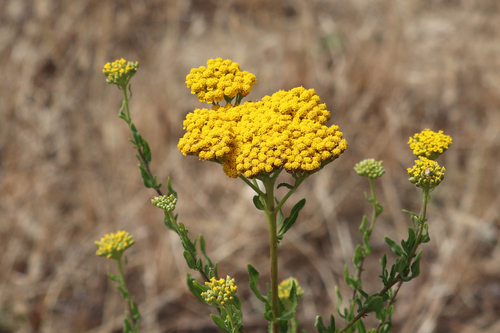
(c) Richard Reynolds, some rights reserved (CC BY-NC), uploaded by Richard Reynolds

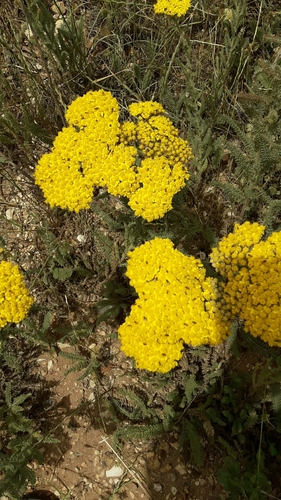
(c) Kenneth Bader, some rights reserved (CC BY-NC), uploaded by Kenneth Bader

(c) Kenneth Bader, some rights reserved (CC BY-NC), uploaded by Kenneth Bader
What to Eat
Edible parts: Leaves, Leaves - tea
Leaves and young shoots can be eaten raw or cooked, and are also used as a flavouring. They have a strong lemon scent and are eagerly collected by the Hopi Indians.
Where to Find It
It is a subtropical plant.
Central America, Mexico, North America, USA,
How to Identify
An aromatic herb. It grows 25 cm tall. The crushed leaves have a lemon scent. The leaves are grass-like. They have a strong vein down the centre. The leaves are 7.5-12.5 cm long. The flower heads are bunched at the end of the branches. The flower heads are about 5 cm across. They have 8-10 short rays.
How to Grow
We have very little information on this species. It can be grown outdoors in Britain as a half-hardy annual and requires a dry to moist light or medium well-drained soil in a sunny position. The flowers are spicily scented whilst the leaves also have an aromatic fragrance.
Propagation: Sow seed in spring in a greenhouse. Prick seedlings out into individual pots when large enough to handle and plant out after the last expected frosts. If sufficient seed is available, an outdoor sowing directly in situ in mid to late spring is worth attempting.
Medicinal Uses
The plant is carminative and emetic. Crushed leaves have been used in the treatment of stomach aches. The blossoms, mixed with salt, have been eaten to treat stomach complaints.
Other Uses
The plant yields an inferior dye, though no further details are given.
Wikipedia
Source ↗Pectis angustifolia, the lemonscented cinchweed, is a summer blooming annual plant which is found in Western North America, generally from Nebraska and Colorado to Arizona and Mexico. It is in flower from July to October, and the seeds ripen from September to October. Lemonscented cinchweed cannot grow in the shade. The plant is carminative and emetic. The crushed leaves have been used in the treatment of stomach aches. Among the Hopi of Arizona it was known as taichima and was eaten boiled with green corn.
Names & Synonyms
Crownseed pectis
References (5)
- Beckstrom-Sternberg, Stephen M., and James A. Duke. "The Foodplant Database." http://probe.nalusda.gov:8300/cgi-bin/browse/foodplantdb.(ACEDB version 4.0 - data version July 1994)
- Facciola, S., 1998, Cornucopia 2: a Source Book of Edible Plants. Kampong Publications, p 41
- Loughmiller, C & L., 1985, Texas Wildflowers. A Field Guide. University of Texas, Austin. p 69
- Moerman, D. F., 2010, Native American Ethnobotany. Timber Press. p 379
- Plants for a Future database, The Field, Penpol, Lostwithiel, Cornwall, PL22 0NG, UK. http://www.scs.leeds.ac.uk/pfaf/