Physalis grisea
(Waterf.) M. Martinez
Dwarf Cape-gooseberry, Hairy ground-cherry, Strawberry-tomato
SolanaceaeFruit
iNaturalist · cc-by-nc
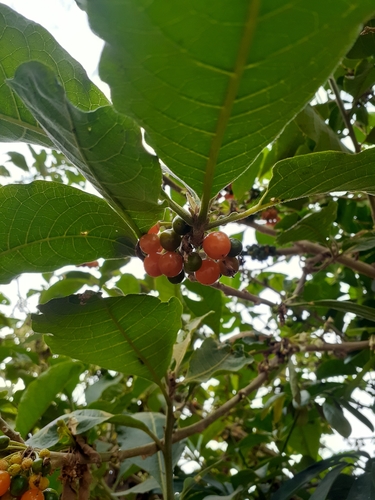
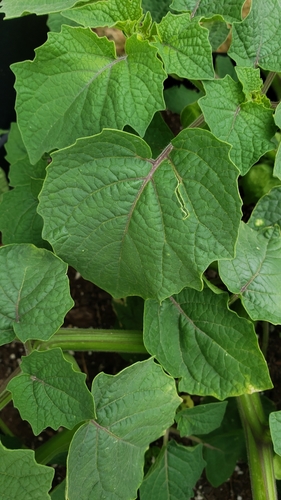
(c) dstein910, some rights reserved (CC BY-NC), uploaded by dstein910
(c) dstein910, some rights reserved (CC BY-NC), uploaded by dstein910

iNaturalist · cc-by-nc
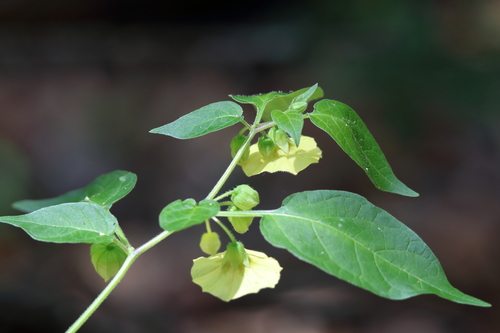
(c) Ashley Beck, some rights reserved (CC BY-NC), uploaded by Ashley Beck
(c) Ashley Beck, some rights reserved (CC BY-NC), uploaded by Ashley Beck
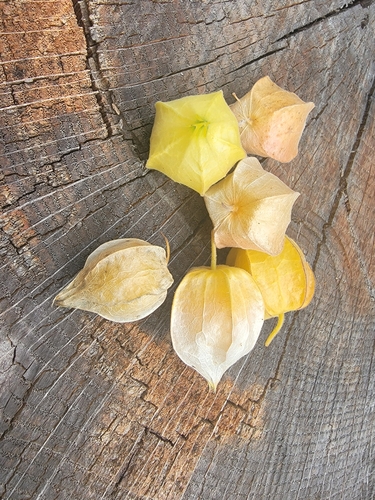
iNaturalist · cc-by
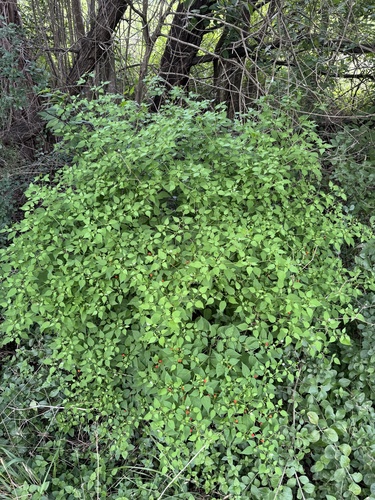
(c) Navin Sasikumar, some rights reserved (CC BY), uploaded by Navin Sasikumar
(c) Navin Sasikumar, some rights reserved (CC BY), uploaded by Navin Sasikumar
What to Eat
Edible parts: Fruit
The fruit are eaten fresh or used in preserves.
Where to Find It
It is a temperate plant.
Canada, North America*, USA,
Countries: Antigua & Barbuda, Barbados, Bahamas, Belize, Canada, Costa Rica, Cuba, Dominica, Dominican Republic, Grenada, Guatemala, Honduras, Haiti, Jamaica, St Kitts & Nevis, St Lucia, Mexico, Nicaragua, Panama, Puerto Rico, El Salvador, Trinidad & Tobago, United States, St Vincent
How to Identify
A temperate herb of the Solanaceae family, one of 75-100 Physalis species.
Wikipedia
Source ↗Physalis grisea is a species of flowering plant in the nightshade family known by common names including strawberry ground-cherry, downy ground-cherry, and strawberry-tomato in English. The name downy ground-cherry is due to the soft hairs that give the plant a gray cast. This downy gray coloration is the origin of the specific epithet grisea. Physalis grisea is native to northeastern North America.
Notes
There are about 75-100 Physalis species.
Names & Synonyms
Physalis pruinosa auct.Physalis pubescens var. grisea Waterf.
References (5)
- Samuels, J., 2015, Biodiversity of Food Species of the Solonaceae Family: A Preliminary Taxonomic Inventory of Subfamily Solanoideae. Resources 2015, 4. 277-322
- Taxon 42:104. 1993
- USDA, ARS, National Genetic Resources Program. Germplasm Resources Information Network - (GRIN). [Online Database] National Germplasm Resources Laboratory, Beltsville, Maryland. Available: www.ars-grin.gov/cgi-bin/npgs/html/econ.pl (10 April 2000)
- Wiersema, J. H. & Leon, B., 2013, World Economic Plants. A Standard Reference CRC Press. 2nd Ed. p 524
- World Checklist of Useful Plant Species 2020. Royal Botanic Gardens, Kew