Physalis minima
L.
Native gooseberry

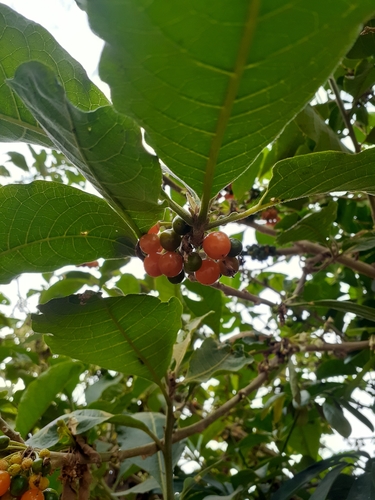
(c) Douglas Goldman, some rights reserved (CC BY-SA)

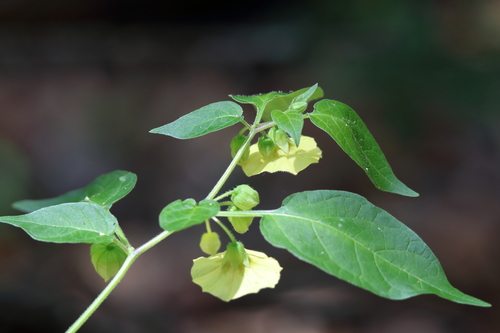
(c) Douglas Goldman, some rights reserved (CC BY-SA)

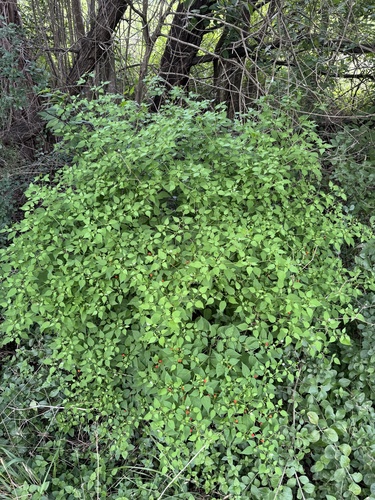
(c) Douglas Goldman, some rights reserved (CC BY-SA)
What to Eat
Edible parts: Fruit, Leaves, Seeds
The fruit is best cooked, though it can also be eaten raw; unripe fruits work as a cooked vegetable. It tastes similar to a cherry tomato — juicy, mildly astringent, and sweet with a pleasant balance of acidity — though the overall yield is considered scarcely worthwhile. Each fruit is about 1.5cm in diameter and contains approximately 6% sugars, 2.7% protein, 1.2% ash, 0.6% tannin, and 0.5% pectin, along with a useful amount of vitamin C at about 24.5mg per 100ml of juice. Fruits form and ripen consecutively over a long period; average yield from a plant covering 2.5 square metres is around 545g. Each fruit is naturally enclosed in its own papery calyx, protecting it from pests and the elements — this calyx is toxic and must not be eaten.
Known Hazards
Where to Find It
A tropical plant. They are common in waste places at low altitudes up to 1600 m in the Babuyan Islands and from northern Luzon to Mindanao and Palawan in the Philippines. It grows in southern China on slopes between 1000-1800 m. altitude. It grows in wetlands. It can grow in arid places. In Sichuan and Yunnan.
Africa, Asia, Australia, Bangladesh, Benin, Brunei, Central Africa, China, Congo DR, East Africa, Fiji, Himalayas, India, Indochina, Indonesia, Kenya, Malaysia, Micronesia, Middle East, Myanmar, Nepal, Niue, Northeastern India, Oman, Pacific, Pakistan, Palau, Papua New Guinea, PNG, Philippines, Samoa, SE Asia, Sikkim, Socotra, South Africa, Southern Africa, South America, Sri Lanka, Tonga, Tuvulu, Uganda, USA, Vietnam, Wallis & Futuna, West Africa, Yemen, Zambia, Zimbabwe,
How to Identify
An erect or spreading branched herb. It is an annual plant. The roots are fibrous. The leaves are alternate and entire and covered with soft downy hairs. They have irregular teeth along the edge. They are 2-3 cm long and 1-1.5 cm wide. They are pale green. The stems are round or nearly so. The flowers are yellow with the inner ring of petals bell shaped. These are sometimes purple at the base inside. The fruit is a round berry about 6 mm across. It is completely surrounded by an inflated calyx. This is 5 angled.
Nutrition Score: 40/100
| Part | Moisture | kJ | kcal | Protein | Vit A | Vit C | Iron | Zinc |
|---|---|---|---|---|---|---|---|---|
| Fruit | 84.2 | 264 | 63 | 3.2 | — | 1 | 4.2 | 0.5 |
How to Grow
We have very little information on this species and do not know if it will be hardy in Britain, though if it proves to be tender, it should be possible to treat it as an annual, sowing the seed in early spring in a warm greenhouse and planting out after the last expected frosts. It is highly resistant to pests and diseases and is worthy of cultivation. Closely related to P. virginiana. The following notes are based on the general needs of the genus. Succeeds in any well-drained soil in full sun or light shade.
Propagation: Sow seed in March or April in a greenhouse, barely covering it. Germination is usually quick and reliable; diurnal temperature fluctuations help. Prick seedlings into individual pots of fairly rich soil once large enough to handle, then plant out after the last expected frost, with cloche protection if needed until established. Divide plants in spring — larger divisions can go straight into their final positions, while smaller ones are better potted up and grown on in light shade in a cold frame until well rooted before planting out in late spring or early summer. For basal cuttings in early summer, take shoots with plenty of underground stem when they reach about 8–10cm above ground, pot individually, and keep in light shade in a cold frame or greenhouse until rooting well before planting out in summer.
Medicinal Uses
The fruit is considered appetizing, bitter, diuretic, laxative, and tonic. Plant extracts have shown anticancer activity. Leaf juice mixed with mustard oil and water has been used as a remedy for earache.
Other Uses
No other uses are known.
Wikipedia
Source ↗An annual reaching 0.5m in height, frost-tender with hermaphrodite insect-pollinated flowers. Grows in light sandy to heavy clay soils with good drainage and tolerates semi-shade or full sun. Adapts to mildly acidic to basic soils and tolerates both dry and moist conditions.
Production
In Northeastern India fruit are available February to March.
Other Information
They are mostly eaten by children.
Notes
There are about 75-100 Physalis species.
Names & Synonyms
Ajja kotte, Amansit, Ban tipariya, Batepari, Bauk-pin, Bon tepari, Budda budama, Chalpang-puak, Chechendet, Cheplukan, Chipluan, Chirboti, Chirpoti, Chutia handi, Ciplukan, Dhan mori, Etagoli lodidi, Fotka, Futka, Gudde hannu, Jojing nbelang, Kamoni, Kedicahu, Kongo ogwal-ogwal, Kopal phuta, Kupanti, Kuttythakkali, Leletup, Letup-letup, Manini, Motampuli, Njodi-njotta, Pakmou, Pako tipai, Papotan, Parpoti, Phakphake, Phuga, Pini, Pipat, Pokmou, Pon-pon, Popte, Popti, Ran popati, Sodakkuthakali, Sunberry, Tepari, Thaitho, Thaitu, Tholtakkali, Tongogwal matino, Tulatipati, Tungnyai ri, Tunutunu, Ubat pekong, Vejiga de perro, Xiao suan jiang
References (82)
- Achigan-Dako, E, et al (Eds), 2009, Catalogue of Traditional Vegetables in Benin. International Foundation for Science.
- Acipa, A. et al, 2013, Nutritional Profile of some Selected Food Plants of Otwal and Ngai Counties, Oyam District, Northern Uganda. African Journal or Food, Agriculture, Nutrition and Development. 13(2)
- Altschul, S.V.R., 1973, Drugs and Foods from Little-known Plants. Notes in Harvard University Herbaria. Harvard Univ. Press. Massachusetts. no. 4019
- Ambasta, S.P. (Ed.), 2000, The Useful Plants of India. CSIR India. p 452
- Arinathan, V., et al, 2007, Wild edibles used by Palliyars of the western Ghats, Tamil Nadu. Indian Journal of Traditional Knowledge. 6(1) pp 163-168
- Baishya, S. Kr., et al, 2013, Survey of Wild Edible Fruits of Dhubri District, Assam, India. Plant Archives Vol 13 (1): 155-158
- Bandyopadhyay, S. et al, 2009, Wild edible plants of Koch Bihar district, West Bengal. Natural Products Radiance 8(1) 64-72
- Banerjee, A., et al, 2013, Ethnobotanical Documentation of Some Wild Edible Plants in Bankura District, West Bengal, India. The Journal of Ethnobiology and Traditional Medicine. Photon 120 (2013) 585-590
- Barua, U., et al, 2007, Wild edible plants of Majuli island and Darrang districts of Assam. Indian Journal of Traditional Knowledge 6(1) pp 191-194
- Biswas, S. C., et al, 2018, Diversity of wild edible minor fruits used by the ethnic communities of Tripura, India. Indian Journal of Traditional Knowledge. Vol 17(2), April 2018, pp 282-289
- Bodkin, F., 1991, Encyclopedia Botanica. Cornstalk publishing, p 790
- Burkill, I.H., 1966, A Dictionary of the Economic Products of the Malay Peninsula. Ministry of Agriculture and Cooperatives, Kuala Lumpur, Malaysia. Vol 2 (I-Z) p 1750
- Chakraborty, S. & Chaturbedi, H. P., 2014, Some Wild Edible Fruits of Tripura- A Survey. Indian Journal of Applied research. (4) 9
- Chandrakumar, P., et al, 2015, Ethnobotanical studies of wild edible plants of Gond, Halba and Kawar tribes of Salekasa Taluka, Gondia District, Maharashtra State, India. International Research Journal of Pharmacy 6(8)
- Chase, P. & Singh, O. P., 2016, Bioresources of Nagaland: A Case of Wild 4 Edible Fruits in Khonoma Village Forest. in J. Purkayastha (ed.), Bioprospecting of Indigenous Bioresources of North-East India. p 51
- Cherikoff V. & Isaacs, J., The Bush Food Handbook. How to gather, grow, process and cook Australian Wild Foods. Ti Tree Press, Australia p 120
- Chowdery, T., et al, 2014, Wild edible plants of Uttar Dinajpur District, West Bengal. Life Science Leaflets. 47:pp 20-36 http://lifesciencesleaflets.ning.com
- Chowdhury, M. & Mukherjee, R., 2012, Wild Edible Plants Consumed by Local Communities of Maldah of West Bengal, India. Indian J.Sci.Res.3(2) : 163-170
- Cooper, W. and Cooper, W., 2004, Fruits of the Australian Tropical Rainforest. Nokomis Editions, Victoria, Australia. p 518
- Cribb, A.B. & J.W., 1976, Wild Food in Australia, Fontana. p 73
- Dangol, D. R. et al, 2017, Wild Edible Plants in Nepal. Proceedings of 2nd National Workshop on CUAOGR, 2017.
- Dhyani, S.K., & Sharma, R.V., 1987, Exploration of Socio-economic plant resources of Vyasi Valley in Tehri Garwhal. J. Econ. Tax. Bot. Vol. 9 No. 2 pp 299-310
- Dobriyal, M. J. R. & Dobriyal, R., 2014, Non Wood Forest Produce an Option for Ethnic Food and Nutritional Security in India. Int. J. of Usuf. Mngt. 15(1):17-37
- Fowler, D. G., 2007, Zambian Plants: Their Vernacular Names and Uses. Kew. p 85
- Garcia, G. S. C., 2006, The mother-child nexus. Knowledge and valuation of wild food plants in Wayanad, Western Ghats, India. Journal of Ethnobiology and Ethnomedicine, 2:39
- Hardwick, G., 2001, Economically Useful Plants for Northern Australia: Master Species List. Crusader eBooks.
- Hiddins, L., 1999, Explore Wild Australia with the Bush Tucker Man. Penguin Books/ABC Books. p 153
- Hussey, B.M.J., Keighery, G.J., Cousens, R.D., Dodd, J., Lloyd, S.G., 1997, Western Weeds. A guide to the weeds of Western Australia. Plant Protection Society of Western Australia. p 220
- Jackes, B.R., 2001, Plants of the Tropics. Rainforest to Heath. An Identification Guide. James Cook University. p 83
- Jadhav, R., et al, 2015, Forest Foods of Northern Western Ghats: Mode of Consumption, Nutrition and Availability. Asian Agri-History Vol. 19, No. 4: 293-317
- Jardin, C., 1970, List of Foods Used In Africa, FAO Nutrition Information Document Series No 2.p 94
- Kar, A., et al, 2013, Wild Edible Plant Resources used by the Mizos of Mizoram, India. Kathmandu University Journal of Science, Engineering and Technology. Vol. 9, No. 1, July, 2013, 106-126
- Karthi, Sathya, & Salome, 2014, Uncultivated Edible Greens from Small Millet Farms Tamil Nadu India. IDRC
- Kenneally, K.E., Edinger, D. C., and Willing T., 1996, Broome and Beyond, Plants and People of the Dampier Peninsula, Kimberley, Western Australia. Department of Conservation and Land Management. p 186
- Kiple, K.F. & Ornelas, K.C., (eds), 2000, The Cambridge World History of Food. CUP p 1881
- Kiran, K. C., et al, 2019, Diversity and Seasonal Availability of Potential Wild Edible Plants from Vidarbha Region of Maharashtra State, India. Int.J.Curr.Microbiol.App.Sci (2019) 8(2): 1434-1446
- Kuvar, S. D. & Shinde, R. D., 2019, Wild Edible Plants used by Kokni Tribe of Nasik District, Maharashtra. Journal of Global Biosciences. Volume 8, Number 2, 2019, pp. 5936-5945
- Lamp, C & Collet F., 1989, Field Guide to Weeds in Australia. Inkata Press. p 212
- Lazarides, M. & Hince, B., 1993, Handbook of Economic Plants of Australia, CSIRO. p 189
- Low, T., 1991, Wild Herbs of Australia and New Zealand. Angus & Robertson. p 100 (Drawing)
- Low, T., 1991, Wild Food Plants of Australia. Australian Nature FieldGuide, Angus & Robertson. p 112
- Low, T., 1992, Bush Tucker. Australia’s Wild Food Harvest. Angus & Robertson. p 76
- Lungphi, P., Wangpan, T. & Tangjang, S., 2018, Wild edible plants and their additional uses by the Tangsa community living in the Changlang district of Arunachal Pradesh, India. Pleione 12(2): 151 - 164. 2018.
- Marandi, R. R. & Britto, S. J., 2015, Medicinal Properties of Edible Weeds of Crop Fields and Wild plants Eaten by Oraon Tribals of Latehar District, Jharkhand. International Journal of Life Science and Pharma Research. Vo. 5. (2) April 2015
- Martin, F.W. & Ruberte, R.M., 1979, Edible Leaves of the Tropics. Antillian College Press, Mayaguez, Puerto Rico. p 220
- Masoodi, H. U. R. & Sundriyal, R. C., 2020, Richness of non-timber forest products in Himalayan communities—diversity, distribution, use pattern and conservation status. Journal of Ethnobiology and Ethnomedicine 16:56
- Masters, T., 2021, Traditional food plants of the upper Aswa River catchment of northern Uganda—a cultural crossroads. Journal of Ethnobiology and Ethnomedicine (2021) 17:24
- Maundu, P. et al, 1999, Traditional Food Plants of Kenya. National Museum of Kenya. 288p
- Monsalud, M.R., Tongacan, A.L., Lopez, F.R., & Lagrimas, M.Q., 1966, Edible Wild Plants in Philippine Forests. Philippine Journal of Science. p 545
- Narayanan Ratheesh, M. K. et al, 2011, Wild edible plants used by the Kattunaikka, Paniya and Kuruma tribes of Wayanad District, Kerala, India. Journal of Medicinal Plants Research Vol. 5(15), pp. 3520-3529
- Ojelel, S. & Kakudidi, E. K., 2015, Wild edible plant species utilized by a subsistence farming community in the Obalanga sub-county, Amuria district, Uganda. Journal of Ethnobiology and Ethnomedicine. 11:7
- Oryema, C., et al, 2013, Edible wild fruit species of Gulu District, Uganda. International Journal of Biology and Biological Sciences Vol 2(4) pp 068-082
- Paczkowska, G . & Chapman, A.R., 2000, The Western Australian Flora. A Descriptive Calatogue. Western Australian Herbarium. p 537
- Pagag, K. & Borthakur, S.K., 2012, Wild edible wetland plants from Lakhimpur district of Assam, India. Pleione 6(2): 322 - 327
- Parham, B. E. V., 1972, Plants of Samoa. New Zealand Department of Scientific and Industrial Research. Information Series. No. 85 p 148
- Parmar, C., & Kaushel, M. K., 1982, In Wild Fruits. Kalyani Publishers, New Delhi, India. p 62
- Pasha, M. K. & Uddin, S. B., 2019, Minor Edible Fruits of Bangladesh. Bangladesh J. Plant Taxon. 26(2): 299–313
- Patiri, B. & Borah, A., 2007, Wild Edible Plants of Assam. Geethaki Publishers. p 88
- Peekel, P.G., 1984, (Translation E.E.Henty), Flora of the Bismarck Archipelago for Naturalists, Division of Botany, Lae, PNG. p 492, 495
- Plants for a Future database, The Field, Penpol, Lostwithiel, Cornwall, PL22 0NG, UK. http://www.scs.leeds.ac.uk/pfaf/
- Prachi, K., et al, 2012, Underutilized wild fruits of North Maharashtra. Journal of Research in Plant Sciences. (2012) 1:071-076
- Ramachandran, V.S., 1987, Further Notes on the Ethnobotany of Cannanore District, Kerala. J. Econ. Tax. Bot. Vol. 11 No. 1 pp 47-
- Ramachandran, V. S., 2007, Wild edible plants of the Anamalais, Coimbatore district, western Ghats, Tamil Nadu. Indian Journal or Traditional Knowledge. 6(1) pp 173-176
- Ravikrishna, S., 2011, Ethno-medico-botanical survey on Wild Edible fruits of Udupi Taluq, Udupi p 91 (As Physalis micrantha)
- Royal Botanic Gardens, Kew (1999). Survey of Economic Plants for Arid and Semi-Arid Lands (SEPASAL) database. Published on the Internet; http://www.rbgkew.org.uk/ceb/sepasal/internet [Accessed 11th June 2011]
- Saikia, M., 2015, Wild edible vegetables consumed by Assamese people of Dhemaji District of Assam, NE India and their medicinal values. Archives of Applied Science Research, 2015, 7 (5):102-109
- Sasi, R. & Rajendran, A., 2012, Diversity of Wild Fruits in Nilgiri Hills of the Southern Western Ghats - Ethnobotanical Aspects. IJABPT, 3(1) p 82-87
- Savita, et al, 2006, Studies on wild edible plants of ethnic people in east Sikkim. Asian J. of Bio Sci. (2006) Vol. 1 No. 2 : 117-125
- Singh, H.B., Arora R.K.,1978, Wild edible Plants of India. Indian Council of Agricultural Research, New Delhi. p 79
- Smith, N. M., 1991, Ethnobotanical Field Notes from the Northern Territory, Australia, J. Adelaide Bot. Gard. 14(1): 1-65
- Smith, Nicholas et al. 1993, Ngarinyman Ethnobotany: Aboriginal Plant Use from the Victoria River Area Northern Australia. Northern Territory Botanical Bulletin No 16. Parks and Wildlife Commission of the Northern Territory. p 39
- Sp. pl. 1:183. 1753
- Suwardi, A. B., et al, 2020, Ethnobotany and conservation of indigenous edible fruit plants in South Aceh, Indonesia. Biodiversitas Vol. 21, No. 5, pp 1850-1860
- Taram, M., et al, 2018, Wild Food Plant Resources of Komkar Adi Tribe of Upper Siang District in Arunachal Pradesh, India. Bulletin of Arunachal Forest Research, Vol. 33(2), 27-35
- Terashima, H., & Ichikawa, M., 2003, A comparative ethnobotany of the Mbuti and Efe hunter-gatherers in the Ituri Forest, Democratic Republic of Congo. African Study Monographs, 24 (1, 2): 1-168, March 2003
- Terra, G.J.A., 1973, Tropical Vegetables. Communication 54e Royal Tropical Institute, Amsterdam, p 67
- Tiwi Plants and Animals. 2001, Aboriginal flora and fauna knowledge from Bathurst and Melville Islands, northern Australia. Northern Territory Botanical Bulletin; No. 24 p 72
- Wheeler, J.R.(ed.), 1992, Flora of the Kimberley Region. CALM, Western Australian Herbarium, p 723
- Wightman, Glenn et al. 1992, Mangarrayi Ethnobotany: Aboriginal Plant Use from the Elsey Area Northern Australia. Northern Territory Botanical Bulletin No 15. Parks and Wildlife Commission of the Northern Territory. p 40
- Wightman, Glenn et al. 1994, Gurindji Ethnobotany: Aboriginal Plant Use from Daguragu Northern Australia. Northern Territory Botanical Bulletin No 18. Parks and Wildlife Commission of the Northern Territory. p 42, 43
- Yuncker, T.G., 1959, Plants of Tonga, Bernice P. Bishop Museum, Hawaii, Bulletin 220. p 236
- Yunupinu Banjgul, Laklak Yunupinu-Marika, et al. 1995, Rirratjinu Ethnobotany: Aboriginal Plant Use from Yirrkala, Arnhem Land, Australia. Northern Territory Botanical Bulletin No 21. Parks and Wildlife Commission of the Northern Territory. p 64.