Physalis obscura
Michx.

Wikimedia Commons - Alex Popovkin, Bahia, Brazil from Brazil

Wikimedia Commons - Britton, N.L., and A. Brown.

Wikimedia Commons - Roger Culos
What to Eat
Edible parts: Fruit
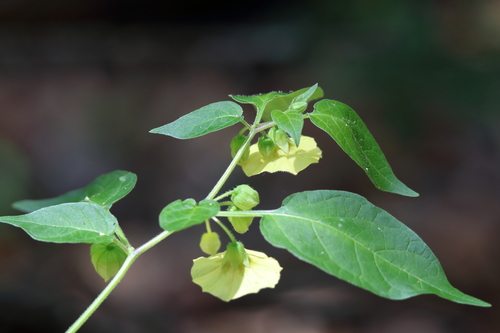
The fruit can be eaten raw or cooked. Each fruit is naturally enclosed in its own papery calyx, protecting it from pests and the elements — this calyx is toxic and must not be eaten.
Known Hazards
Where to Find It
It is a warm temperate plant.
Central America, Mexico, North America, USA,
How to Identify
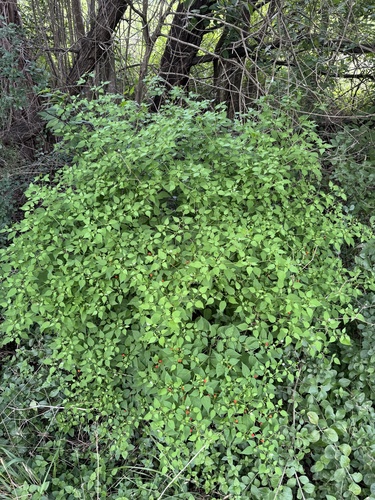
An annual growing to 1m with frost sensitivity and hermaphrodite insect-pollinated flowers. Tolerates light sandy to heavy clay soils with good drainage and grows in semi-shade or full sun. Prefers mildly acidic to basic soils and moist conditions.
How to Grow
We have very little information on this species and do not know if it will be hardy in Britain, though judging by its native range it could succeed outdoors in the milder parts of this country. If it proves to be tender, it should be possible to treat it as an annual, sowing the seed in early spring in a warm greenhouse and planting out after the last expected frosts. It is probably no more than a variety of P. pubescens. The following notes are based on the general needs of the genus. Succeeds in any well-drained soil in full sun or light shade.
Propagation: Sow seed in March or April in a greenhouse, barely covering it. Germination is usually quick and reliable; diurnal temperature fluctuations help. Prick seedlings into individual pots of fairly rich soil once large enough to handle, then plant out after the last expected frost, with cloche protection if needed until established. Divide plants in spring — larger divisions can go straight into their final positions, while smaller ones are better potted up and grown on in light shade in a cold frame until well rooted before planting out in late spring or early summer. For basal cuttings in early summer, take shoots with plenty of underground stem when they reach about 8–10cm above ground, pot individually, and keep in light shade in a cold frame or greenhouse until rooting well before planting out in summer.
Medicinal Uses
No medicinal uses are known.
Other Uses
No other uses are known.
Wikipedia
An annual growing to 1m with frost sensitivity and hermaphrodite insect-pollinated flowers. Tolerates light sandy to heavy clay soils with good drainage and grows in semi-shade or full sun. Prefers mildly acidic to basic soils and moist conditions.
Notes
There are about 75-100 Physalis species.
References (3)
- Beckstrom-Sternberg, Stephen M., and James A. Duke. "The Foodplant Database." http://probe.nalusda.gov:8300/cgi-bin/browse/foodplantdb.(ACEDB version 4.0 - data version July 1994)
- Hedrick, U.P., 1919, (Ed.), Sturtevant's edible plants of the world. p 491
- Plants for a Future database, The Field, Penpol, Lostwithiel, Cornwall, PL22 0NG, UK. http://www.scs.leeds.ac.uk/pfaf/