Physalis pubescens
L.
Downy ground-cherry, Goldenberry

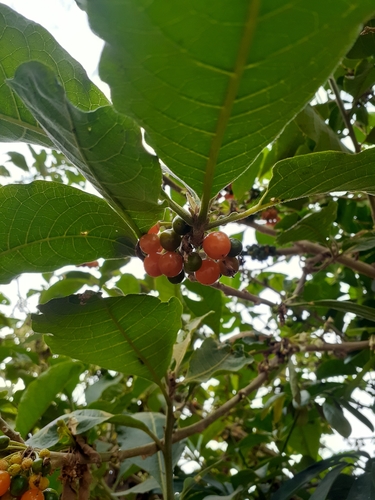
(c) meilinkc, some rights reserved (CC BY-NC)

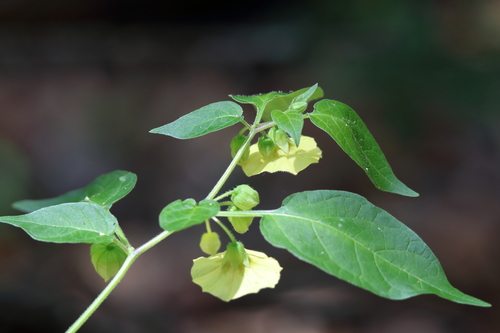
(c) chjars, some rights reserved (CC BY-NC), uploaded by chjars

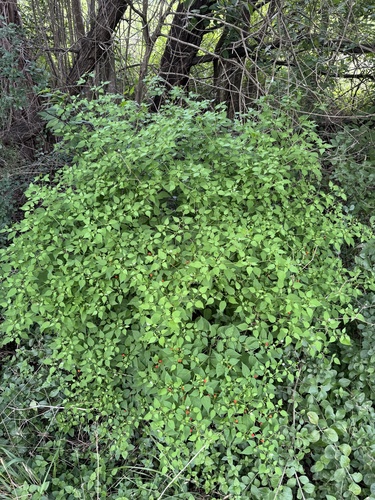
(c) Kinmatsu Lin, some rights reserved (CC BY-NC), uploaded by Kinmatsu Lin
What to Eat
Edible parts: Fruit
The fruit can be eaten raw or used in pies and preserves, offering a delicious bittersweet flavour. The fruit drops from the plant before fully ripening and should be left for a week or two until the husk has dried and the fruit has turned golden-yellow. When dried in sugar it is excellent in fruit cakes, with some cooks preferring it to raisins or figs. Each plant can yield up to 0.5 kilo of fruit. The berry is about 15mm in diameter and will keep for several weeks if left inside the calyx. Each fruit is naturally enclosed in a papery calyx that protects it from pests and the elements — this calyx is toxic and must not be eaten.
Known Hazards
Where to Find It
It is a tropical plant. It grows from sea level to 1,300 m above sea level. It can tolerate some shade. It can grow in arid places.
Africa, Amazon, Antigua and Barbuda, Argentina, Asia, Australia, Belize, Bolivia, Brazil*, Caribbean, Central Africa, Central America, China, Colombia, Congo DR, Costa Rica, Cuba, Dominica, Dominican Republic, Ecuador, El Salvador, French Guiana, Guadeloupe, Guatemala, Guianas, Guyana, Haiti, Hispaniola, Honduras, Indochina, Jamaica, Martinique, Mauritius, Mexico, Myanmar, New Zealand, Nicaragua, North America, Panama, Paraguay, Peru, Puerto Rico, SE Asia, South Africa, Southern Africa, South America, Suriname, Uruguay, USA, Venezuela, Vietnam, West Indies,
How to Identify
An annual herb. It grows 50-120 cm high. It is yellowish-green and has soft hairs. The leaves are simple and thin. The leaves are 2-6 cm long. The flowers occur singly. The flowers are yellow with purple-brown spots. There are several named cultivated varieties. The fruit are round and in a balloon like calyx. The fruit are orange. The pulp is sweet.
Nutrition Score: 39/100
| Part | Moisture | kJ | kcal | Protein | Vit A | Vit C | Iron | Zinc |
|---|---|---|---|---|---|---|---|---|
| Fruit | 82.1 | 234 | 56 | 0.9 | 3200 | 17.7 | 0.8 | 0.3 |
How to Grow
Succeeds in any well-drained soil in full sun or light shade. Cultivated for its edible fruit in the Ukraine. There are some named varieties. 'Cossack Pineapple' has a small pineapple-flavoured fruit. 'Goldie' has medium-sized fruits that are borne prolifically on a well-branched plant.
Propagation: Sow seed in March or April in a greenhouse, barely covering it. Germination is typically quick and prolific. Diurnal temperature fluctuations assist germination. Once seedlings are large enough to handle, prick them out into individual pots of fairly rich soil and plant out after the last expected frosts, providing cloche protection until they are growing away well.
Medicinal Uses
The whole plant is antipyretic, depurative, diuretic, pectoral, and vermifuge. A decoction of the plant is used in the treatment of abscesses, coughs, fevers, and sore throat.
Other Uses
None known Special Uses Food Forest
Wikipedia
Source ↗Physalis pubescens is a species of flowering plant in the nightshade family known by many common names, including husk tomato, low ground-cherry and hairy groundcherry in English, and muyaca and capulí in Spanish. It is native from Brazil, but also found in southern half of the United States, Mexico, Central and much of South America. It can be found elsewhere as an introduced species and sometimes a weed. It can grow in many types of habitat, including disturbed areas. This is an annual herb producing a glandular, densely hairy stem up to about 60 cm (24 in) in maximum height from a taproot. The oval or heart-shaped leaves are 3–9 cm (1.2–3.5 in) long and have smooth or toothed edges. The flowers blooming from the leaf axils are bell-shaped and about a centimeter long. They are yellow with five dark spots in the throats, and have five stamens tipped with blue anthers. The five-lobed calyx of sepals at the base of the flower enlarges as the fruit develops, becoming an inflated, ribbed, lanternlike structure 2–4 cm (0.79–1.57 in) long which contains the berry.
Other Information
It is cultivated.
Notes
There are about 75-100 Physalis species.
Names & Synonyms
Camapu, Canapu, Capulin, Crapeaud pepper, Fisalis, Fislis, Goldenberry, Ground cherry, Hairy cherry, Husk-tomato, Jua-de-capote, Jua-poca, Miltomate, Muyaca, Naniyobo ahuka, Pap bush, Pororu wokuru, Shibero bime, Tomate, Uvilla, White crapeaud pepper, Yurankmis
References (42)
- Arenas, P. and Scarpa, G. F., 2006, Edible wild plants of the Chorote Indians, Gran Chaco, Argentina. Botanical Journal of the Linnean Society. Vol. 153 (1): pp 73-85 (Also as Physalis neesiana)
- Barfod, A. S. & Kvist, L. P., 1996, Comparative Ethnobotanical Studies of the Amerindian Groups in Coastal Ecuador. The Danish Academy of Sciences and Letters. p 79
- Beckstrom-Sternberg, Stephen M., and James A. Duke. "The Foodplant Database." http://probe.nalusda.gov:8300/cgi-bin/browse/foodplantdb.(ACEDB version 4.0 - data version July 1994)
- Bianchini, F., Corbetta, F., and Pistoia, M., 1975, Fruits of the Earth. Cassell. p 180
- Brack, P., et al, 2020, Frutas nativas do Rio Grande do Sul, Brasil: riqueza e potencial alimentício. Native fruits of Rio Grande do Sul, Brazil: richness and potential as food. Rodriguésia 71: e03102018
- Brazil: Biodiversity for Food and Nutrition. http://www.b4fn.org/countries/brazil/
- Caballero-Serrano, V., et al, 2019, Traditional ecological knowledge and medicinal plant diversity in Ecuadorian Amazon home gardens. Global Ecology and Conservation 17 (2019) e00524 p 14
- Caballero, J. N., & Mapes, C. S., 1985, Gathering and Subsistence Patterns among the P'urhepecha Indians of Mexico. J. Ethnol. 5(1): 31-47
- Coradin, L. et al (Eds), 2011, Especies Nativas da Flora Brasileira de Valor Economico Atual ou Potencial. Brasilia MMA. p 193
- Elias, T.S. & Dykeman P.A., 1990, Edible Wild Plants. A North American Field guide. Sterling, New York p 149
- Esperanca, M. J., 1988. Surviving in the wild. A glance at the wild plants and their uses. Vol. 1. p 402
- Facciola, S., 1998, Cornucopia 2: a Source Book of Edible Plants. Kampong Publications, p 235
- Fisk, J. R. & Hoover, E., 2015, Wild Fruits of Minnesota. A Field Guide. University of Minnesota p 27
- Hedrick, U.P., 1919, (Ed.), Sturtevant's edible plants of the world. p 492
- Hunter, D., et al, 2019, The potential of neglected and underutilized species for improving diets and nutrition. Planta (2019) 250:709-729
- Hussey, B.M.J., Keighery, G.J., Cousens, R.D., Dodd, J., Lloyd, S.G., 1997, Western Weeds. A guide to the weeds of Western Australia. Plant Protection Society of Western Australia. p 222
- Hu, Shiu-ying, 2005, Food Plants of China. The Chinese University Press. p 666
- Kermath, B. M., et al, 2014, Food Plants in the Americas: A survey of the domesticated, cultivated and wild plants used for Human food in North, Central and South America and the Caribbean. On line draft. p 652
- Kinupp, V. F., 2007, Plantas alimenticias nao-convencionais da regiao metropolitana de Porto Alegre, RS, Brazil p 101
- Kinupp, V. F. & Bergman, I., 2008, Protein and minerals of native species, potential vegetables and fruits. Cienc.Tecnol. Aliment. Vol. 28 No. 4 Campinas Oct/Dec.
- Lazarides, M. & Hince, B., 1993, Handbook of Economic Plants of Australia, CSIRO. p 189
- Piedra-Malagón, E. M., et al, 2022, Edible native plants of the Gulf of Mexico Province. Biodiversity Data Journal 10: e80565 p 31
- Lopez-Diago, D. & Garcia, N., 2021, Wild edible fruits of Colombia. Biota ColomBiana 22 (2) p 52
- Lorenzi, H., Bacher, L., Lacerda, M. & Sartori, S., 2006, Brazilian Fruits & Cultivated Exotics. Sao Paulo, Instituto Plantarum de Estuados da Flora Ltda. p 312
- Maas, P.J. M., Non-Timber Forest Products of the North-West District of Guyana Part 2. The 85 most important NTFP species. p 180
- Paczkowska, G . & Chapman, A.R., 2000, The Western Australian Flora. A Descriptive Calatogue. Western Australian Herbarium. p 537
- Plants for a Future database, The Field, Penpol, Lostwithiel, Cornwall, PL22 0NG, UK. http://www.scs.leeds.ac.uk/pfaf/
- Plants of Haiti Smithsonian Institute http://botany.si.edu/antilles/West Indies
- Roa, J. A. G. & Boada, D. S. G., 2018, Fundación para el Fortalecimiento de la Fruticultura y Plantas Alimenticias no Convencionales en Colombia.
- Royal Botanic Gardens, Kew (1999). Survey of Economic Plants for Arid and Semi-Arid Lands (SEPASAL) database. Published on the Internet; http://www.rbgkew.org.uk/ceb/sepasal/internet [Accessed 11th June 2011]
- Samuels, J., 2015, Biodiversity of Food Species of the Solonaceae Family: A Preliminary Taxonomic Inventory of Subfamily Solanoideae. Resources 2015, 4. 277-322
- Sp. pl. 1:183. 1753
- Scarpa, G. F., 2009, Wild food plants used by the indigenous peoples of South American Gran Chaco: A general synopsis and intercultural comparison. Journal of Applied Botany and Food Quality 83:90-101
- Segura, S., et al, 2018, The edible fruit species in Mexico. Genet Resour Crop Evol (2018) 65:1767–1793
- Shin, T., et al, 2018, Traditional knowledge of wild edible plants with special emphasis on medicinal uses in Southern Shan State, Myanmar. Journal of Ethnobiology and Ethnomedicine (2018) 14:48
- Termote, C., et al, 2011, Eating from the wild: Turumbu, Mbole and Bali traditional knowledge of non-cultivated edible plants, District Tshopo, DRCongo, Gen Resourc Crop Evol. 58:585-618
- Terra, G.J.A., 1973, Tropical Vegetables. Communication 54e Royal Tropical Institute, Amsterdam, p 67
- Torre, de la, L., et al, 2008, Enciclopedia de las Plantas Útiles del Ecuador. Herbario QCA. Pontificia Universidad Católica del Ecuador. p 587
- USDA, ARS, National Genetic Resources Program. Germplasm Resources Information Network - (GRIN). [Online Database] National Germplasm Resources Laboratory, Beltsville, Maryland. Available: www.ars-grin.gov/cgi-bin/npgs/html/econ.pl (10 April 2000)
- Wiersema, J. H. & Leon, B., 2013, World Economic Plants. A Standard Reference CRC Press. 2nd Ed. p 524
- World Checklist of Useful Plant Species 2020. Royal Botanic Gardens, Kew
- www.colecionandofrutas.org