Picea abies
(L.) H. Karst.
Norway spruce, Common spruce

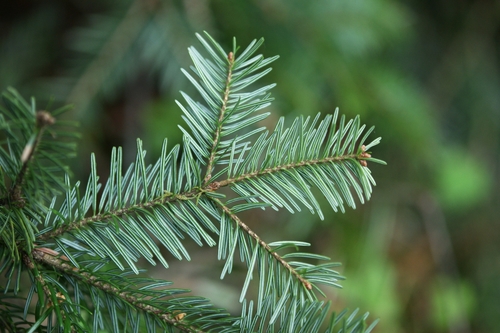
(c) Douglas Goldman, some rights reserved (CC BY-SA), uploaded by Douglas Goldman
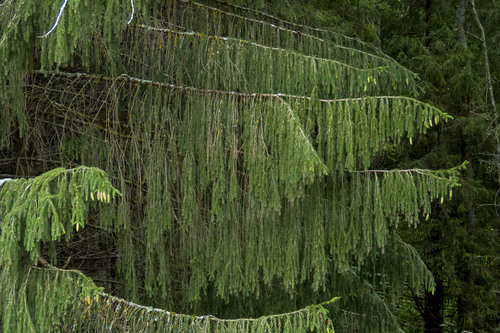
(c) Вотинцевы Елена и Сергей, some rights reserved (CC BY-NC), uploaded by Вотинцевы Елена и Сергей

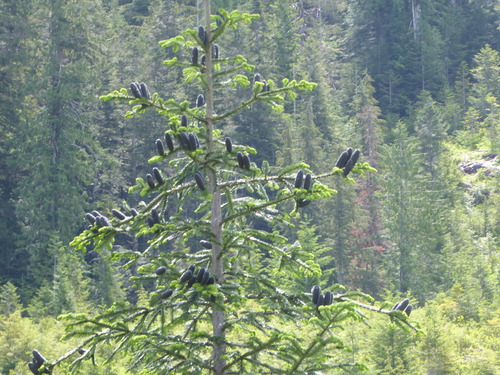
(c) Edward Ricemeyer, some rights reserved (CC BY-SA)
What to Eat
Edible parts: Flowers, Inner bark, Seeds, Tea, Shoots, Resin, Gum
Young male catkins can be eaten raw or cooked and are used as a flavouring. Immature female cones are edible cooked; the central portion, when roasted, is sweet and syrupy. Inner bark can be dried, ground into a powder and used as a thickener in soups or added to cereals when making bread — it is an emergency food for use when all else fails. The seed is edible raw, rich in oil with a pleasant, slightly resinous flavour, but is too small and fiddly to be worthwhile unless food is scarce. A refreshing tea rich in vitamin C can be made from young shoot tips; these tips are also used in making spruce beer.
Where to Find It
It is a temperate plant. It is frost hardy. It is fast growing. It will grow on most soils. It needs full sunlight. It is cultivated in China. It grows in upland sites in Asia, In Hobart Botanical gardens. It grows between 1000 and 2300 m altitude in Northern Europe. It suits hardiness zones 2-9. Arboretum Tasmania. National Arboretum Canberra.
Albania, Australia, Austria, Balkans, Belarus, Bosnia, Britain, Bulgaria, Canada, China, Czech Republic, Estonia, Europe, Finland, France, Germany, Hungary, India, Ireland, Italy, Korea, Lithuania, Luxembourg, Mediterranean, North America, Norway, Poland, Romania, Russia, Scandinavia, Slovenia, Sweden, Switzerland, Tasmania, Ukraine, USA, Yugoslavia,
How to Identify
A large tree. It grows 22-39-60 m tall and spreads 4.5-7.5 m wide. The trunk can be 1.3-6 m across. It has a conical shape. The secondary branches droop. The leaves are needle-like and dark green above but paler underneath. They are single and stiff. They are 12-24 mm long. They are bent away form the lower side of the twig. Male flowers are yellow and in clusters at the ends of twigs. Female flowers are pink. The fruit are cones which start dark red and become cigar shaped and glossy. They are 10-20 cm long. They change from green flecked with purple to light brown. There are many cultivated varieties.
How to Grow
Plants are grown from seed.
Propagation: Stratification will likely improve germination, so sow fresh seed in autumn in a cold frame if possible. Sow stored seed as early in the year as possible in a cold frame in a position of light shade; do not allow seed to dry out, and store it in a cool place. Prick out seedlings into individual pots when large enough to handle and grow on in a greenhouse or cold frame for their first winter; plant out in early summer of the following year or grow on in an outdoor nursery bed for a further year. Protection from spring frosts may be needed. Cuttings of semi-ripe terminal shoots, 5–8cm long, taken in August in a frame with frost protection, form roots in spring. Cuttings of mature terminal shoots, 5–10cm long, taken in September/October in a cold frame, take 12 months to root. Cuttings of soft to semi-ripe wood taken in early summer in a frame are slow but reliable.
Medicinal Uses
The buds, leaves and resin are antibiotic, antiseptic, balsamic, expectorant and sedative. A pitch or resin obtained from the trunk is rubefacient and stimulant, used externally in plasters for its healing and antiseptic properties. A poultice of the sap or gum has been used to treat the pain of boils and abscesses.
Other Uses
The tree yields Burgundy pitch and Jura turpentine, obtained by making incisions in the trunk and scraping out the resin some months later. Burgundy pitch is used as a varnish and in medicinal plasters, and is a strong adhesive. The turpentine serves as a waterproofer and wood preservative. An essential oil from the leaves is used in perfumery. The seed contains 30% fatty oil used in varnish production. The bark contains tannin and has been widely used in Europe as a tannin source, containing up to 13%; yields can be doubled by heating or steaming the bark as soon as possible after felling. The tree is fairly wind-resistant and fast-growing, making it useful for shelterbelts. The dwarf cultivar 'Inversa' can be grown as ground cover in a sunny position; cultivars 'Reflexa' and 'Procumbens' are also suitable, best spaced about 1 metre apart each way. Wood is medium hard, fairly elastic, durable under water, light in weight and colour, and is used for general carpentry, joinery and musical instruments. It is also highly valued for paper pulp production.
Wikipedia
Source ↗Picea abies, the Norway spruce or European spruce, is a species of spruce native to Northern, Central and Eastern Europe. It has branchlets that typically hang downwards, and the longest cones of any spruce, 9–17 cm long. It is very closely related to the Siberian spruce (Picea obovata), which replaces it east of the Ural Mountains, and with which it hybridises freely. The Norway spruce has a wide distribution, being planted for its wood, and is the species used as a Christmas tree in several countries around the world. It was the first gymnosperm to have its genome sequenced. The Latin specific epithet abies means "like Abies, Fir tree".
Production
It is fast growing.
Other Information
The shoots are foraged and eaten in restaurants in Sweden.
Notes
There are between 30 and 45 species of Picea.
Names & Synonyms
Gran, Homarika, Kuusk, Lucsika, Navadna smreka, Ou zhou yun shan, Sapin, Smrca, Vagne
References (33)
- Abbet, C., et al, 2014, Ethnobotanical survey on wild alpine food plants in Lower and Central Valais (Switzerland). Journal of Ethnopharmacology 151 (2014) 624–634
- Ambasta, S.P. (Ed.), 2000, The Useful Plants of India. CSIR India. p 453
- Christanell, A., et al, 2010, The Cultural Significance of Wild Gathered Plant Species in Kartitsch (Eastern Tyrol, Austria) and the Influence of Socioeconomic Changes on Local Gathering Practices. Chapter 3 in Ethnobotany in the New Europe. Berghahn Books.
- Coombes, A.J., 2000, Trees. Dorling Kindersley Handbooks. p 62
- Cundall, P., (ed.), 2004, Gardening Australia: flora: the gardener's bible. ABC Books. p 1039
- Deut. Fl. 324. 1881
- Denes, A., et al, 2012, Wild plants used for food by Hungarian ethnic groups living in the Carpathian Basin. Acta Societatis Botanicorum Poloniae 81 (4): 381-396
- Facciola, S., 1998, Cornucopia 2: a Source Book of Edible Plants. Kampong Publications, p 169
- Farrar, J.L., 1995, Trees of the Northern United States and Canada. Iowa State University press/Ames p 108
- Fu Liguo, Li Nan, Mill, R.R., Pinaceae. Flora of China.
- Girard, N. J., 2020, Sustainable Foraging of Wild Edible Plants in Norway. A Biocultural Approach. M. Sc. thesis Norwegian University. p 37
- Harris, E & J., 1983, Field Guide to the Trees and Shrubs of Britain. Reader's Digest. p 232
- Hedrick, U.P., 1919, (Ed.), Sturtevant's edible plants of the world. p 494 (As Picea excelsa)
- Hibbert, M., 2002, The Aussie Plant Finder 2002, Florilegium. p 232
- http://www.botanic-gardens-ljubljana.com/en/plants
- Irving, M., 2009, The Forager Handbook, A Guide to the Edible Plants of Britain. Ebury Press p 359
- Joyce, D., 1998, The Garden Plant Selector. Ryland, Peters and Small. p 171
- Kalle, R. & Soukand, R., 2012, Historical ethnobotanical review of wild edible plants of Estonia (1770s-1960s) Acta Societatis Botanicorum Poloniae 81(4):271-281
- Little, E.L., 1980, National Audubon Society Field Guide to North American Trees. Alfred A. Knopf. p 282
- Lord, E.E., & Willis, J.H., 1999, Shrubs and Trees for Australian gardens. Lothian. p 85
- Łukasz Łuczaj and Wojciech M Szymański, 2007, Wild vascular plants gathered for consumption in the Polish countryside: a review. J Ethnobiol Ethnomedicine. 3: 17
- Luczaj, L. et al, 2012, Wild food plant use in 21st century Europe: the disappearance of old traditions and the search for new cuisines involving wild edibles. Acta Soc Bot Pol 81(4):359–370
- Luczaj, L., et al, 2015, Wild food plants and fungi used by Ukrainians in the western part of the Maramureş region in Romania. Acta Soc Bot Pol 84(3):339–346
- Marinelli, J. (Ed), 2004, Plant. DK. p 147
- Pieroni, A. & Soukand, R., 2018, Forest as Stronghold of Local Ecological Practice: Currently Used Wild Food Plants in Polesia, Northern Ukraine. Economic Botany, XX(X) pp. 1-21
- Pieroni, A. & Soukand, R., 2017, Are Borders more Important than Geographical Distance? The Wild Food Ethnobotany of the Boykos and its Overlap with that of the Bukovinian Hutsuls in Western Ukraine. Journal of Ethnobiology 37(2): 326–345
- Plants for a Future database, The Field, Penpol, Lostwithiel, Cornwall, PL22 0NG, UK. http://www.scs.leeds.ac.uk/pfaf/
- Redzic, S. J., 2006, Wild Edible Plants and their Traditional Use in the Human Nutrition in Bosnia-Herzegovina. Ecology of Food and Nutrition, 45:189-232
- Schuler, S., (Ed.), 1977, Simon & Schuster's Guide to Trees. Simon & Schuster. No. 26
- Shikov, A. N. et al, 2017, Traditional and Current Food Use of Wild Plants Listed in the Russian Pharmacopoeia. Frontiers in Pharmacology. Vol. 8 Article 841
- Soukand, R., et al, 2017, Multi-functionality of the few: current and past uses of wild plants for food and healing in Liubań region, Belarus. Journal of Ethnobiology and Ethnomedicine (2017) 13:10
- Svanberg, I., 2012, The use of wild plants as food in pre-industrial Sweden. Acta Societatis Botanicorum Poloniae 81(4): 317-327
- Svanberg, I. et al, 2012, Uses of tree saps in northern and eastern parts of Europe. Acta Societatis Botanicorum Poloniae 81 (4): 343-357