Picea glauca
(Moench) Voss
Dwarf Alberta Spruce, White Spruce
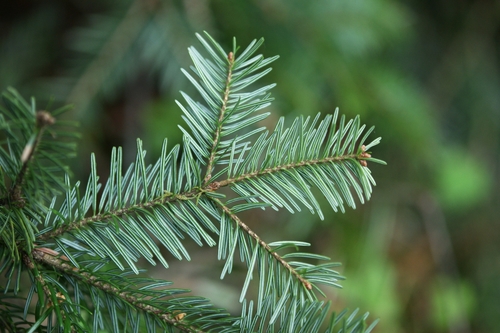
(c) Shuk Han (Nancy) Mak, some rights reserved (CC BY-NC), uploaded by Shuk Han (Nancy) Mak

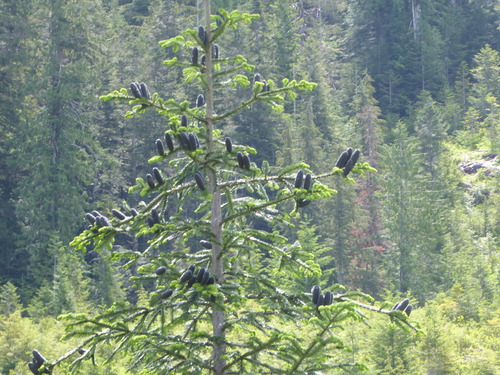
(c) ColinDJones, some rights reserved (CC BY-NC), uploaded by ColinDJones

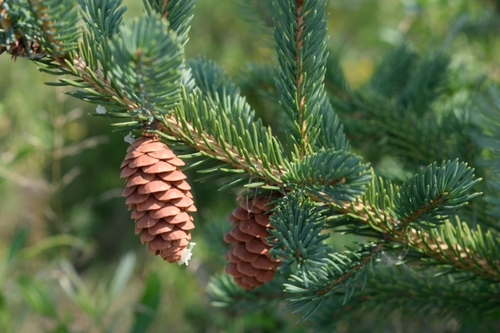
(c) Douglas Goldman, some rights reserved (CC BY-SA), uploaded by Douglas Goldman
What to Eat
Edible parts: Flowers, Gum, Inner bark, Seeds, Seedspod, Tea
Young male catkins can be eaten raw or cooked and used as a flavouring. Immature female cones are edible when cooked — the central portion becomes sweet and syrupy when roasted; the cones are about 5cm long. The inner bark can be eaten raw or cooked, or dried and ground into a powder for use as a soup thickener or bread additive. Usually harvested in spring, it is an emergency food used only when all else fails. The seed is raw-edible but only 2–4mm long and too fiddly to be worthwhile except in desperation. Young shoot tips make a refreshing tea rich in vitamin C. The trunk yields a gum suitable for chewing. Spruce oil, distilled from the leaves and twigs, is used commercially to flavour chewing gum, ice cream, soft drinks, and sweets.
Where to Find It
It is a cold temperate plant. It is frost hardy. It grows on a variety of soils and under a wide range of climates. It occur at the Arctic tree line in Canada. It suits hardiness zones 1-8.
Alaska, Australia, Canada, North America, Slovenia, USA,
How to Identify
A large evergreen tree. It grows 25-36 m high and spreads 3-6 m wide. It is cone shaped. The bark is smooth and thin but becomes darker and scaly with age. The branches turn down but lift at the tips. The leaves are straight and stiff and 15-22 mm long. The tip is pointed but not sharp. The leaves are green covered with a bloom. There are lines of white dots on all sides. They produce a fetid smell when crushed. The cones are oval and 5 cm long. They have a blunt tip and are without stalks. The scales are light brown and thin and tough. They are flexible and close fitting. They open in late summer releasing their seed. They are green at first and later become brown. The mature cones are easily compressed but the scales don't break. The seed are 2-4 mm long.
How to Grow
Propagation: Sow fresh seed in autumn in a cold frame to benefit from natural stratification, or sow stored seed as early in the year as possible under the same conditions. Light shade is preferable. Keep seed moist and cool during storage. Prick out seedlings into individual pots once large enough to handle and overwinter them in a greenhouse or cold frame. Plant out into permanent positions in early summer the following year, or grow on in an outdoor nursery bed for a further season. Spring frost protection may be needed. Semi-ripe terminal shoot cuttings, 5–8cm long, taken in August in a frame, protected from frost, root in spring. Mature terminal shoot cuttings, 5–10cm long, taken September/October in a cold frame, take 12 months to root. Soft to semi-ripe wood cuttings taken in early summer in a frame are slow but reliable.
Medicinal Uses
White spruce was widely used medicinally by several native North American tribes, particularly for chest complaints, though it sees little or no use in modern herbalism. An infusion of the cones has been used for urinary troubles. The inner bark is pectoral and has been chewed, and taken as an infusion, for TB, influenza, coughs, and colds, as well as for rheumatism. It has also been applied as a poultice to sores and infected areas and used to bandage cuts. Tea from the young shoot tips has antiseptic properties and is used for respiratory infections. A stem decoction serves as a herbal steam bath for rheumatism. The gum is antiseptic, digestive, laxative, pectoral, and salve-like; a decoction has been used for respiratory complaints. Trunk pitch has been applied as a salve to sores and cuts, and mixed with oil it has been used as a poultice for skin rashes, scabies, persistent scabs, and boils, as well as on wounds with blood poisoning. Rotten, dried, finely powdered wood has been used as a baby powder and as a treatment for skin rashes.
Other Uses
This fairly wind-resistant tree is suitable for shelterbelt planting; the cultivar 'Denstat' has been recommended for this purpose. Burning the leaves repels insects. Various native North American tribes made string from the long roots to stitch canoe bark and weave baskets. Rotten, dried, finely powdered wood doubles as a baby powder and skin rash treatment. The bark yields tannin, and a yellow-brown dye can be obtained from the rotten wood. Trunk pitch can be used to waterproof and seal canoes. The wood is straight-grained, resilient, light, soft, and not strong; used for construction and paper pulp. Its resonance and vibration-transmitting qualities make it well suited for guitars, violins, and piano soundboards.
Wikipedia
Source ↗Picea glauca, the white spruce, is a species of spruce native to the northern temperate and boreal forests in Canada and United States, North America. Picea glauca is native from central Alaska all through the east, across western and southern/central Canada to the Avalon Peninsula in Newfoundland, Quebec, Ontario and south to Montana, North Dakota, Minnesota, Wisconsin, Michigan, Upstate New York and Vermont, along with the mountainous and immediate coastal portions of New Hampshire and Maine, where temperatures are just barely cool and moist enough to support it. There is also an isolated population in the Black Hills of South Dakota and Wyoming. It is also known as Canadian spruce, skunk spruce, cat spruce, Black Hills spruce, western white spruce, Alberta white spruce, and Porsild spruce.
Production
It is slow growing. Trees can live for 200 years.
Notes
There are between 30 and 40 species of Picea.
Names & Synonyms
Abeto, Bela smreka
References (18)
- Coombes, A.J., 2000, Trees. Dorling Kindersley Handbooks. p 63
- Cundall, P., (ed.), 2004, Gardening Australia: flora: the gardener's bible. ABC Books. p 1040
- Facciola, S., 1998, Cornucopia 2: a Source Book of Edible Plants. Kampong Publications, p 169
- Farrar, J.L., 1995, Trees of the Northern United States and Canada. Iowa State University press/Ames p 102
- Hibbert, M., 2002, The Aussie Plant Finder 2002, Florilegium. p 233
- Holloway, P. S. & Alexander, G., 1990, Ethnobotany of the Fort Yukon Region, Alaska. Economic Botany, Vol. 44, No. 2 pp. 214-225
- http://www.botanic-gardens-ljubljana.com/en/plants
- Jernigan, K. (Ed.), et al, A Guide to the Ethnobotany of the Yukon-Kuskokwim Region. p 9
- Joyce, D., 1998, The Garden Plant Selector. Ryland, Peters and Small. p 171
- Kermath, B. M., et al, 2014, Food Plants in the Americas: A survey of the domesticated, cultivated and wild plants used for Human food in North, Central and South America and the Caribbean. On line draft. p 655
- Little, E.L., 1980, National Audubon Society Field Guide to North American Trees. Alfred A. Knopf. p 283
- Lord, E.E., & Willis, J.H., 1999, Shrubs and Trees for Australian gardens. Lothian. p 86
- MacKinnon, A., et al, 2009, Edible & Medicinal Plants of Canada. Lone Pine. p 30
- Mitt. Deutsch. Dendrol. Ges. 16:93. 1907
- Moerman, D. F., 2010, Native American Ethnobotany. Timber Press. p 398
- Morton,
- Plants for a Future database, The Field, Penpol, Lostwithiel, Cornwall, PL22 0NG, UK. http://www.scs.leeds.ac.uk/pfaf/
- Porsild, A.E., 1974, Rocky Mountain Wild Flowers. Natural History Series No. 2 National Museums of Canada. p 36