Pinus cembroides
Zucc.
Mexican pinyon, Mexican Nut Pine

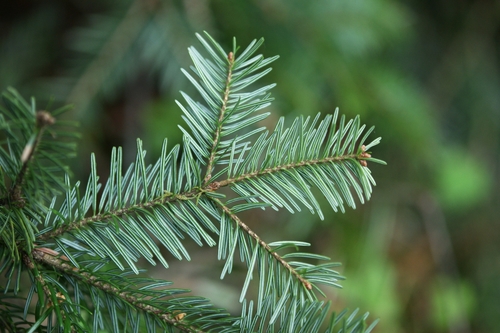
(c) CARLOS VELAZCO, some rights reserved (CC BY-NC), uploaded by CARLOS VELAZCO

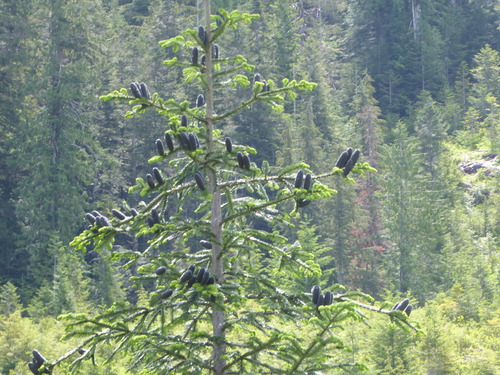
(c) José Belem Hernández Díaz, some rights reserved (CC BY), uploaded by José Belem Hernández Díaz

(c) Carlos G Velazco-Macias, some rights reserved (CC BY-NC), uploaded by Carlos G Velazco-Macias
What to Eat
Edible parts: Seeds, Nuts
The oily seed kernel is excellent eaten raw, roasted, or ground into a flour for bread and cakes, and can also be made into nut butter. Seeds are a good size at up to 15mm long. This species is noted as having the highest protein and lowest starch content of all the piñons — approximately 14.6% protein, 62% fat, and 17.3% carbohydrate — and is a major commercial seed source in Mexico. The inner bark is used only in times of dire need; it is dried, ground into a powder, and used as a thickener in soups or added to cereals in bread-making. The pulpwood also yields a vanillin flavouring as a by-product of resin processing.
Known Hazards
Where to Find It
It is a temperate plant. Plants will grow on most soils. They need wind protection. It does well in arid soils. It cannot tolerate temperatures below -5°C. It suits hardiness zones 7-8.
Africa, Australia, Central America, India, Mexico, North America, South Africa, Southern Africa, USA,
How to Identify
A small tree. It grows to 8 m high. It spreads 4.5 m wide. The crown is rounded. The leaves are short and grey-green. The cones are pale yellow and oval.
How to Grow
Thrives in a light well-drained sandy or gravelly loam. Dislikes poorly drained moorland soils. Established plants tolerate drought, succeeding in hot, dry positions. This species is not hardy in the colder areas of the country, it tolerates temperatures down to between -5 and -10°c. Leaf secretions inhibit the germination of seeds, thereby inhibiting the growth of other plants below the tree. A slow growing plant, it takes 25 years from seed before cones are formed. The tree takes 250 - 350 years to reach full maturity. The cones open and shed their seed whilst still attached to the tree. Plants are strongly outbreeding, self-fertilized seed usually grows poorly. They hybridize freely with other members of this genus. This species is sometimes held to include a number of very similar species which are here treated as separate entities. See P. edulis, P. monophylla and P. quadrifolia. These species differ mainly in the number of leaves in a bundle. The sub-species P. cembroides orizabensis. D. Baill. has larger seeds than the type. Plants in this genus are notably susceptible to honey fungus. Pine seeds are typically harvested in late summer to early autumn, usually from August to October (Northern Hemisphere), when cones begin to open and release seeds. Pine trees usually flower in spring, typically from March to June (Northern Hemisphere), depending on the species and climatic conditions. Growth rates vary significantly among pine species, but many can be considered fast-growing, reaching heights of 10 to 30 feet (3 to 9 meters) within 5 to 10 years, depending on species and environmental conditions. Pine species are generally not self-fertile; they require cross-pollination between different trees to produce seeds effectively.
Propagation: Sow seed in individual pots in a cold frame as soon as it is ripe, or in late winter. Stratification at 4°c for 6 weeks can improve germination of stored seed. Move seedlings to permanent positions as soon as possible, protecting them through the first winter or two. The root system is sparse, making early establishment critical. Plant trees when small — between 30 and 90cm, ideally around 5–10cm tall — under a good weed-excluding mulch. Larger transplants check badly and may show negligible growth for several years, with lasting damage to roots and wind resistance. Cuttings work only on trees under 10 years old, using single leaf fascicles with the base of the short shoot. Disbudding a few weeks before taking cuttings can help, but cuttings are generally slow to grow away.
Medicinal Uses
Gum that exudes from damaged parts of the tree is used to treat sore throats. Turpentine from pine resin is antiseptic, diuretic, rubefacient, and vermifuge. Taken internally it is valuable for kidney and bladder complaints; used both internally and as a rub or steam bath it treats rheumatic conditions. It is also beneficial to the respiratory system and helps with mucous membrane diseases, coughs, colds, influenza, and TB. Applied externally via liniment plasters, poultices, steam baths, and inhalers, it treats skin complaints, wounds, sores, burns, and boils.
Other Uses
The needles yield a tan or green dye and contain terpene, which is washed out by rain and harms germination in some plants including wheat. A gum pitch is used as a waterproofing glue and for repairing pottery. Oleo-resins occur in all pine tissues but are often insufficient for commercial extraction; they are obtained by tapping the trunk or by destructive distillation of the wood, with warmer-climate trees generally yielding more. Turpentine makes up roughly 20% of the oleo-resin, separated by distillation, and is used as a solvent for waxes, in varnish-making, and medicinally. The residual rosin is used on violin bows and in sealing wax and varnish. Pitch from the resin is used for waterproofing and wood preservation. The wood is soft, light, and close-grained, with a pleasant fragrance when burnt. It is used mainly for fuel and fence posts, and rarely as lumber.
Wikipedia
Source ↗Pinus cembroides, also known as pinyon pine, Mexican pinyon, Mexican nut pine, and Mexican stone pine, is a pine in the pinyon pine group. It is a small pine growing to about 20 m (66 ft) with a trunk diameter of up to 50 cm (20 in). It is native to western North America. It grows in areas with low levels of rainfall and its range extends southwards from Arizona, Texas and New Mexico in the United States into Mexico. It typically grows at altitudes between 1,600 and 2,400 m (5,200 and 7,900 ft). The seeds are large and form part of the diet of the Mexican jay and Abert's squirrel. They are also collected for human consumption, being the most widely used pine nut in Mexico.
Production
Trees grow slowly. They take 20 years to produce significant crops. Often they only produce a significant crop every 3-4 years.
Other Information
It is an important food source. The edible nuts are high in protein.
Notes
There are over 100 species of Pinus.
Names & Synonyms
Pino pinonero, Two-leaved Nut-pine
References (36)
- Abh. Math.-Phys. Cl. Koenigl. Bayer. Akad. Wiss. 1:392. 1832
- Ambasta, S.P. (Ed.), 2000, The Useful Plants of India. CSIR India. p 457 (var edulis)
- Arellanes, Y., et al, 2013, Influence of traditional markets on plant management in the Tehuacan Valley. Journal of Ethnobiology and Ethnomedicine 9:38
- Beckstrom-Sternberg, Stephen M., and James A. Duke. "The Foodplant Database." http://probe.nalusda.gov:8300/cgi-bin/browse/foodplantdb.(ACEDB version 4.0 - data version July 1994)
- Bodkin, F., 1991, Encyclopedia Botanica. Cornstalk publishing, p 800
- Brickell, C. (Ed.), 1999, The Royal Horticultural Society A-Z Encyclopedia of Garden Plants. Convent Garden Books. p 800
- Ciesla, W.M., 1998, Non-wood forest products from conifers. Non-wood forest products 12, FAO, Rome, p 73
- Cruz, I. M., et al, 2015, Edible fruits and seeds in the State of Mexico. Revista Mexicana de Ciencias Agricolas. Vol. 6. Num. 2 pp 331-346
- Cundall, P., (ed.), 2004, Gardening Australia: flora: the gardener's bible. ABC Books. p 1047
- Elias, T.S. & Dykeman P.A., 1990, Edible Wild Plants. A North American Field guide. Sterling, New York p 228
- Facciola, S., 1998, Cornucopia 2: a Source Book of Edible Plants. Kampong Publications, p 170
- FAO, 2012, Forest Genetic Resources Situation in Mexico. Final Report of Project TCP/ 3301 p 287
- Farjon, A., and Styles, B. T., 1997, Pinus (Pinaceae): Flora Neotropica, Vol. 75, pp. 1-291
- Felger, R.S., Ancient Crops for the Twenty first century, in Rickie, G.A., (ed), 1979, New Agricultural Crops, AAAS Selected Symposium 38. Westview Press, Colarado. p 10
- Flowerdew, B., 2000, Complete Fruit Book. Kyle Cathie Ltd., London. p 187
- Forest Genetic Resources Situation in Mexico, FAO 2012 Annex 15 p 286
- Gouldstone, S., 1978, Australian and New Zealand Guide to food bearing plants. Books for Pleasure. p 55
- Gouldstone, S., 1983, Growing your own Food-bearing Plants in Australia. Macmillan p 153
- Grandtner, M. M., 2008, World Dictionary of Trees. Wood and Forest Science Department. Laval University, Quebec, Qc Canada. (Internet database http://www.wdt.qc.ca)
- Hedrick, U.P., 1919, (Ed.), Sturtevant's edible plants of the world. p 496
- Kermath, B. M., et al, 2014, Food Plants in the Americas: A survey of the domesticated, cultivated and wild plants used for Human food in North, Central and South America and the Caribbean. On line draft. p 659
- Lyle, S., 2006, Discovering fruit and nuts. Land Links. p 328
- Mapes, C. & Basurto, F., 2016, Biodiversity and Edible Plants of Mexico. Chapter 5 in R. Lira, et al. (eds.), Ethnobotany of Mexico, Ethnobiology, Springer. p 91
- Menninger, E.A., 1977, Edible Nuts of the World. Horticultural Books. Florida p 154
- NYBG Herbarium "edible"
- Piedra-Malagón, E. M., et al, 2022, Edible native plants of the Gulf of Mexico Province. Biodiversity Data Journal 10: e80565 p 27
- Plants for a Future database, The Field, Penpol, Lostwithiel, Cornwall, PL22 0NG, UK. http://www.scs.leeds.ac.uk/pfaf/
- Ruiters-Welcome, A. K., 2019, Food plants of southern Africa. Ph.D. thesis. Univ. of Johannesburg p 86
- Saunders, C.F., 1948, Edible and Useful Wild Plants. Dover. New York. p 76
- Segura, S., et al, 2018, The edible fruit species in Mexico. Genet Resour Crop Evol (2018) 65:1767–1793
- van Wyk, B., 2005, Food Plants of the World. An illustrated guide. Timber press. p 297
- van Wyk, Be, & Gericke, N., 2007, People's plants. A Guide to Useful Plants of Southern Africa. Briza. p 22
- Welcome, A. K. & Van Wyk, B.-E., 2019, An inventory and analysis of the food plants of southern Africa. South African Journal of Botany 122 (2019) 136–179
- Wiersema, J. H. & Leon, B., 2013, World Economic Plants. A Standard Reference CRC Press. 2nd Ed. p 530
- Wickens, G.E., 1995, Edible Nuts. FAO Non-wood forest products. FAO, Rome. p176
- World Checklist of Useful Plant Species 2020. Royal Botanic Gardens, Kew