Pinus edulis
Engelm.
Pinyon Pine, Pine nut

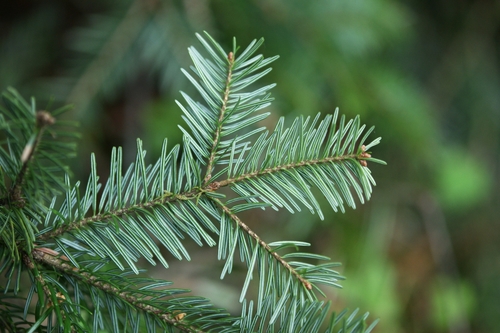
(c) jwaskowiak, some rights reserved (CC BY-NC)

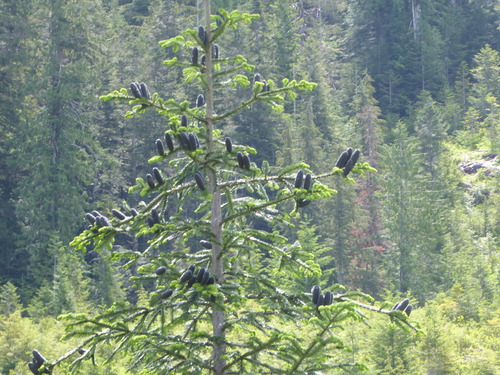
(c) Razzu Engen, some rights reserved (CC BY-NC-SA)

(c) Dane Larsen, some rights reserved (CC BY-NC)
What to Eat
Edible parts: Seeds, Bark, Resin
The seed is delicious raw or cooked, with a slightly resinous flavour. Up to 25mm long and rich in oil, protein, and thiamine, it contains around 15% protein and can be ground into a meal for use in stews, bread, and cakes, or made into nut butter. It is an important food for local Indigenous peoples and is sold commercially in Colorado and New Mexico markets, with around 450,000 kilos traded in American markets annually. Leaves can be brewed into a tea. Immature female cones are roasted — the soft centre becomes a sweet, syrupy food. The inner bark has a sweet flavour and can be cut into strips and cooked like spaghetti; it is also dried, ground into a powder, and used as a soup thickener or mixed into cereal flour for bread-making. Pitch hardened from the trunk serves as a chewing gum. The pulpwood yields a vanillin flavouring as a by-product of resin processing.
Known Hazards
Where to Find It
It is a temperate plant. It suits hardiness zones 5-9. Trees are very cold hardy. They can tolerate temperatures down to -35°C. It can grow in deserts.
Australia, Central America, Mexico, North America, USA,
How to Identify
A small tree. It grows 8-15 m high and spreads 6 m wide. The crown is rounded. The leaves are short and stiff and blue-green. They have 1-4 short needles. The cone is small. The seeds are large and nut like and edible.
Nutrition Score: 68/100
| Part | Moisture | kJ | kcal | Protein | Vit A | Vit C | Iron | Zinc |
|---|---|---|---|---|---|---|---|---|
| Nuts | 5.9 | 2632 | 630 | 11.6 | 3 | 2 | 3.1 | 4.3 |
How to Grow
Thrives in a light well-drained sandy or gravelly loam. Dislikes poorly drained moorland soils. Established plants tolerate drought. Succeeds in a hot dry position. Prefers an acid soil in full sun. A very hardy species, tolerating temperatures down to about -35°c when it is fully dormant. A slow-growing but long-lived tree in the wild, it takes about 25 years from seed before it produces seed. It then produces good crops every 3 - 4 years. The cones open and shed their seed whilst still attached to the tree. Trees take about 250 - 350 years to reach full maturity. This species is considered by some botanists to be no more than a form of P. cembroides, its main difference from that species is that it has leaves in bundles of two whereas P. cembroides usually has bundles of three. Plants are strongly outbreeding, self-fertilized seed usually grows poorly. They hybridize freely with other members of this genus. Leaf secretions inhibit the germination of seeds, thereby reducing the amount of plants that can grow below the tree. Plants in this genus are notably susceptible to honey fungus. An evergreen.
Propagation: Sow seed in individual pots in a cold frame as soon as it is ripe, or in late winter. Stratification at 4°c for 6 weeks can improve germination of stored seed. Move seedlings to permanent positions as soon as possible and protect them through the first winter or two. The root system is very sparse, so early planting matters greatly. Set trees out when small — between 30 and 90cm, ideally around 5–10cm tall — under a thorough weed-excluding mulch. Larger trees check badly and may make little growth for several years, with lasting damage to root development and wind resistance. Cuttings are only viable from trees under 10 years old, using single leaf fascicles with the base of the short shoot. Disbudding some weeks before taking cuttings can assist rooting, but cuttings are generally slow to establish.
Medicinal Uses
Turpentine from pine resin is antiseptic, diuretic, rubefacient, and vermifuge, and is valuable for kidney, bladder, and rheumatic complaints, as well as mucous membrane diseases and respiratory conditions. Externally it is applied as liniment plasters and poultices on cuts, boils, burns, and various skin problems. Heated pitch has been applied to the face to remove facial hair. The gum is used as a plaster on cuts and sores. An infusion of the leaves has been used as an emetic to cleanse the stomach. The leaves have been chewed in the treatment of venereal diseases, and burned with the smoke inhaled as a remedy for colds. The inner bark is expectorant.
Other Uses
The needles yield a tan or green dye and contain terpene, which rain leaches out and which suppresses germination in some plants including wheat. This species yields resin, though it is not commercially significant. Oleo-resins occur in all pine tissues and are obtained by tapping the trunk or through destructive distillation of the wood; warmer-climate trees typically yield more. Turpentine makes up roughly 20% of the oleo-resin and is used as a solvent for waxes, in varnish-making, and medicinally. Residual rosin is used on violin bows and in sealing wax and varnish. Pitch from the resin is used for waterproofing and wood preservation. The gum (almost certainly the resin) is used to waterproof baskets and canoes, repair pottery, and make turquoise mosaic, and has been used as a red paint on jars and bowls. For waterproofing containers, melted gum was poured inside, the container rotated to coat all interior surfaces, and more gum applied to the outside. The resin has also served as a glue for fixing turquoise in jewellery. Combined with sumac leaves (Rhus spp) and yellow ochre, the gum produces a black dye and ink: sumac leaves are boiled to a strong mixture, ochre is powdered and roasted, gum is added to the ochre and roasted again until the mixture reduces to a black powder, which is then dissolved into the sumac liquid to form a rich blue-black ink. The wood is light, soft, not strong, and brittle; it is used for fuel and fencing. Charcoal made from the wood is used in smelting, and the wood burns with few sparks.
Wikipedia
Source ↗Pinus edulis, the Colorado pinyon, two-needle piñon, pinyon pine, or simply piñon, is a pine in the pinyon pine group native to the Southwestern United States, used for its edible pine nuts.
Production
Trees are slow growing. They take 25 years to produce the first cones. They can live for 400 years. Cones open on the tree so need to be picked.
Other Information
The seeds or nuts are popular. It is cultivated.
Notes
There are over 100 species of Pinus. It is the emblem of the New Mexico State of the USA.
Names & Synonyms
American pinon, Colarado pinon, Pignolia, Rocky Mountain pinyon, Two-leaved Pine, Colorado pine
References (28)
- Andersen, B. A., 1996 ed, Desert Plants of Utah. Utah State University. p
- Beckstrom-Sternberg, Stephen M., and James A. Duke. "The Foodplant Database." http://probe.nalusda.gov:8300/cgi-bin/browse/foodplantdb.(ACEDB version 4.0 - data version July 1994)
- Brickell, C. (Ed.), 1999, The Royal Horticultural Society A-Z Encyclopedia of Garden Plants. Convent Garden Books. p 801
- Cheifetz, A., (ed), 1999, 500 popular vegetables, herbs, fruits and nuts for Australian Gardeners. Random House p 218
- Ciesla, W.M., 1998, Non-wood forest products from conifers. Non-wood forest products 12, FAO, Rome, p 73
- Cundall, P., (ed.), 2004, Gardening Australia: flora: the gardener's bible. ABC Books. p 1048
- Desert Survivors Online Plant Database
- Elias, T.S. & Dykeman P.A., 1990, Edible Wild Plants. A North American Field guide. Sterling, New York p 228
- Facciola, S., 1998, Cornucopia 2: a Source Book of Edible Plants. Kampong Publications, p 170
- Flowerdew, B., 2000, Complete Fruit Book. Kyle Cathie Ltd., London. p 187
- Glowinski, L., 1999, The Complete Book of Fruit Growing in Australia. Lothian. p 134
- Grandtner, M. M., 2008, World Dictionary of Trees. Wood and Forest Science Department. Laval University, Quebec, Qc Canada. (Internet database http://www.wdt.qc.ca)
- Hedrick, U.P., 1919, (Ed.), Sturtevant's edible plants of the world. p 497
- Jackes, D. A., Edible Forest Gardens
- Jordan, J., et al, 2006, Vascular Plants Utilized by the Plains Apache in Southwestern Oklahoma, Publications of the Oklahoma Biological Survey. 2nd Series. Volume 7: 24-33, 2006
- Kermath, B. M., et al, 2014, Food Plants in the Americas: A survey of the domesticated, cultivated and wild plants used for Human food in North, Central and South America and the Caribbean. On line draft. p 660
- Krochmal, A. & Krochmal, C., 1982, Uncultivated Nuts of The United States. United States Department of Agriculture Forest Service. p 64
- Mapes, C. & Basurto, F., 2016, Biodiversity and Edible Plants of Mexico. Chapter 5 in R. Lira, et al. (eds.), Ethnobotany of Mexico, Ethnobiology, Springer. p 91
- MINNIS,
- Moerman, D. F., 2010, Native American Ethnobotany. Timber Press. p 406
- Plants for a Future database, The Field, Penpol, Lostwithiel, Cornwall, PL22 0NG, UK. http://www.scs.leeds.ac.uk/pfaf/
- Saunders, C.F., 1948, Edible and Useful Wild Plants. Dover. New York. p 75
- van Wyk, B., 2005, Food Plants of the World. An illustrated guide. Timber press. p 297
- VESTAL,
- Wickens, G.E., 1995, Edible Nuts. FAO Non-wood forest products. FAO, Rome. p176
- Wiersema, J. H. & Leon, B., 2013, World Economic Plants. A Standard Reference CRC Press. 2nd Ed. p 531
- F. A. Wislizenus, Mem. tour N. Mexico 88. 1848
- World Checklist of Useful Plant Species 2020. Royal Botanic Gardens, Kew