Pinus monophylla
Torr. & Frém.
One-leaved Pine, Singleleaf pine

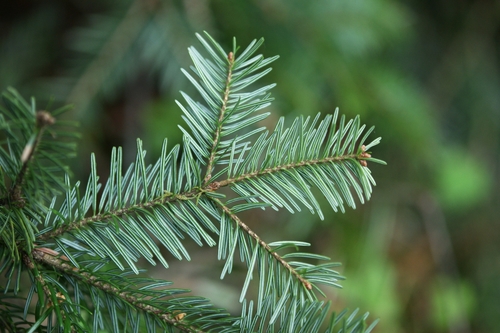
(c) Dawn Endico, some rights reserved (CC BY-SA)

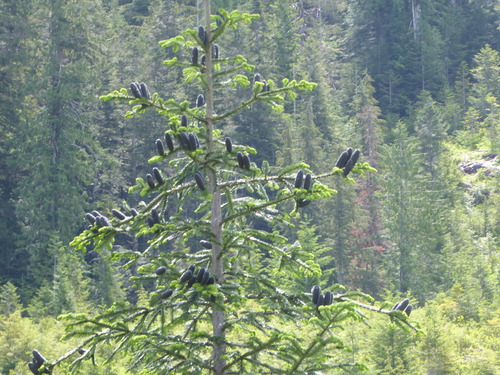
(c) Steve Dudrow, some rights reserved (CC BY-NC), uploaded by Steve Dudrow
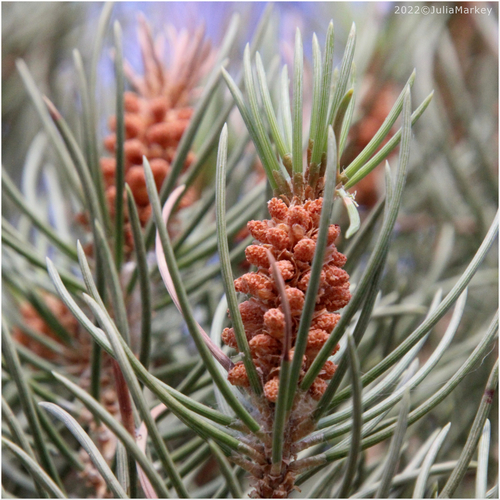
(c) juliamarkey, some rights reserved (CC BY-NC), uploaded by juliamarkey
What to Eat
Edible parts: Seeds, Nuts
The seeds can be eaten raw or cooked. They are oily with an agreeable almond-like flavour and are frequently used in sweetmeats and pastries. They are the lowest in protein and fats and the highest in starch of the piñons, and are an important food source for native peoples of Nevada and California. The seeds are a good size, up to 20mm long with a thin shell. Pitch from the trunk can be hardened and used as a chewing gum. A vanillin flavouring is also obtained as a by-product of resins released from the pulpwood.
Known Hazards
Where to Find It
It is a temperate plant. It grows naturally on dry rocky mountain slopes in the United States. It suits hardiness zones 6-9. It grows between 600-2,100 m above sea level. It can grow in deserts.
Australia, Central America, Mexico, North America, USA,
How to Identify
An evergreen pine tree. It grows 15 m high and is a broad cone shape. The bark is grey and has narrow ridges. The leaves are needle like and rigid and curved. They are 5 cm long and taper to a sharp point. They occur singly and are grey-green. They are on stout orange shoots. The flowers occur in separate clusters on young shoots. Male flowers are yellow and female flowers are red. The fruit is a cone 5.5 cm long. It is green but ripens to grey-brown.
How to Grow
Thrives in a light well-drained sandy or gravelly loam. Succeeds in a hot dry position. Dislikes poorly drained moorland soils. Established plants tolerate drought. A slow growing tree in the wild, taking 25 years from sowing until it produces a crop. It then usually produces cones annually, with heavy crops very 2 - 3 years. The tree is long-lived, taking 250 - 350 years to reach maturity. It grows well in southern England and in most of the drier parts of Britain. The cones take 2 summers to mature, they open and shed their seed whilst still attached to the tree. Closely related to P. cembroides and considered to be no more than a sub-species of it by some botanists. The main difference is that this species has its leaves singly whilst P. cembroides has them in groups of two or three. Plants are strongly outbreeding, self-fertilized seed usually grows poorly. They hybridize freely with other members of this genus. Leaf secretions inhibit the germination of seeds, thereby reducing the amount of plants that can grow beneath the tree. Plants in this genus are notably susceptible to honey fungus.
Propagation: Sow seed in individual pots in a cold frame as soon as it is ripe, or in late winter if not. Stored seed benefits from a short stratification of 6 weeks at 4°c to improve germination. Seedlings should be planted into their permanent positions as soon as possible and protected for the first winter or two. Because the root system is very sparse, early transplanting is essential for good establishment. Plant trees when small, between 30 and 90cm — ideally at around 5–10cm tall. A thorough weed-excluding mulch greatly aids establishment. Larger transplants check badly and show little growth for several years, with poor root development and wind resistance as a result. Cuttings can be taken, but only from trees less than 10 years old. Use single leaf fascicles with the base of the short shoot. Disbudding the shoots several weeks before taking cuttings can help, though cuttings are generally slow to establish.
Medicinal Uses
Single leaf piñon was used medicinally by several native North American Indian tribes, who valued it particularly for its antiseptic and vulnerary properties and its beneficial effect on the respiratory system; it is little or not at all used in modern herbalism. Turpentine from pine resin is antiseptic, diuretic, rubefacient, and vermifuge, used internally for kidney and bladder complaints and both internally and externally for rheumatic conditions. It is also employed for mucous membrane diseases, respiratory complaints, VD, TB, coughs, colds, and influenza. A decoction is used to expel tapeworms and other internal parasites. Externally it is applied via liniment plasters and inhalers. A poultice of melted gum has been applied to cuts and sores. Heated pitch has been applied to the face as a depilatory, used as a poultice for sciatic pains and muscular soreness, and has also been applied as a face cream to prevent sunburn. Cooked pitch has been used by women to stop menstruation and induce infertility, and has also been given to adolescent girls to help maintain youthfulness and promote longevity. The gum is applied as a plaster on sores and cuts.
Other Uses
A tan or green dye can be obtained from the needles. The needles release a substance called terpene when washed by rain, which inhibits germination of some plants including wheat. Oleo-resins occur in the tissues of all pines, obtained by tapping the trunk or by destructive distillation of the wood; trees from warmer regions generally yield more. Turpentine makes up an average of 20% of the oleo-resin and is separated by distillation, with uses including as a solvent for waxes, in varnish, and medicinally. The remaining rosin is used by violinists on their bows and in sealing wax and varnish. Pitch derived from the resin is used for waterproofing and as a wood preservative. The gum (almost certainly the resin) is used for waterproofing canoes, baskets, and water containers, for repairing pottery, and in making turquoise mosaic; it also serves as an adhesive for mending pottery. The bark has been used as a roofing material. The wood is light, soft, weak, and brittle, used primarily as fuel and for fence posts; it is also made into charcoal for smelting. It has high combustibility, burns well, and gives off a pleasant aroma when burning.
Wikipedia
Source ↗Pinus monophylla, the single-leaf pinyon, (alternatively spelled piñon) is a pine in the pinyon pine group, native to North America. The range is in southernmost Idaho, western Utah, Arizona, southwest New Mexico, Nevada, eastern and southern California and northern Baja California. It occurs at moderate altitudes from 1,200 to 2,300 m (3,900 to 7,500 ft), rarely as low as 950 m (3,120 ft) and as high as 2,900 m (9,500 ft). It is widespread and often abundant in this region, forming extensive open woodlands, often mixed with junipers in the Pinyon-juniper woodland plant community. Single-leaf pinyon is the world's only one-needled pine.
Production
It is slow growing and long lived. It can grow over 400 years. Cones take 2 years to mature.
Other Information
They are high in starch and low in protein.
Notes
There are over 100 species of Pinus.
Names & Synonyms
Pinon monoaguja, Colarado pinyon, Nut pine, Singleleaf pinyon pine, Stone pine
References (25)
- Andersen, B. A., 1996 ed, Desert Plants of Utah. Utah State University.
- Beckstrom-Sternberg, Stephen M., and James A. Duke. "The Foodplant Database." http://probe.nalusda.gov:8300/cgi-bin/browse/foodplantdb.(ACEDB version 4.0 - data version July 1994)
- Brickell, C. (Ed.), 1999, The Royal Horticultural Society A-Z Encyclopedia of Garden Plants. Convent Garden Books. p 801
- Ciesla, W.M., 1998, Non-wood forest products from conifers. Non-wood forest products 12, FAO, Rome, p 73
- Coombes, A.J., 2000, Trees. Dorling Kindersley Handbooks. p 70
- Couture, M. D., 1978, Recent and Contemporary Foraging Practices of the Harney Valley Paiute. Thesis, Portland State University
- Cundall, P., (ed.), 2004, Gardening Australia: flora: the gardener's bible. ABC Books. p 1049
- Elias, T.S. & Dykeman P.A., 1990, Edible Wild Plants. A North American Field guide. Sterling, New York p 193
- Facciola, S., 1998, Cornucopia 2: a Source Book of Edible Plants. Kampong Publications, p 170
- Farjon, A., and Styles, B. T., 1997, Pinus (Pinaceae): Flora Neotropica, Vol. 75, pp. 1-291
- Grandtner, M. M., 2008, World Dictionary of Trees. Wood and Forest Science Department. Laval University, Quebec, Qc Canada. (Internet database http://www.wdt.qc.ca)
- Hedrick, U.P., 1919, (Ed.), Sturtevant's edible plants of the world. p 498
- Kermath, B. M., et al, 2014, Food Plants in the Americas: A survey of the domesticated, cultivated and wild plants used for Human food in North, Central and South America and the Caribbean. On line draft. p 661
- Krochmal, A. & Krochmal, C., 1982, Uncultivated Nuts of The United States. United States Department of Agriculture Forest Service. p 67
- Lyle, S., 2006, Discovering fruit and nuts. Land Links. p 328
- Mapes, C. & Basurto, F., 2016, Biodiversity and Edible Plants of Mexico. Chapter 5 in R. Lira, et al. (eds.), Ethnobotany of Mexico, Ethnobiology, Springer. p 91 (As Pinus juarezensis)
- Moerman, D. F., 2010, Native American Ethnobotany. Timber Press. p 409
- Plants for a Future database, The Field, Penpol, Lostwithiel, Cornwall, PL22 0NG, UK. http://www.scs.leeds.ac.uk/pfaf/
- Rep. exped. Rocky Mts. 319, t. 4. 1843
- Saunders, C.F., 1948, Edible and Useful Wild Plants. Dover. New York. p 75
- Segura, S., et al, 2018, The edible fruit species in Mexico. Genet Resour Crop Evol (2018) 65:1767–1793
- Standley, P. C., 1926, Trees and Shrubs of Mexico. Contributions from the United States National Herbarium Vol. 23 p
- Wickens, G.E., 1995, Edible Nuts. FAO Non-wood forest products. FAO, Rome. p176
- Wiersema, J. H. & Leon, B., 2013, World Economic Plants. A Standard Reference CRC Press. 2nd Ed. p 532
- World Checklist of Useful Plant Species 2020. Royal Botanic Gardens, Kew