Pinus muricata
D. Don
Bishop’s pine, Rough Pine
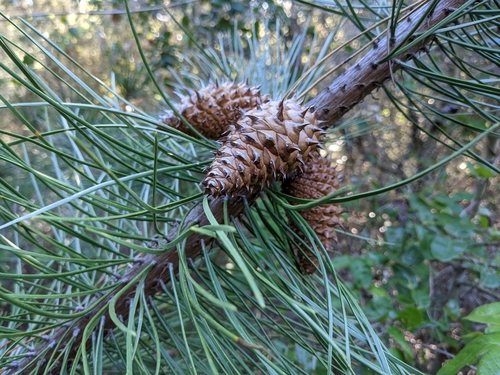
(c) Eric Brunschwiler, some rights reserved (CC BY-NC), uploaded by Eric Brunschwiler
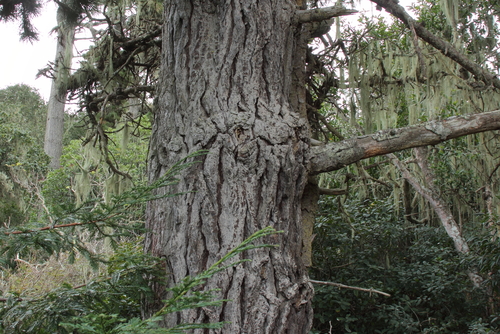
(c) R.J. Adams, some rights reserved (CC BY-NC), uploaded by R.J. Adams
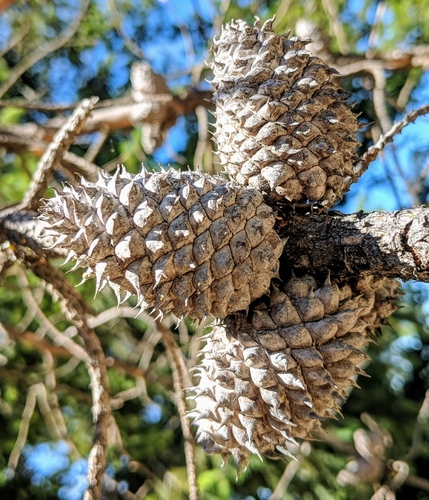
(c) Uki D. Lucas, some rights reserved (CC BY), uploaded by Uki D. Lucas
What to Eat
Edible parts: Seeds
The seeds can be eaten raw or cooked, and dried for later use. A vanillin flavouring is obtained as a by-product of resins released from the pulpwood.
Known Hazards
Where to Find It
It is a warm temperate plant. It grows naturally on low hills and in coastal regions in California in the United States. It suits hardiness zones 8-10. Hobart Domain and Government House.
Australia, Falklands, Mexico*, North America, Tasmania, USA,
How to Identify
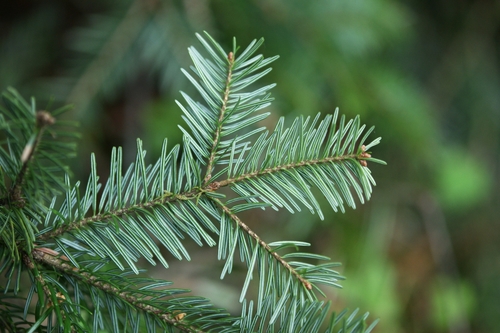
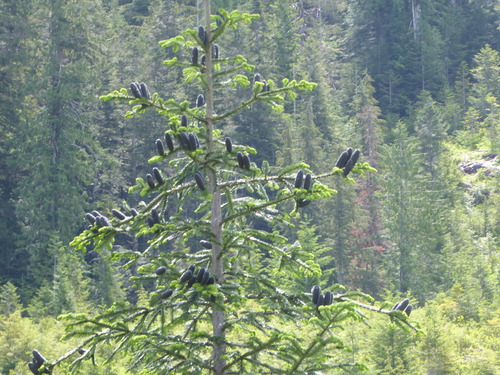
An evergreen pine tree. It grows 25 m high and is tall and broad. The bark is purple-brown with thick furrows. The leaves are needle like and stiff. They are 15 cm long and grow in pairs. The male and female flowers are in separate clusters on young shoots. The male flowers are yellow and the female flowers are red. The fruit is a red-brown cone and is 8 cm long. The cones occur in rings and remain for several years.
How to Grow
Thrives in a light well-drained sandy or gravelly loam. Dislikes poorly drained moorland soils. Established plants tolerate drought and are very resistant to maritime exposure. Mature trees produce a broad heavy crown and are somewhat likely to be blown down in severe gales. This species is not hardy in the colder areas of the country, it tolerates temperatures down to about -10°c. It grows quickly on barren acidic sandy soils, with annual growths of 1.8 metres being recorded for young trees. Trees from the northern provenances maintain rapid height growth for longer than trees from the southern provenances, but both remain vigorous in girth. Trees grow larger in cultivation than they do in the wild. The cones are about 8cm long, they remain on the tree and retain viable seed for up to 25 years, opening up and scattering the seed after a forest fire. Plants are strongly outbreeding, self-fertilized seed usually grows poorly. They hybridize freely with other members of this genus. Leaf secretions inhibit the germination of seeds, thereby reducing the amount of plants that can grow beneath the tree. Plants in this genus are notably susceptible to honey fungus.
Propagation: Sow seed in individual pots in a cold frame as soon as it is ripe, or in late winter if not. Stored seed benefits from 6 weeks of cold stratification at 4°c to improve germination. Move seedlings to permanent positions as soon as possible and protect them for the first winter or two. The root system is very sparse, so early planting is important for good establishment. Plant trees when small — between 30 and 90cm, ideally around 5–10cm tall — with a thorough weed-excluding mulch. Larger transplants check badly, barely growing for several years, with poor root development and wind resistance. Cuttings are only viable from trees under 10 years old, using single leaf fascicles with the base of the short shoot. Disbudding a few weeks before taking cuttings can help, though cuttings are generally slow to establish.
Medicinal Uses
Turpentine from pine resin is antiseptic, diuretic, rubefacient, and vermifuge. Taken internally, it treats kidney and bladder complaints, and is used both internally and as a rub or steam bath for rheumatic conditions. It is beneficial to the respiratory system and useful for mucous membrane diseases, coughs, colds, influenza, and TB. Externally it treats skin complaints, wounds, sores, burns, and boils, applied as liniment plasters, poultices, herbal steam baths, and inhalers.
Other Uses
This is a very fast-growing tree, even in exposed maritime conditions, making it an excellent shelterbelt species. Trees in a very exposed position at Rosewarne in north Cornwall reached 10m in 29 years. A tan or green dye comes from the needles. The needles release terpene when rained on, which has a negative effect on germination of some plants including wheat. Oleo-resins are extracted by tapping the trunk or by destructive distillation of wood; warmer-region trees tend to yield more. Turpentine makes up around 20% of the oleo-resin and is separated by distillation, used as a solvent for waxes, in varnish, and medicinally. Rosin, the residue after turpentine removal, is used on violin bows, in sealing wax, and varnish. Pitch from the resin is used for waterproofing, wood preservation, and as an adhesive. The roots have been used in basket-making. The wood is heavy, coarse-grained, weak, and usually knotty — of little commercial value, though occasionally milled into lumber.
Wikipedia
Source ↗Pinus muricata, the bishop pine, is a pine with a very restricted range: mostly in California, including several offshore Channel Islands, and a few locations in Baja California, Mexico. Stands of Bishop Pine are also found in Point Reyes National Seashore, in Marin County north of San Francisco, always on the west side of the San Andreas Fault that runs through the park. It is always on or near the coast. In San Luis Obispo County it is found alone or in stands scattered on the coastal mountains and hills from Morro Bay to Shell Beach. A few stands of the tree are seen on the hills above the Sycamore Canyon Resort in Avila Beach. Bishop pine seems to prefer already disturbed, unvegetated areas where it probably faces less competition from oaks and shrubs. The common name "bishop pine" resulted from the tree having been first identified near the Mission of San Luis Obispo in San Luis Obispo, California. This tree has a large number of common names and other prior scientific names, due primarily to numerous variant forms. Other English names that have occasionally been used are prickle cone pine, Obispo pine, Santa Cruz pine and dwarf marine pine.
Other Information
It is cultivated.
Notes
There are over 100 species of Pinus.
References (7)
- Coombes, A.J., 2000, Trees. Dorling Kindersley Handbooks. p 71
- Cundall, P., (ed.), 2004, Gardening Australia: flora: the gardener's bible. ABC Books. p 1049
- Moerman, D. F., 2010, Native American Ethnobotany. Timber Press. p 410
- Plants for a Future database, The Field, Penpol, Lostwithiel, Cornwall, PL22 0NG, UK. http://www.scs.leeds.ac.uk/pfaf/
- Trans. Linn. Soc. London 17:441. 1837
- Upson, R., & Lewis R., 2014, Updated Vascular Plant Checklist and Atlas for the Falkland Islands. Falklands Conservation and Kew.
- Wiersema, J. H. & Leon, B., 2013, World Economic Plants. A Standard Reference CRC Press. 2nd Ed. p 532