Pinus pinea
Linn.
Roman Pine, Stone Pine

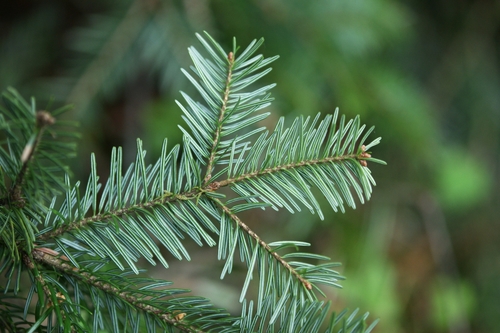
(c) Paul Asman and Jill Lenoble, some rights reserved (CC BY), uploaded by Paul Asman and Jill Lenoble

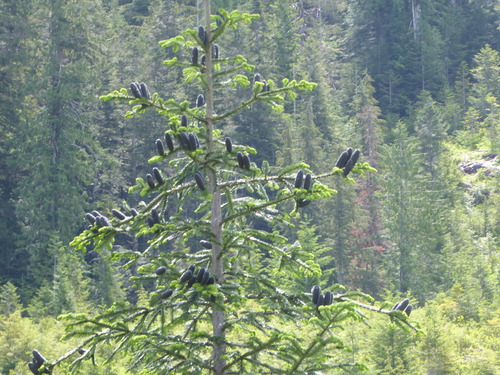
(c) Fred Watson, some rights reserved (CC BY-NC), uploaded by Fred Watson

(c) Ben Zerante, some rights reserved (CC BY-NC), uploaded by Ben Zerante
What to Eat
Edible parts: Seeds, Flavouring, Spice, Shoots - drink
The seeds are a standout edible — oil-rich with a soft texture and a hint of resin, they make a delicious snack and can serve as a staple food. Measuring up to 20mm x 10mm, they are one of the main sources of commercial pine nuts. They can be added to ice cream, cakes, and puddings, or ground into a powder for use as a thickener and flavouring in soups. Young pine cones can also be ground into a powder and used as a flavouring. A vanillin flavouring is additionally obtained as a by-product of resins released from the pulpwood.
Known Hazards
Where to Find It
It is a warm temperate plant. It grows naturally on sandy soils near the coast in Mediterranean regions. It grows well in coastal areas. It can tolerate drought once established. It can grow in arid places. It suits hardiness zones 8-10. Arboretum Tasmania. Hobart Domain and Government House, Launceston City Park, Westbury oval. National Arboretum Canberra.
Africa, Albania, Australia, Balkans, Britain, Canada, Colombia, Croatia, Cyprus, Europe, France, Gibraltar, Greece, Hawaii, Iraq, Israel, Italy, Lebanon, Mediterranean*, Mexico, Middle East, North Africa, North America, Portugal, Sicily, South Africa, Southern Africa, South America, Spain, Syria, Tasmania, Tunisia, Turkey, Türkiye, USA, Yugoslavia,
How to Identify
A flat topped tree. It can reach 27 m tall. The branches radiate upwards like the ribs of an umbrella. The bark is light brown and cracks into long flat plates. The leaves are needles which grow in pairs. They are dark green and long. The male flowers are golden. The female flowers are green. The cones are large and heavy and globe shaped. One cones contains about 100 seeds. Cones take about 3 years to ripen. The nuts or seeds are eaten.
Nutrition Score: 73/100
| Part | Moisture | kJ | kcal | Protein | Vit A | Vit C | Iron | Zinc |
|---|---|---|---|---|---|---|---|---|
| Nuts | 6.7 | 2368 | 567 | 24 | 3 | 1.9 | 9.2 | 4.3 |
How to Grow
Thrives in a light well-drained sandy or gravelly loam. Dislikes poorly drained moorland soils and shady positions. Established plants tolerate drought. Succeeds in a chalky soil. This species is hardy to about -18°c. Although sometimes thought to be somewhat tender in this country, it is perfectly hardy as far north as south-east Scotland. The trees transplant very badly if they are allowed to stay in one position for more than 2 years. This is usually a short-lived tree, rarely surviving for much more than 100 years. The Italian stone pine is extensively planted for its edible seeds in Europe. The variety 'Fragilis' has thin shelled seeds and is the form most widely cultivated. Trees take between 10 and 20 years to produce cones from seed. One of our plants produced its first young female cone when 7 years old, though this did not mature because it was not fertilised. A 20 year old plant at Kew was about 4.5 metres tall with a number of trunks and had more than 15 mature cones. A very old specimen at Kew was carrying lots of 1st and 2nd year cones in July 1996. The cones ripen in their third year and can then remain unopened on the tree for several years. Plants are strongly outbreeding, self-fertilized seed usually grows poorly. This species does not hybridize with other members of this genus. Leaf secretions inhibit the germination of seeds, thereby reducing the amount of plants that can grow under the trees. Plants in this genus are notably susceptible to honey fungus. Pine species are generally not self-fertile; they require cross-pollination between different trees to produce seeds effectively. Pine seeds are typically harvested in late summer to early autumn, usually from August to October (Northern Hemisphere), when cones begin to open and release seeds. Pine trees usually flower in spring, typically from March to June (Northern Hemisphere), depending on the species and climatic conditions. Growth rates vary significantly among pine species, but many can be considered fast-growing, reaching heights of 10 to 30 feet (3 to 9 meters) within 5 to 10 years, depending on species and environmental conditions.
Propagation: Sow seed in individual pots in a cold frame as soon as it is ripe, or in late winter if not. Stored seed benefits from 6 weeks of cold stratification at 4°c to improve germination. Move seedlings to their permanent positions as soon as possible and protect them for the first winter or two. The root system is very sparse, so early planting is essential for good establishment. Plant trees when small — between 30 and 90cm, ideally around 5–10cm tall — with a thorough weed-excluding mulch. Larger transplants check badly, barely growing for several years, with poor root development and wind resistance. Cuttings are only viable from trees under 10 years old, using single leaf fascicles with the base of the short shoot. Disbudding a few weeks before taking cuttings can help, though cuttings are typically slow to establish.
Medicinal Uses
Turpentine from pine resin is antiseptic, diuretic, rubefacient, and vermifuge. Taken internally, it treats kidney and bladder complaints, and is used both internally and as a rub or steam bath for rheumatic conditions. It benefits the respiratory system and is useful for mucous membrane diseases, coughs, colds, influenza, and TB. Externally it treats skin complaints, wounds, sores, burns, and boils, applied as liniment plasters, poultices, herbal steam baths, and inhalers.
Other Uses
A tan or green dye comes from the needles. The needles release terpene when rained on, negatively affecting germination of some plants including wheat. The tree yields resin and turpentine. Oleo-resins are extracted by tapping the trunk or by destructive distillation of the wood; warmer-region trees tend to yield more. Turpentine makes up around 20% of the oleo-resin, separated by distillation, and used as a solvent for waxes, in varnish-making, and medicinally. Rosin, the residue after turpentine removal, is used on violin bows and in sealing wax and varnish. Pitch from the resin is used for waterproofing and wood preservation. Pines are valuable in agroforestry for timber production, erosion control, and as windbreaks, and can improve soil quality and provide wildlife habitat. The tree is suited to use as a screen, specimen, or seashore planting, though aggressive surface roots are possible. Pine seeds are an important food source for birds, mammals, and other wildlife, while the dense evergreen foliage offers shelter, nesting, and roosting sites. Bark, needle litter, and fallen branches provide overwintering habitat for invertebrates. The resinous scent of the tree may have some pest-repellent properties. The wood is used for carpentry and furniture-making.
Wikipedia
Source ↗Pinus pinea is an evergreen tree reaching 10m tall and wide, growing at a medium rate. Monoecious with wind-pollinated, non-self-fertile flowers blooming May to June with seeds ripening in April. Hardy to UK zone 8. Noted for attracting wildlife. Grows in light sandy to medium loamy, well-drained soils and tolerates poor fertility. Adaptable to mildly acidic, neutral, and basic mildly alkaline soils. Requires full sun and cannot tolerate shade. Tolerates drought and both dry and moist soils. Withstands strong winds but not maritime exposure.
Production
Seeds need warm summers to ripen. Seeds are stored in their cones until ready to be eaten or they become rancid. The seed take 3 years to ripen. The trees take 15 years until they beging to bear and 50 years until they reach maximum production.
Other Information
It is cultivated.
Notes
Biblical references Hosea 14:8. There are over 100 species of Pinus.
Names & Synonyms
Cam fistigi, Fistik cami, Italian stone pine, Parasol Pine, Pignoli, Pignolia, Pin, Pina, Pinie, Pinj, Pino, Pinocchi, Pino negral, Pinon mediterraneo, Pinonero, Sanaubar thamari, Umbrella Pine
References (59)
- Bianchini, F., Corbetta, F., and Pistoia, M., 1975, Fruits of the Earth. Cassell. p 188
- Blamey, M and Grey-Wilson, C., 2005, Wild flowers of the Mediterranean. A & C Black London. p 27
- Blanco-Salas, J., et al, 2019, Wild Plants Potentially Used in Human Food in the Protected Area “Sierra Grande de Hornachos” of Extremadura (Spain). Sustainability 2019, 11, 456
- Bodkin, F., 1991, Encyclopedia Botanica. Cornstalk publishing, p 802
- Bonet, M. A. & Valles, J., 2002, Use of non-crop food vascular plants in Montseny biosphere reserve (Catalonia, Iberian Peninsula). International Journal of Food Sciences and Nutrition (2002) 53, 225–248
- Bremness, L., 1994, Herbs. Collins Eyewitness Handbooks. Harper Collins. p 73
- Brickell, C. (Ed.), 1999, The Royal Horticultural Society A-Z Encyclopedia of Garden Plants. Convent Garden Books. p 802
- Cheifetz, A., (ed), 1999, 500 popular vegetables, herbs, fruits and nuts for Australian Gardeners. Random House p 219
- Ciesla, W.M., 1998, Non-wood forest products from conifers. Non-wood forest products 12, FAO, Rome, p 72
- Coombes, A.J., 2000, Trees. Dorling Kindersley Handbooks. p 72
- Cundall, P., (ed.), 2004, Gardening Australia: flora: the gardener's bible. ABC Books. p 1050
- Dogan, Y., et al, 2004, The Use of Wild Edible Plants in Western and Central Anatolia (Turkey). Economic Botany 58(4) pp. 684-690
- Dolina, K. & Luczaj, L., 2014, Wild food plants used on the Dubrovnik coast (south-eastern Croatia) Acta Soc Bot Pol 83(3):175–181
- Ertug, F., 2004, Wild Edible Plants of the Bodrum Area. (Mugla, Turkey). Turk. J. Bot. 28 (2004): 161-174
- Ertug, F, Yenen Bitkiler. Resimli Türkiye Florası -I- Flora of Turkey - Ethnobotany supplement
- Facciola, S., 1998, Cornucopia 2: a Source Book of Edible Plants. Kampong Publications, p 170
- FAO, 1995, Edible Nuts. Non Wood Forest Products 5.
- Flowerdew, B., 2000, Complete Fruit Book. Kyle Cathie Ltd., London. p 187
- Glowinski, L., 1999, The Complete Book of Fruit Growing in Australia. Lothian. p 135
- Gouldstone, S., 1978, Australian and New Zealand Guide to food bearing plants. Books for Pleasure. p 55
- Hall, N. et al, 1972, The Use of Trees and Shrubs in the Dry Country of Australia, AGPS, Canberra. p 398
- Hardwick, G., 2001, Economically Useful Plants for Northern Australia: Master Species List. Crusader eBooks.
- Harris, E & J., 1983, Field Guide to the Trees and Shrubs of Britain. Reader's Digest. p 251
- Hedrick, U.P., 1919, (Ed.), Sturtevant's edible plants of the world. p 498
- Heywood, V. H. & Zohary, D.,1995, A Catalogue of the Wild Relatives of Cultivated Plants Native to Europe. Flora Mediterranea 5 - 1995, p 381
- Hussey, B.M.J., Keighery, G.J., Cousens, R.D., Dodd, J., Lloyd, S.G., 1997, Western Weeds. A guide to the weeds of Western Australia. Plant Protection Society of Western Australia. p 14
- Jardin, C., 1970, List of Foods Used In Africa, FAO Nutrition Information Document Series No 2.p 46
- Kayabasi, N. P., et al, 2018, Wild edible plants and their traditional use in the human nutrition in Manyas (Turkey). Indian Journal of Traditional Knowledge. Vol. 17(2), April 2018, pp 299-306
- Kermath, B. M., et al, 2014, Food Plants in the Americas: A survey of the domesticated, cultivated and wild plants used for Human food in North, Central and South America and the Caribbean. On line draft. p 662
- Kiple, K.F. & Ornelas, K.C., (eds), 2000, The Cambridge World History of Food. CUP p 433, 1834
- Lentini, F. and Venza, F., 2007, Wild food plants of popular use in Sicily. J Ethnobiol Ethnomedicine. 3: 15
- Lord, E.E., & Willis, J.H., 1999, Shrubs and Trees for Australian gardens. Lothian. p 87
- Menninger, E.A., 1977, Edible Nuts of the World. Horticultural Books. Florida p 153, 155
- Mulherin, J., 1994, Spices and natural flavourings. Tiger Books, London. p 109
- Paczkowska, G. & Chapman, A.R., 2000, The Western Australian Flora. A Descriptive Calatogue. Western Australian Herbarium. p 28
- Phillips, R. & Rix, M., 2002, The Botanical Garden Vol. 1. Trees and Shrubs. MacMillan. p 50
- Plants for a Future database, The Field, Penpol, Lostwithiel, Cornwall, PL22 0NG, UK. http://www.scs.leeds.ac.uk/pfaf/
- Recher, P, 2001, Fruit Spirit Botanical Gardens Plant Index. www.nrg.com.au/~recher/ seedlist.html p 3
- Rivera, C., et al, 2005, The Ethnobotanical Study of Local Mediterranean Food Plants as Medicinal Resources in Southern Spain. Journal of Physiologyand Pharmacology. 56, Suppl. 1, 97-114
- Rivera, D. et al, 2006, Gathered Mediterranean Food Plants - Ethnobotanical Investigations and Historical Development, in Heinrich M, Müller WE, Galli C (eds): Local Mediterranean Food Plants and Nutraceuticals. Forum Nutr. Basel, Karger, 2006, vol 59, pp 18–74
- Roa, J. A. G. & Boada, D. S. G., 2018, Fundación para el Fortalecimiento de la Fruticultura y Plantas Alimenticias no Convencionales en Colombia.
- Royal Botanic Gardens, Kew (1999). Survey of Economic Plants for Arid and Semi-Arid Lands (SEPASAL) database. Published on the Internet; http://www.rbgkew.org.uk/ceb/sepasal/internet [Accessed 6th May 2011]
- Ruiters-Welcome, A. K., 2019, Food plants of southern Africa. Ph.D. thesis. Univ. of Johannesburg p 87
- Ryan, S., 2008, Dicksonia. Rare Plants Manual. Hyland House. p 69
- Schuler, S., (Ed.), 1977, Simon & Schuster's Guide to Trees. Simon & Schuster. No. 34
- Sfikas, G., 1984, Trees and shrubs of Greece. Efstathiadis Group. Athens. p 40
- Segura, S., et al, 2018, The edible fruit species in Mexico. Genet Resour Crop Evol (2018) 65:1767–1793
- Solomon, C., 2001, Encyclopedia of Asian Food. New Holland. p 281
- Sp. pl. 2:1000. 1753
- Staples, G.W. and Herbst, D.R., 2005, A tropical Garden Flora. Bishop Museum Press, Honolulu, Hawaii. p 70
- Tardio, J., et al, Ethnobotanical review of wild edible plants in Spain. Botanical J. Linnean Soc. 152 (2006), 27-71
- van Wyk, B, van Wyk, P, and van Wyk B., 2000, Photographic guide to Trees of Southern Africa. Briza. p 236
- van Wyk, B., 2005, Food Plants of the World. An illustrated guide. Timber press. p 297
- van Wyk, Be, & Gericke, N., 2007, People's plants. A Guide to Useful Plants of Southern Africa. Briza. p 22
- Welcome, A. K. & Van Wyk, B.-E., 2019, An inventory and analysis of the food plants of southern Africa. South African Journal of Botany 122 (2019) 136–179
- Wickens, G.E., 1995, Edible Nuts. FAO Non-wood forest products. FAO, Rome. p 51, 178
- Wiersema, J. H. & Leon, B., 2013, World Economic Plants. A Standard Reference CRC Press. 2nd Ed. p 533
- World Checklist of Useful Plant Species 2020. Royal Botanic Gardens, Kew
- Zeven, A. C. & de West, J. M. J., 1982, Dictionary of cultivated plants and their regions of diversity. Wageningen. p 117