Smallanthus sonchifolius
(Poepp. & Endl.) H. Rob.
Yacon

(c) Forest and Kim Starr, some rights reserved (CC BY)

(c) edibleoffice, some rights reserved (CC BY-NC-SA)

(c) peganum, some rights reserved (CC BY-SA)
What to Eat
Edible parts: Tubers, Leaves, Root, Juice, Vegetable
Generally, yacón is cultivated in different countries for food and medicinal use. Since 1960, cultivation has spread from South America to countries such as New Zealand and Japan.
Where to Find It
It grows in the tropical and subtropical Andes. It is mostly between 900-2,750 m altitude. They can grow up to 3,300 m altitude. It can develop under short and long daylengths. It needs temperatures above 4-5°C. It needs deep rich, well drained soils. In Yunnan.
Andes*, Argentina, Asia, Australia, Bolivia, Brazil, Britain, China, Colombia, Ecuador, Europe, Japan, Korea, New Zealand, North America, Peru*, Philippines, SE Asia, South America, Taiwan, Tasmania, USA, Venezuela,
How to Identify
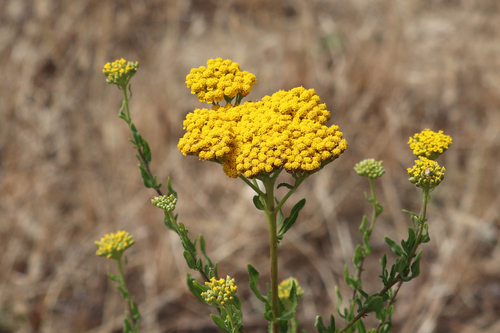
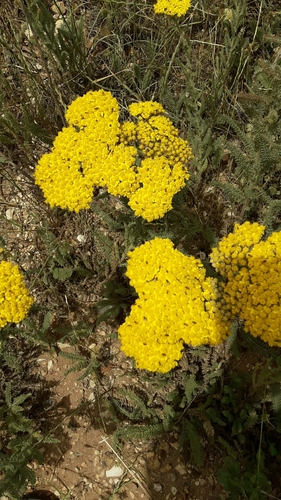
A herb. There is an underground stem which lasts from year to year and this produces stems above ground each year. The roots are purple but orange inside. The tall stems above ground are covered with fine hairs. The stems are green in colour and covered with purple spots. The stems can be 1.5 m high. The leaves are opposite, thin and smooth with teeth along the edge. Other stems come from the axils of the lower stems. The yellow or orange flowers are on the ends of these stems. They are composite flowers. The tubers are cylinder shaped and joined together.
Nutrition Score: 21/100
| Part | Moisture | kJ | kcal | Protein | Vit A | Vit C | Iron | Zinc |
|---|---|---|---|---|---|---|---|---|
| Roots - dried | 7.5 | — | — | 6.5 | — | — | — | — |
How to Grow
Plants are grown from offsets or slips. Sections about 10-20 cm long are taken from the base of the main stem. Often these have roots attached. They are planted throughout the year as long as there is enough moisture. Earth is mounded up once around the plants.
Propagation: Seed - sow in containers in a nursery and only just cover the seed. Prick out the seedlings into individual pots as soon as they are large enough to handle and plant them out when 15cm or more tall Division when the plant is dormant. The plant forms 2 distinct types of tuber. Large tubers, usually on thin roots 2 - 5cm long, are used as storage organs and do not have the capacity to form new shoots. These are the tubers that are usually eaten. Smaller tubers are formed in a cluster around the stem. These form the shoots for the following year's growth and so are the ones that should be used for propagation. Dig up the plants once the top growth has died down. Remove the large tubers for food, cut the main stems back to about 10cm long and store these stems with their cluster of small tubers in a cool frost-free place. Do not let them dry out. Pot them up several weeks before you wish to plant them out and when they come into active growth divide each cluster into individual shoots with their tubers attached and re-pot these. Plant them out when they are growing actively. Cuttings of basal shoots as new growth begins. Harvest the shoots with plenty of underground stem when they are about 8 - 10cm above the ground. Pot them up into individual pots and keep them in light shade until they are rooting well then plant them out.
Medicinal Uses
Yacón is believed to have health promoting effects. The tubers contain phytoalexines, phenolic compounds and high concentrations of fructanes, which are considered as bioactive compounds that are beneficial for human health. The leaves have been shown to be radical scavenging, cytoprotective and anti-hyperglycemic active. There has been considerable research into yacón products for medicinal purposes because of its antidiabetic and hypoglycaemic effect. In Andean folk medicine, yacón is used against liver and kidney disease whereas, in Bolivia, it is used against diabetes and digestive problems.
Other Uses
Plants might be useful in agroforestry because they succeed under trees, though in relatively sunless climes the plants are not likely to do well in the shade of trees.
Production
The crop takes 7 months to mature. Tubers will store in a dark place for several months. A tuber can be 200 cm long, 3-10 cm wide and weigh 2 kg.
Other Information
It is a commercially cultivated vegetable.
Notes
It has high oligofructose content. The leaves contain anti-oxidants.
Names & Synonyms
Arboloco, Aricoma, Aricuma, Bolivian sunroot, Llacon, Jiquima, Jiquimilla, Leafcup yacon, Strawberry jicama
References (26)
- Brako, L., & Zarucchi, J. L., 1993. Catalogue of the flowering plants and gymnosperms of Peru. Monogr. Syst. Bot. Missouri Bot. Gard. 45.
- Castillo, R. O., 1995, Plant Genetic Resources in the Andes: Impact, Conservation, and Management. Crop Science 35:355-360 (As Polymnia sonchifolius)
- Choque Deigado, G. T., et al, 2013, Yacon (Smallanthus sonchifolius): A Functional Food. Plant Foods for Human Nutrition. 68(3): 222-228.
- Facciola, S., 1998, Cornucopia 2: a Source Book of Edible Plants. Kampong Publications, p 41
- Globally Important Agricultural Heritage Systems (GIAHS) Application. Fao ca3178 en
- Hermandez Bermejo, J.E., and Leon, J. (Eds.), 1994, Neglected Crops. 1492 from a different perspective. FAO Plant Production and Protection Series No 26. FAO, Rome. p18, 176
- Hibbert, M., 2002, The Aussie Plant Finder 2002, Florilegium. p 238
- Jørgensen, P. M., & S. León-Yánez, eds. 1999. Catalogue of the vascular plants of Ecuador. Monogr. Syst. Bot. Missouri Bot. Gard. 75
- Kiple, K.F. & Ornelas, K.C., (eds), 2000, The Cambridge World History of Food. CUP p 1884
- Kay, D.E., 1973, Root Crops, Digest 2, Tropical Products Institute, London, p 187
- Kays, S. J., and Dias, J. C. S., 1995, Common Names of Commercially Cultivated Vegetables of the World in 15 languages. Economic Botany, Vol. 49, No. 2, pp. 115-152 (As Polymnia sonchifolia)
- Lim, T. K., 2015, Edible Medicinal and Non Medicinal Plants. Volume 9, Modified Stems, Roots, Bulbs. Springer p 67, 77
- Markle, G. M., et al., eds. 1998. Food and feed crops of the United States, ed. 2.
- Nov. gen. sp. pl. 3:47, t. 254. 1843
- Phytologia 39:51. 1978
- Plants for a Future database, The Field, Penpol, Lostwithiel, Cornwall, PL22 0NG, UK. http://www.scs.leeds.ac.uk/pfaf/ (As Polymnia edulis)
- Recher, P, 2001, Fruit Spirit Botanical Gardens Plant Index. www.nrg.com.au/~recher/ seedlist.html p 3
- Tapia, M. E., The role of under-utilised plant species with regard to increased food security and improved health of poor poeople, in mountain regions. IIAP-PNUD/Peru (As Polymnia sonchifolia)
- Tindall, H.D., 1983, Vegetables in the tropics. Macmillan p. 92
- Torre, de la L., et al, 2008, Enciclopedia de las Plantas Útiles del Ecuador. Herbario QCA. Pontificia Universidad Católica del Ecuador. p 234
- Ulian, T., et al, 2020, Unlocking plant resources to support food security and promote sustainable agriculture. Plants, People, Planet. 2020;2:421–445.
- USDA, ARS, National Genetic Resources Program. Germplasm Resources Information Network - (GRIN). [Online Database] National Germplasm Resources Laboratory, Beltsville, Maryland. Available: www.ars-grin.gov/cgi-bin/npgs/html/econ.pl (10 April 2000)
- Wiersema, J. H. & B. León. 1999. World economic plants: a standard reference. (World Econ Pl)
- Wiersema, J. H. & Leon, B., 2013, World Economic Plants. A Standard Reference CRC Press. 2nd Ed. p 640
- World Checklist of Useful Plant Species 2020. Royal Botanic Gardens, Kew
- Zardini, E., 1991, Ethnobotanical notes on "yacon," Polymnia sonchifolia (Asteraceae). In: Econ. Bot. 45:72-85 [As Polymnia sonchifolia Poepp. & Endl.]