Pritchardia pacifica
Seem & Wendl.
Fiji Fan Palm, Pacific fan palm

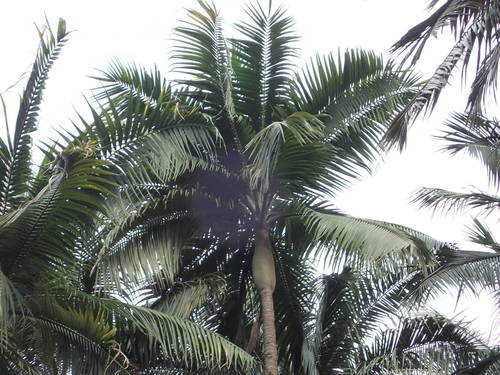
(c) Ahmad Fuad Morad, some rights reserved (CC BY-NC-SA)
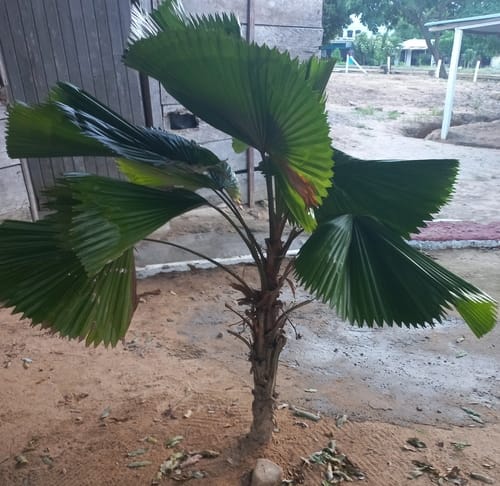
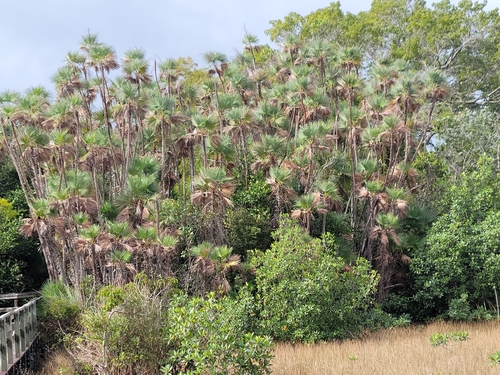
(c) Victor Manuel Garcia, some rights reserved (CC BY-NC)
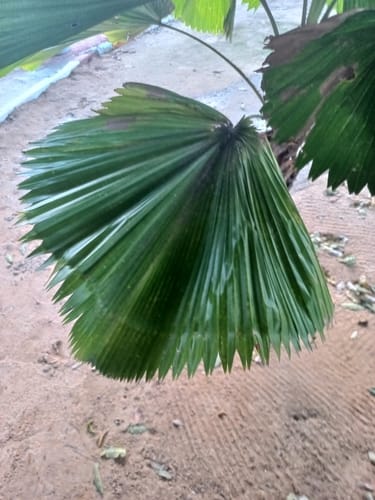
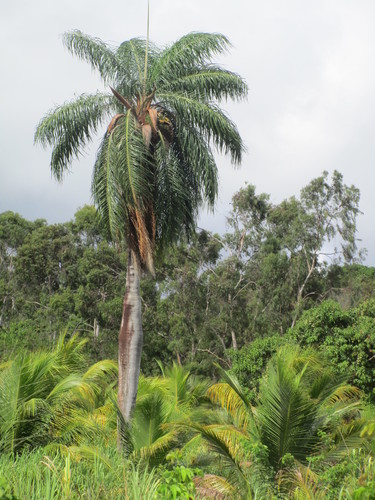
(c) Victor Manuel Garcia, some rights reserved (CC BY-NC)
What to Eat
Edible parts: Fruit, Seeds, Palm heart ?
The seeds are eaten raw, and the small fruit are particularly popular with children. The palm heart may also be edible.
Known Hazards
Where to Find It
It is a tropical plant. It grows in tropical dry forests. It needs well drained soil. It will grow in sun of light shade. Adelaide Botanical Gardens. In the Cairns Botanical Gardens. In Townsville Queens garden. It suits hardiness zones 11-12.
Asia, Australia, Cook Islands, Dominican Republic, Fiji, Hawaii, India, Indonesia, Kiribati, Marquesas, Marshall Islands, Micronesia, Nauru, Pacific*, Rotuma, Samoa, SE Asia, Tokelau, Tonga*, Tuvalu, USA, Vanuatu, West Indies,
How to Identify
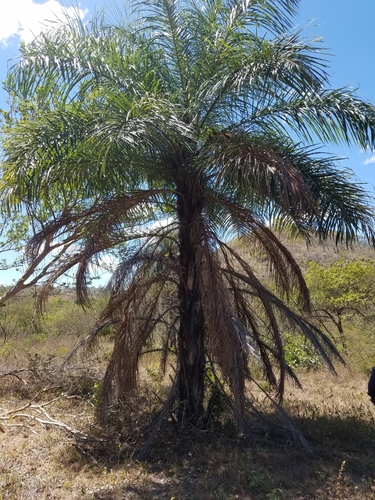
A fan palm. It grows to about 10-15 m high. The trunk is 20 cm across. It has vertical cracks. The trunk is slim and covered with old leaf bases especially near the top. It has large stiff, fan shaped leaves. They can be 1.8 m long. These are held erect. It has many fine segments. The flowers grow among the leaves. Several flowering stalks occur. There is a distinct stalk and flowers in a cluster near the tip. The fruit are produced in abundance. They are small, round and black when ripe. They are 12 mm across.
How to Grow
Plants are grown from seed. Seed germinate easily. Young plants can easily die.
Propagation: Seed - when sown fresh it can germinate in 30 days.
Other Uses
The leaves were traditionally used to make special, large, umbrella-fans for chiefs. The trunk has sometimes been used as a ridge beam.
Wikipedia
Source ↗Pritchardia pacifica, the Fiji fan palm, or piu, is a species of palm tree in the genus Pritchardia that is native to Tonga. It is also found in Fiji, Samoa, and the north-eastern part of India (especially in the tribal areas of Arunachal Pradesh, where people use it as thatched roofing), and the Marquesas. However, these populations are likely to be human introductions. This species is found in tropical dry forests.
Production
Once established, plants are fast growing in the tropics.
Other Information
A common palm in the Pacific and the seeds are commonly eaten in some places. The small fruit are especially eaten by children. It is cultivated.
Notes
There are about 40 Pritchardia species.
Names & Synonyms
Dabam, Fakamalu, Fak maru, Masei, Niu masei, Niu piu, Pacific Fan palm, Palem kipas fiji, Piu, Sakiki, Te bam
References (26)
- Balick, M.J. and Beck, H.T., (Ed.), 1990, Useful palms of the World. A Synoptic Bibliography. Colombia p 567
- Blomberry, A. & Rodd, T., 1982, Palms. An informative practical guide. Angus & Robertson. p 151
- Brickell, C. (Ed.), 1999, The Royal Horticultural Society A-Z Encyclopedia of Garden Plants. Convent Garden Books. p 833
- Clarke, W.C. & Thaman, R.R., 1993, Agroforestry in the Pacific Islands: Systems for sustainability. United Nations University Press. New York. p 82
- Cundall, P., (ed.), 2004, Gardening Australia: flora: the gardener's bible. ABC Books. p 1085
- Gibbons, M., 1993, Palms. Compact study Guide and Identifier. Sandstone. p 65
- Gibbons, M., 2003, A pocket guide to Palms. Chartwell Books. p 173
- Hibbert, M., 2002, The Aussie Plant Finder 2002, Florilegium. p 240
- Jones, D.L., 1994, Palms throughout the World. Smithtonian Institution, Washington. p 54, 314
- Lebot, V. & Sam, C., Green desert or ‘all you can eat’? How diverse and edible was the flora of Vanuatu before human introductions?. Terra australis 52 p 410
- Marinelli, J. (Ed), 2004, Plant. DK. p 377
- McClatchey, W., Thaman, R., & Vodonaivalu, S., 2000, A Preliminary Checklist of the Flora of Rotuma with Rotuman Names. Pacific Science (2000) Vol. 54, No. 4: 345-363
- Parham, B. E. V., 1972, Plants of Samoa. New Zealand Department of Scientific and Industrial Research. Information Series. No. 85 p 90
- Riffle, R.L. & Craft, P., 2003, An Encyclopedia of Cultivated Palms. Timber Press. p 422
- Smith, A.C., 1979, Flora Vitiensis Nova, Lawaii, Kuai, Hawaii, Volume 1 p 397
- Staples, G.W. and Herbst, D.R., 2005, A tropical Garden Flora. Bishop Museum Press, Honolulu, Hawaii. p 626
- Sukarya, D. G., (Ed.) 2013, 3,500 Plant Species of the Botanic Gardens of Indonesia. LIPI p 809
- Thaman, R.R., 1976, The Tongan Agricultural System, University of the South Pacific, Suva, Fiji. p 420
- Thaman, R. R., 1987, Plants of Kiribati: A listing and analysis of vernacular names. Atoll Research Bulletin No. 296
- Thaman, R. R., et al, 1994, The Flora of Nauru. Atoll Research Bulletin No. 392. Smithsonian Institute p 56
- Thaman, R. R, 2016, The flora of Tuvalu. Atoll Research Bulletin No. 611. Smithsonian Institute p 42
- Watling, D., 2005, Palms of the Fiji Islands. Environmental Consultants (Fiji) Ltd. p 122, 167
- H. Wendland, Bonplandia 10:197, t. 15. 1862
- Whistler, W. A., 1988, Ethnobotany of Tokelau: The Plants, Their Tokelau Names, and Their Uses. Economic Botany 42(2): 155-176
- Whistler, W. A., in Cox. P. A. et al (Ed.), 1991, Islands, Plants and Polynesians. Dioscorides Press Portland, Oregon. p 61
- Zeven, A. C. & de West, J. M. J., 1982, Dictionary of cultivated plants and their regions of diversity. Wageningen. p 61