Anthemis cotula
L.
Mayweed, Stinking chamomile

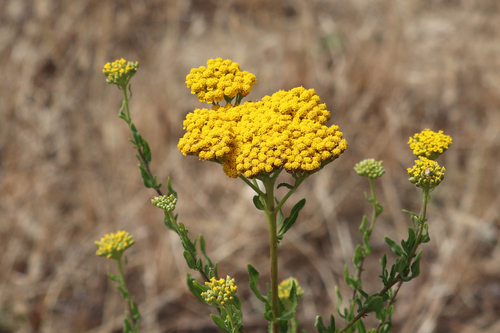
(c) Jim, some rights reserved (CC BY-NC-SA)

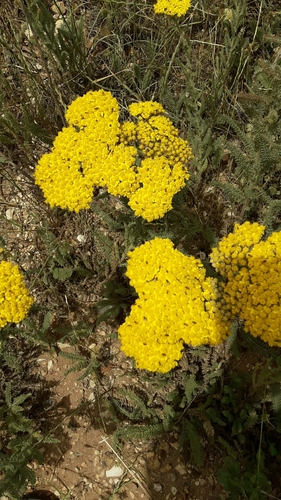
(c) Daniel Newberry, some rights reserved (CC BY-NC), uploaded by Daniel Newberry
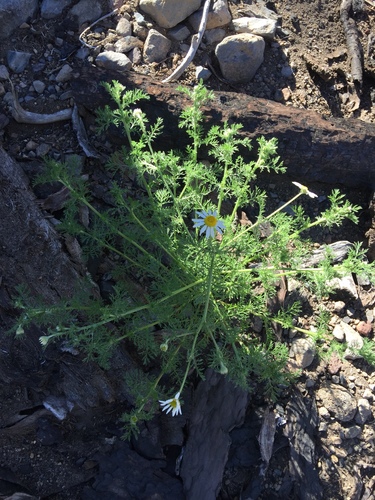
(c) Courtney Kelly Jett, some rights reserved (CC BY-NC), uploaded by Courtney Kelly Jett
What to Eat
Edible parts: Leaves, Flowers, Flavouring, Tea
Edible Parts: Leaves Edible Uses: Tea The herb is used as a flavouring in Peru. It is aromatic. Caution is advised, there are some reports of toxicity. A herb tea is made from the flowers in a similar way to camomile tea and it has a similar though weaker effect medicinally. The odour is not very pleasant and so it is not commonly used.
Known Hazards
Where to Find It
It is a temperate plant and grows in waste areas. In Argentina it grows from sea level to 1,500 m above sea level.
Albania, Algeria, Argentina, Armenia, Asia, Australia, Brazil, Britain, Canada, Caucasus, Central America, Chile, China, Dominican Republic, Europe, France, Germany, Greece, Hawaii, India, Ireland, Italy, Korea, Luxembourg, Mediterranean, Mexico, Middle East, Netherlands, New Zealand, North Africa, North America, Pacific, Pakistan, Paraguay, Peru, Portugal, Saudi Arabia, South America, Spain, Uruguay, USA, Tasmania, Turkey, Türkiye, Uruguay, West Indies,
How to Identify
A small annual herb. It grows 20-60 cm high. It has a bad smell. The stems are erect and may or may not be branched. The leaves are divided 1-3 times. The last segment is narrow and pointed. The flowers are in daisy like heads. They are white and at the end of the plant.
How to Grow
Prefers a sunny position and a well-drained soil that is neutral to slightly acid. Succeeds in heavy clay soils. Bees dislike this plant. The leaves contain glands which release a most disagreeable odour when the plant is handled and can cause allergic reactions in people.
Propagation: Seed - best sown outdoors as soon as it is ripe. Most of the seed germinates in the autumn.
Medicinal Uses
Antispasmodic Astringent Diaphoretic Diuretic Emetic Emmenagogue Epilepsy Stings Tonic Mayweed is closely related to camomile, but is far less effective as a medicine. It has been used as an antispasmodic and to induce menstruation and was traditionally used to treat supposedly hysterical conditions related to the uterus. It is rarely used in contemporary herbal medicine. The whole plant is antispasmodic, astringent, diaphoretic, diuretic, emetic, emmenagogue and tonic. It is used internally as a tea, which can be made either from the flowers or the whole plant, though the flowers are less unpleasant and so are more commonly used. An infusion is used in the treatment of a variety of complaints such as rheumatism, epilepsy, asthma, colds and fevers. Applied externally, it is used as a poultice on piles or to draw splinters out of the body, and can also be applied to the bath water. The leaves are rubbed onto insect stings. Some people are allergic to the plant and this remedy could give them painful blisters. This herb is contraindicated for pregnant women or nursing mothers.
Other Uses
Dye Repellent The growing and the dried plant is said to repel mice and fleas, it can also be used as an insecticide. A gold dye is obtained from the whole plant. Special Uses Scented Plants
Wikipedia
Source ↗Anthemis cotula, also known as stinking chamomile or mayweed, is a flowering annual plant with a noticeable and strong odor. The odor is often considered unpleasant, and it is from this that it gains the common epithet "stinking". In pre-colonial times, its distribution was limited to Europe and Africa; though it was established in most of Europe, it was not present in Finland, Ireland, or the northernmost reaches of Scotland, in spite of the fact that these countries feature climatic regions favorable to this plant and are in proximity to countries where the species is native, such as Russia, Estonia, Lithuania and England. It has successfully migrated to the American continents where it can be found growing in meadows, alongside roads, and in fields. The name "cotula" is the Latin form of κοτύλη kotylē, the Greek word for "small cup", describing the shape of the flowers; it was assigned by Carl Linnaeus in his work Species Plantarum in 1753. Anthemis cotula is also known by a wide variety of other names, including mather, dog- or hog's-fennel, dog-finkle, dog-daisy, pig-sty-daisy, chigger-weed, mayweed, Johnnyweed, maroute, Maruta cotula, Cotula Maruta foetida, Manzanilla loca, wild chamomile, Camomille puante. Foetid Chamomile, maithes, maithen, mathor mayweed chamomile, camomille des chiens, camomille puante, stinkende Hundskamille, camomila-de-cachorro, macéla-fétida, and manzanilla hedionda.
Notes
There are about 100 Anthemis species.
Names & Synonyms
Amargaza, Dog fennel, Hou chun huang ju, Magarza, Mansanilla, Manzanilla cimarrona, Papatya, Stinking mayweed
References (16)
- Altschul, S.V.R., 1973, Drugs and Foods from Little-known Plants. Notes in Harvard University Herbaria. Harvard Univ. Press. Massachusetts. no. 4984
- Ambasta S.P. (Ed.), 2000, The Useful Plants of India. CSIR India. p 44
- Blamey, M and Grey-Wilson, C., 2005, Wild flowers of the Mediterranean. A & C Black London. p 441
- Blanco-Salas, J., et al, 2019, Wild Plants Potentially Used in Human Food in the Protected Area “Sierra Grande de Hornachos” of Extremadura (Spain). Sustainability 2019, 11, 456
- Bodkin, F., 1991, Encyclopedia Botanica. Cornstalk publishing, p 87
- Facciola, S., 1998, Cornucopia 2: a Source Book of Edible Plants. Kampong Publications, p 32
- Flora of Pakistan.
- Gunes, S. et al, 2018, Survey of wild food plants for human consumption in Karaisali (Adana-Turkey). Indian Journal of Traditional Knowledge. Vol. 17(2), April 2018, pp 290-298
- Hovsepyan, R., et al, 2016, Food as a marker for economy and part of identity: traditional vegetal food of Yezidis and Kurds in Armenia. Journal of Ethnic Foods. 3:32-41
- Lamp, C & Collet F., 1989, Field Guide to Weeds in Australia. Inkata Press. p 23
- MacKinnon, A., et al, 2009, Edible & Medicinal Plants of Canada. Lone Pine. p 358
- Malezas Comestibles del Cono Sur, INTA, 2009, Buernos Aires
- Paczkowska, G. & Chapman, A.R., 2000, The Western Australian Flora. A Descriptive Catalogue. Western Australian Herbarium. p 155
- Plants for a Future database, The Field, Penpol, Lostwithiel, Cornwall, PL22 0NG, UK. http://www.scs.leeds.ac.uk/pfaf/
- Sp. pl. 2:894. 1753
- Tasmanian Herbarium Vascular Plants list p 3