Ratibida columnifera
(Nutt.) Wooton & Standl.
Prairie coneflower, Mexican hat

(c) d_carrillo, some rights reserved (CC BY-NC)

(c) d_carrillo, some rights reserved (CC BY-NC)

no rights reserved
What to Eat
Edible parts: Leaves - tea, Flowers - tea
A pleasant-tasting tea is made from the leaves and flower heads.
Where to Find It
It is a temperate plant. It grows in the prairie region of the USA. It suits hardiness zones 4-9.
Argentina, Australia, Mexico, North America*, Slovenia, South America, USA,
How to Identify
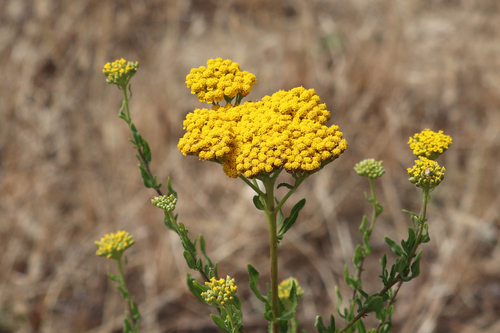
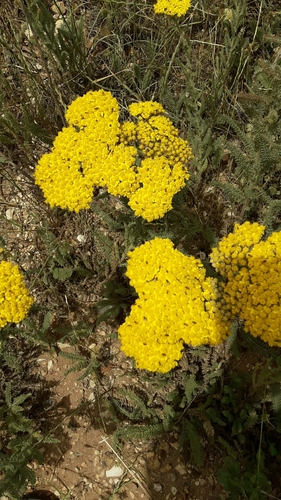
A daisy family plant that keeps growing from year to year. It grows 60 cm high and spreads 45 cm wide. The leaves are alternate and deeply divided into narrow segments. They are 5-10 cm long. The flowers are yellow disks. The flowers heads occur as several together in cone like disks. They are 1-5 cm high. The fruit is a grey-black flattened achene.
How to Grow
Propagation: Sow seed in a cold frame in early spring, just barely covering it, in a sunny position. When seedlings are large enough to handle, prick them out into individual pots and plant out in early summer. Division in spring is possible but very difficult due to the plant's long taproot.
Medicinal Uses
The leaves and stems are analgesic. An infusion is used to relieve headache pain and to treat stomach aches and fevers. A decoction is used as a wash to relieve pain and treat poison ivy rash, and also as a wash to draw poison from a rattlesnake bite.
Other Uses
None known
Wikipedia
Source ↗Ratibida columnifera, commonly known as upright prairie coneflower, rocketflower, Mexican hat, and longhead prairie coneflower, is a perennial species of flowering plant in the genus Ratibida in the family Asteraceae. It is native to much of North America and inhabits prairies, plains, roadsides, and disturbed areas.
Notes
There are 5 Ratibida species.
Names & Synonyms
References (11)
- Beckstrom-Sternberg, Stephen M., and James A. Duke. "The Foodplant Database." http://probe.nalusda.gov:8300/cgi-bin/browse/foodplantdb.(ACEDB version 4.0 - data version July 1994)
- Contr. U.S. Natl. Herb. 19:706. 1915
- Cormack, R. G. H., 1967, Wild Flowers of Alberta. Commercial Printers Edmonton, Canada. p 390
- Cundall, P., (ed.), 2004, Gardening Australia: flora: the gardener's bible. ABC Books. p 1133
- Facciola, S., 1998, Cornucopia 2: a Source Book of Edible Plants. Kampong Publications, p 41
- Hibbert, M., 2002, The Aussie Plant Finder 2002, Florilegium. p 245 (Ratibida columnifera)
- http://www.botanic-gardens-ljubljana.com/en/plants
- https://www.fireflyforest.com/flowers/category/edible-plants/ Edible Plants – Southeastern Arizona Wildflowers and Plants
- Kiple, K.F. & Ornelas, K.C., (eds), 2000, The Cambridge World History of Food. CUP p 1762
- Lim, T. K., Edible Medicinal and Non-Medicinal Plants Volume 7 Flowers
- Moerman, D. F., 2010, Native American Ethnobotany. Timber Press. p 469