Arctium lappa
L.
Burdock, Beggar's buttons, Edible burdock

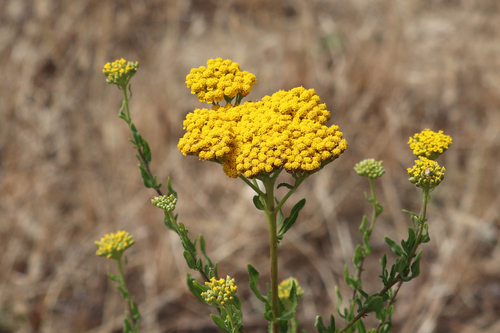
(c) tlit46, some rights reserved (CC BY-NC), uploaded by tlit46

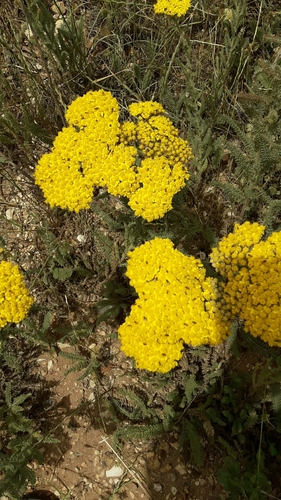
(c) tlit46, some rights reserved (CC BY-NC), uploaded by tlit46

(c) grinnin, some rights reserved (CC BY-NC), uploaded by grinnin
What to Eat
Edible parts: Seeds, Roots, Leaves, Flower stalk, Vegetable
Edible Parts: Leaves Root Seed Stem Edible Uses: Root - raw or cooked. Very young roots can be eaten raw, but older roots are normally cooked. They can be up to 120cm long and 2.5cm wide at the top, but are best harvested when no more than 60cm long. Old and very long roots are apt to become woody at the core. Although it does not have much flavour the root can absorb other flavours. Young roots have a mild flavour, but this becomes stronger as the root gets older. The root is white but discolours rapidly when exposed to the air. Roots can be dried for later use. They contain about 2.5% protein, 0.14% fat, 14.5% carbohydrate, 1.17% ash. The root contains about 45% inulin. Inulin is a starch that cannot be digested by the human body, and thus passes straight through the digestive system. In some people this starch will cause fermentation in the gut, resulting in wind. Inulin can be converted into a sweetener that is suitable for diabetics to eat. Young leaves - raw or cooked. A mucilaginous texture. The leaves contain about 3.5% protein, 1.8% fat, 19.4% carbohydrate, 8.8% ash. Young stalks and branches - raw or cooked. Used like asparagus or spinach. They taste best if the rind is removed. The leaf stalks can be parboiled and used as a substitute for cardoons. The pith of the flowering stem can be eaten raw in salads, boiled or made into confections. A delicate vegetable, somewhat like asparagus in flavour. The seeds can be sprouted and used like bean-sprouts. References More on Edible Uses Composition Figures in grams (g) or miligrams (mg) per 100g of food. Leaves (Fresh weight) 0 Calories per 100g Water : 0% Protein: 3.5g; Fat: 1.8g; Carbohydrate: 19.4g; Fibre: 0g; Ash: 8.8g; Minerals - Calcium: 0mg; Phosphorus: 0mg; Iron: 0mg; Magnesium: 0mg; Sodium: 0mg; Potassium: 0mg; Zinc: 0mg; Vitamins - A: 0mg; Thiamine (B1): 0mg; Riboflavin (B2): 0mg; Niacin: 0mg; B6: 0mg; C: 0mg; Reference: Notes:
Known Hazards
Dangerous Lookalikes
This plant can be confused with the following toxic species. Always verify identification carefully before consuming any wild plant.


Foxglove: Toothed leaf edges, soft velvety hairs, no silvery underside.
Burdock: Very large leaves with wavy edges, pale veins, silvery/woolly undersides, thick edible taproot.
Where to Find It
It can grow in temperate regions but also in warm and humid places. In frosty places leaves will die back but plants will re-shoot from the roots. They need full sun and good drainage. They do best in soils with a pH of 6.5-7.5. It does not grow well in acid soils. Too much nitrogen fertiliser causes forking of the roots. They grow in Nepal at 2000 to 3600 m altitude in moist open places. It grows in wetlands. It grows in Sichuan. In Yunnan.
Afghanistan, Africa, Albania, Armenia, Asia, Australia, Austria, Armenia, Azerbaijan, Balkans, Belarus, Belgium, Bhutan, Bosnia, Britain, Bulgaria, Canada, Caucasus, China, Croatia, Czech, Denmark, Estonia, Europe, Finland, France, Georgia, Germany, Greece, Hawaii, Himalayas, Hungary, India, Indochina, Indonesia, Iran, Iraq, Ireland, Italy, Japan, Korea, Latvia, Lithuania, Luxembourg, Macedonia, Mediterranean, Middle East, Moldova, Nepal, Netherlands, New Zealand, North Africa, North America, Norway, Pacific, Pakistan, Philippines, Poland, Romania, Russia, Scandinavia, SE Asia, Siberia, Slovakia, Slovenia, Spain, Sweden, Switzerland, Taiwan, Tasmania, Tibet, Ukraine, United Kingdom, USA, Vietnam, Yugoslavia,
How to Identify
A tall growing herb or shrub which takes two years from planting to flower and seed production. Plants can be 2 m tall. The plant forms a clump of very large, grey-green wavy-edged leaves. The leaves can be 50 cm long. The leaves and stems are covered with fine hairs. The leaves are paler underneath. In the second year a tall branched flower stalk 2 m tall grows from the centre of the clump. There are many flowers which are small and purple or white. They have a bract around them that is longer than the flower. The fruit is a spiky seed pod. This burr attaches itself to clothes. The burdock roots are long and slender and resemble parsnips. They can be a metre long and 3 cm wide. The skin is brown and the flesh is white.
Nutrition Score: 34/100
| Part | Moisture | kJ | kcal | Protein | Vit A | Vit C | Iron | Zinc |
|---|---|---|---|---|---|---|---|---|
| Root - boiled | 75.6 | 368 | 88 | 2.1 | 0 | 3 | 0.8 | 0.4 |
| Root - raw | 80.1 | 301 | 72 | 1.5 | 0 | 3 | 0.8 | 0.3 |
| Leaves | — | — | — | — | — | — | — | — |
| Seeds | — | — | — | — | — | — | — | — |
| Flower stalk Pith | — | — | — | — | — | — | — | — |
How to Grow
Succeeds in most soils when grown in partial shade. Prefers a moist neutral to alkaline soil and a sunny position in a heavy soil. Plants are best grown in a light well-drained soil if the roots are required for culinary use. Tolerates a pH in the range 4.6 to 7.8. The top growth dies back at temperatures a little above freezing, but the roots tolerate much lower temperatures and can be left in the ground all winter to be harvested as required. Burdock is cultivated for its edible root in Japan, there are some named varieties. Spring-sown seed produces edible roots in late summer and autumn, whilst autumn sown crops mature in the following spring or early summer. Although the plants are quite large, it is best to grow them fairly close together (about 15cm apart, or in rows 30cm apart with the plants 5 - 8cm apart in the rows) since this encourages the development of long straight roots. The seed head has little hooked prickles and these attach themselves to the hairs or clothing of passing creatures and can thus be carried for some considerable distance from the parent plant. The plants usually self-sow freely. The flowers are very attractive to bees and butterflies. In garden design, as well as the above-ground architecture of a plant, root structure considerations help in choosing plants that work together for their optimal soil requirements including nutrients and water. Thick or swollen - fibrous or tap root.
Propagation: Seed - best sown in situ in the autumn. The seed can also be sown in spring. Germination can be erratic, it is best to sow the seed in trays and plant out the young plants before the tap-root develops. Seed requires a minimum temperature of 10°c, but a temperature of 20 - 25°c is optimum. Germination rates can be improved by pre-soaking the seed for 12 hours or by scarification. They germinate best in the light. The autumn sowing should be made as late as possible because any plants with roots more than 3mm in diameter in the spring will quickly run to seed if cold temperatures are followed by daylengths longer than 12½ hours.
Medicinal Uses
Alterative Antibacterial Antifungal Antiphlogistic Antipsoriatic Aperient Blood purifier Carminative Cholagogue Depurative Diaphoretic Diuretic Eczema Hypoglycaemic Stomachic Burdock is one of the foremost detoxifying herbs in both Chinese and Western herbal medicine. The dried root of one year old plants is the official herb, but the leaves and fruits can also be used. It is used to treat conditions caused by an 'overload' of toxins, such as throat and other infections, boils, rashes and other skin problems. The root is thought to be particularly good at helping to eliminate heavy metals from the body. The plant is also part of a North American formula called essiac which is a popular treatment for cancer. Its effectiveness has never been reliably proven or disproven since controlled studies have not been carried out. The other herbs included in the formula are Rumex acetosella, Ulmus rubra and Rheum palmatum. The plant is antibacterial, antifungal, carminative. It has soothing, mucilaginous properties and is said to be one of the most certain cures for many types of skin diseases, burns, bruises etc. It is used in the treatment of herpes, eczema, acne, impetigo, ringworm, boils, bites etc. The plant can be taken internally as an infusion, or used externally as a wash. Use with caution. The roots of one-year old plants are harvested in mid-summer and dried. They are alterative, aperient, blood purifier, cholagogue, depurative, diaphoretic, diuretic and stomachic. The seed is alterative, antiphlogistic, depurative, diaphoretic and diuretic. Recent research has shown that seed extracts lower blood sugar levels. The seed is harvested in the summer and dried for later use. The crushed seed is poulticed onto bruises. The leaves are poulticed onto burns, ulcers and sores.
Other Uses
Hair The juice of the plant, when used as a friction, is said to have a stimulating action against baldness. Special Uses Attracts Wildlife Food Forest
Wikipedia
Source ↗Arctium lappa, commonly called greater burdock, gobō (牛蒡/ゴボウ), edible burdock, lappa, beggar's buttons, thorny burr, or happy major is a Eurasian species of plants in the family Asteraceae. It has become an invasive weed of high-nitrogen soils in North America, Australia, and other regions, but is cultivated for its vegetable root.
Production
Roots can be harvested after about 5-8 months. Roots should be 25 mm across and 60 cm long. Roots left too long become woody and tough. The flavour of roots is not as good once plants have flowered.
Other Information
It is a commercially cultivated vegetable. It is a popular vegetable in Japan. It is called "Gobo". The young stems are eaten by children. It is sold in local markets.
Notes
There are 10 Arctium species. This one has been declared a noxious weed in Tasmania. It has anti-allergy properties. Volatile oil, lignans, lactones, caffeic acid derivatives, including chlorogenic acid, isochlorogenic acid, polysaccharides (fructose), mucilages (xyloglucans, xylanic acids), riterpenes: phytosterols and tannins.
Names & Synonyms
Baomujicigen, Bojtorjan, Cicak, Clotbur, Cuckold, Dzirkhvena, Elaba, Gobo, Harlock, Kratuk, Kurya, Lopuch, Lopukh, Navadni repinec, Ngao pong, Niu pang, Niu bang zi, Purchukli, Repuh, Seta-kina, Storborre, Ueong, Uong
References (79)
- Ambasta S.P. (Ed.), 2000, The Useful Plants of India. CSIR India. p 50
- Beckstrom-Sternberg, Stephen M., and James A. Duke. "The Foodplant Database." http://probe.nalusda.gov:8300/cgi-bin/browse/foodplantdb.(ACEDB version 4.0 - data version July 1994)
- Bircher, A. G. & Bircher, W. H., 2000, Encyclopedia of Fruit Trees and Edible Flowering Plants in Egypt and the Subtropics. AUC Press. p 38
- Bodkin, F., 1991, Encyclopedia Botanica. Cornstalk publishing, p 96
- Blamey, M and Grey-Wilson, C., 2005, Wild flowers of the Mediterranean. A & C Black London. p 449
- Bodkin, F., 1991, Encyclopedia Botanica. Cornstalk publishing, p 96
- Bremness, L., 1994, Herbs. Collins Eyewitness Handbooks. Harper Collins. p 231
- Brown, D., 2002, The Royal Horticultural Society encyclopedia of Herbs and their uses. DK Books. p 127
- Bussman, R. W., et al, 2016, A comparative ethnobotany of Khevsureti, Samtskhe-Javakheti, Tusheti, Svaneti, and Racha-Lechkhumi, Republic of Georgia (Sakartvelo), Caucasus. Journal of Ethnobiology and Ethnomedicine (2016) 12:4
- Bussman, R. W. et al, 2017, Ethnobotany of Samtskhe-Javakheti, Sakartvelo (Republic of Georgia), Caucasus. Indian Journal of Traditional Knowledge Vol. 16(1) pp 7-24
- Bussman, R. W., et al, 2021, Unity in diversity—food plants and fungi of Sakartvelo (Republic of Georgia), Caucasus. Journal of Ethnobiology and Ethnomedicine (2021) 17:72 p 6
- Cao, Y., et al, 2020, Ethnobotanical study on wild edible plants used by three trans-boundary ethnic groups in Jiangcheng County, Pu’er, Southwest China. Journal of Ethnobiology and Ethnomedicine (2020) 16:66
- Cerne, M., 1992, Wild Plants from Slovenia used as Vegetables. Acta Horticulturae 318
- "Chinese Nutrition Journal", 2002, Vol 23(8) p 298
- Ciocarlan, N. & Ghendov, V., 2015, Ethnobotanical and Ecological Studies of Wild Edible Plants from Bugeac Steppe, Republic of Moldova. Journal of EcoAgriTourism. Cailta terra Vol. 11(2):
- Creasy, R., 2000, The Edible Asian Garden. Periplus p 30
- Cundall, P., (ed.), 2004, Gardening Australia: flora: the gardener's bible. ABC Books. p 174
- Denes, A., et al, 2012, Wild plants used for food by Hungarian ethnic groups living in the Carpathian Basin. Acta Societatis Botanicorum Poloniae 81 (4): 381-396
- Dolina, K. & Luczaj, L., 2014, Wild food plants used on the Dubrovnik coast (south-eastern Croatia) Acta Soc Bot Pol 83(3):175–181
- Duke, J.A., 1992, Handbook of Edible Weeds. CRC Press. p 36
- Elias, T.S. & Dykeman P.A., 1990, Edible Wild Plants. A North American Field guide. Sterling, New York p 112
- Esperanca, M. J., 1988. Surviving in the wild. A glance at the wild plants and their uses. Vol. 1. p 391
- Facciola, S., 1998, Cornucopia 2: a Source Book of Edible Plants. Kampong Publications, p 33
- Geng, Y., et al, 2016, Traditional knowledge and its transmission of wild edibles used by the Naxi in Baidi Village, northwest Yunnan province. Journal of Ethnobiology and Ethnomedicine. 12:10
- Girard, N. J., 2020, Sustainable Foraging of Wild Edible Plants in Norway. A Bioculutral Approach. M. Sc. thesis Norwegian University. p 37
- Global Plants JSTOR
- Hedrick, U.P., 1919, (Ed.), Sturtevant's edible plants of the world. p 67 (As Arctium majus)
- Heo, B., et al., 2009, Antiproliferative Activity of Korean Wild Vegetables on Different Human Tumor Cell Lines. Plant Foods for Human Nutrition. 64:257-263
- Hermandez Bermejo, J.E., and Leon, J. (Eds.), 1994, Neglected Crops. 1492 from a different perspective. FAO Plant Production and Protection Series No 26. FAO, Rome. p 263
- Hibbert, M., 2002, The Aussie Plant Finder 2002, Florilegium. p 31
- Hu, Shiu-ying, 2005, Food Plants of China. The Chinese University Press. p 718
- Ju, Y., et al, 2013, Eating from the wild: diversity of wild edible plants used by Tibetans in Shangri-la region, Yunnan, China, Journal of Ethnobiology and Ethno medicine 9:28
- Kaliszewska, I & Kolodziejska-Degorska, I, 2015, The social context of wild leafy vegetables uses in Shiri, Daghestan. Journal of Ethnobiology and Ethnomedicine, 11:63
- Kang, Y., et al, 2012, Wild food plants and wild edible fungi in two valleys on the Qinling Mountains (Shaanxi, central China) Journal of Ethnobiology and Ethnomedicine; 9:26
- Kang, Y., et al, 2012, Wild food plants and wild edible fungi of Heihe valley (Qinling Mountains, Shaanxi, central China): Herbophilia and indifference to fruits and mushrooms. Acta Societas Botanicorum Poloniae 81(4):4-5-413
- Kays, S. J., and Dias, J. C. S., 1995, Common Names of Commercially Cultivated Vegetables of the World in 15 languages. Economic Botany, Vol. 49, No. 2, pp. 115-152
- Kiple, K.F. & Ornelas, K.C., (eds), 2000, The Cambridge World History of Food. CUP p 1740
- Lamp, C & Collet F., 1989, Field Guide to Weeds in Australia. Inkata Press. p 25
- Larkcom, J., 1991, Oriental Vegetables, John Murray, London, p 64
- Lazarides, M. & Hince, B., 1993, Handbook of Economic Plants of Australia, CSIRO. p 23
- Lim, T. K., 2015, Edible Medicinal and Non Medicinal Plants. Volume 9, Modified Stems, Roots, Bulbs. Springer p 11
- Low, T., 1991, Wild Herbs of Australia and New Zealand. Angus & Robertson. p 38 (Drawing)
- Luczaj, L., 2012, Ethnobotanical review of wild edible plants of Slovakia. Acta Societatis Botanicorum Poloniae 81(4):245-255
- MacKinnon, A., et al, 2009, Edible & Medicinal Plants of Canada. Lone Pine. p 367
- Manandhar, N.P., 2002, Plants and People of Nepal. Timber Press. Portland, Oregon. p 94
- Michael, P., 2007, Edible Wild Plants and Herbs. Grub Street. London. p 45
- Nanagulyan, S., et al, 2020, Wild plants and fungi sold in the markets of Yerevan (Armenia). Journal of Ethnobiology and Ethnomedicine 16:26
- Nedelcheva A., 2013, An ethnobotanical study of wild edible plants in Bulgaria. EurAsian Journal of BioSciences 7, 77-94
- PARMENTIER
- Pieroni, A., et al, 2020, Wild food plants traditionally gathered in central Armenia: archaic ingredients or future sustainable foods? Environment, Development and Sustainability. Springer p 6
- Plants for a Future database, The Field, Penpol, Lostwithiel, Cornwall, PL22 0NG, UK. http://www.scs.leeds.ac.uk/pfaf/
- PROSEA handbook Volume 9 Plants yielding non-seed carbohydrates. p 187
- READ
- Redzic, S. J., 2006, Wild Edible Plants and their Traditional Use in the Human Nutrition in Bosnia-Herzegovina. Ecology of Food and Nutrition, 45:189-232
- Redzic, S., 2010, Use of Wild and Semi-Wild Edible Plants in Nutrition and Survival of People in 1430 Days of Siege of Sarajevo during the War in Bosnia and Herzegovina (1992–1995). Coll. Antropol 34 (2010) 2:551-570
- Schneider, E., 2001, Vegetables from Amaranth to Zucchini: The essential reference. HarperCollins. p 135
- Siminiuc, R. & Turcanu, D., 2021, Study of Edible Spontaneous Herbs in the Republic of Moldova for Ensuring a Sustainable Food System. Food and Nutrition Sciences, 2021, 12, 703-718 p 710
- Sohn, E., et al, 2011, Anti-allergic and anti-inflammatory effects of butanol extract from Arctium lappa L. Clinical and Molecular Allergy 9:4
- Solomon, C., 2001, Encyclopedia of Asian Food. New Holland. p 55
- Song, M., et al, 2013, Traditional knowledge of wild edible plants in Jeju Island, Korea. Indian Journal of Traditional Knowledge. 12(2) pp 177-194
- Sp. pl. 2:816. 1753
- Staples, G.W. and Herbst, D.R., 2005, A tropical Garden Flora. Bishop Museum Press, Honolulu, Hawaii. p 167
- Stern, G., 1986, Australian Weeds. A Source of Food and Medicine. Harper & Row. p 33
- Thomson, G. & Morgan, W., (Ed.) 2001, Access to Asian Foods Newsletter, Vic Govt., Australia Issue 39 Manual
- Tozer, F., 2007, The Uses of Wild Plants. Green Man Publishing. p 31
- Turner, N. J. et al, 2011, Edible and Tended Wild Plants, Traditional Ecological Knowledge and Agroecology. Critical Reviews in Plant Sciences, 30:198-225
- USDA, ARS, National Genetic Resources Program. Germplasm Resources Information Network - (GRIN). [Online Database] National Germplasm Resources Laboratory, Beltsville, Maryland. Available: www.ars-grin.gov/cgi-bin/npgs/html/econ.pl (10 April 2000)
- van Wyk, B., 2005, Food Plants of the World. An illustrated guide. Timber press. p 68
- Wang, J. et al, 2013, A Study on the Utilization of Wild Plants for Food in Liangshan Yi Autonomous Prefecture. Plant Diversity and Resources. 35(4): 416-471
- Wang, J., et al, 2020, An ethnobotanical survey of wild edible plants used by the Yi people of Liangshan Prefecture, Sichuan Province, China. Journal of Ethnobiology and Ethnomedicine 16:10 p 6
- Wiersema, J. H. & Leon, B., 2013, World Economic Plants. A Standard Reference CRC Press. 2nd Ed. p 64
- Williams, D., 2017, Ainu Ethnobiology. Contributions in Ethnobiology. Society of Ethnobiology.
- Woodward, P., 2000, Asian Herbs and Vegetables. Hyland House. p 25
- World Checklist of Useful Plant Species 2020. Royal Botanic Gardens, Kew
- Wujisguleng, W., & Khasbagen. K., 2010, An integrated assessment of wild vegetable resources in Inner Mongolian Autonomous Region, China. Journal of Ethnobiology and Ethnomedicine 6:34
- www.ediblewildfood.com
- Zeven, A. C. & de West, J. M. J., 1982, Dictionary of cultivated plants and their regions of diversity. Wageningen. p 34
- Zhang, L. et al, 2013, An Ethnobotanical Study of Traditional Edible Plants Used by Naxi People in Northwestern Yunnan, China. - A Case Study in Wenhai Village. Plant Diversity and Resources. p 484
- Zhang, L., et al, 2016, Ethnobotanical study of traditional edible plants used by the Naxi people during droughts. Journal of Ethnobiology and Ethnomedicine. 12:39