Arctium minus
(Hill) Bernh.
Lesser Burdock, Beggar's buttons

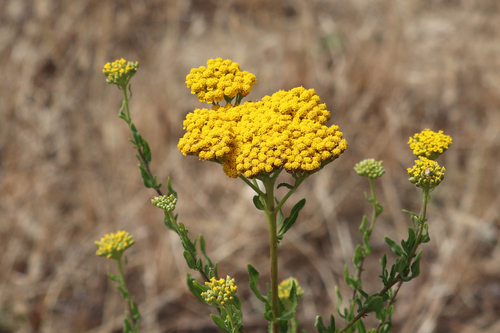
(c) DoomBeya, some rights reserved (CC BY-NC), uploaded by DoomBeya

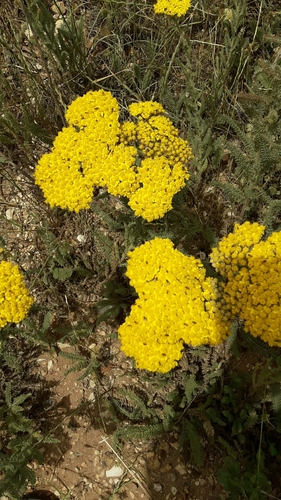
(c) lefevermathieu, some rights reserved (CC BY-NC)
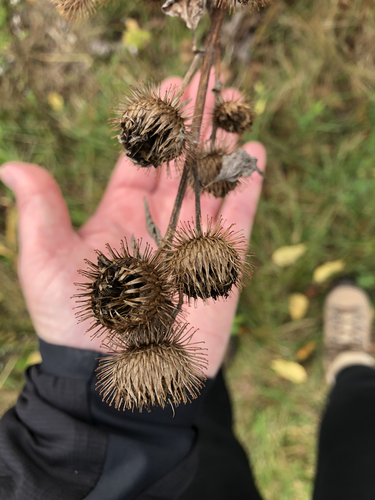
(c) Carol-Ann Patenaude, some rights reserved (CC BY-NC), uploaded by Carol-Ann Patenaude
What to Eat
Edible parts: Stems, Leaves, Roots, Flower stalk
Edible Parts: Leaves Root Seed Stem Edible Uses: Coffee Burdock is a high-value wild food, though not all parts are equally palatable. The roots are the most important edible portion, ranking among the top ten wild foods. First-year roots are preferred, dug before stems form, and can even be spotted in winter beneath snow by the massive egg-shaped leaves. Fresh roots are dull white with brown skins, tasting earthy and starchy with mild resins. They are tough when raw but soften to carrot-like firmness after boiling 1–2 hours. They are excellent in soups, stews, or stir-fries. The leaf stalks and stems are also edible. Young stalks resemble celery in size and texture, though their flavor leans toward artichoke with a salty-bitter accent. Boiling softens the cobweb-like hairs, and the stalks can be used as vegetables. The pith of young stems is soft and mild, though extracting it is difficult. Older stems become extremely fibrous and woody [2-3]. The leaf blades, though large and visually impressive (up to 30 × 50 cm), are less desirable. They are bitter, salty, and mucilaginous, with boiling only slightly improving flavor. They are not suitable as vegetables, though they can be used in survival contexts [2-3]. Overall, burdock roots are the star food part, while stems and stalks provide a secondary vegetable resource. Leaves are best avoided [2-3]. Root - raw or cooked. The best roots are obtained from young plants. Usually peeled and sliced. The roasted root is a coffee substitute. Young leaves and leaf stems - raw or cooked. Used as a potherb. Mucilaginous. It is best to remove the rind from the stem. Young flowering stem - peeled and eaten raw or cooked like asparagus. Seed sprouts. No further details. Edibility rating: 4/5 – Roots excellent, stalks useful, leaves poor. According to USDA data (for greater burdock, Arctium lappa, but closely comparable): 100 g of raw root provides ~72 kcal, 1.5 g protein, 17 g carbohydrates, and useful amounts of potassium (308 mg), calcium, phosphorus, magnesium, iron, and B vitamins.
Dangerous Lookalikes
This plant can be confused with the following toxic species. Always verify identification carefully before consuming any wild plant.


Foxglove: Toothed leaf edges, soft velvety hairs, no silvery underside.
Lesser Burdock: Very large leaves with wavy edges, pale veins, silvery/woolly undersides, thick edible taproot.
Where to Find It
It is a temperate or Mediterranean climate plant. It grows in waste areas. In Argentina plants grow from sea level to 1,000 m above sea level. Tasmania Herbarium.
Albania, Andorra, Argentina, Asia, Australia, Balkans, Brazil, Britain, Canada, Chile, Europe, Ireland, Italy, Luxembourg, New Zealand, Mediterranean, North America, Sicily, South America, Spain, Tasmania, Turkey, Türkiye, Uruguay, USA,
How to Identify
A herb which keeps growing from year to year. It grows 60-100 cm high. The leaves are heart shaped and have teeth around the edge. The leaves are pointed towards the tip. The leaves near the base have hollow stems. It has a cluster of small flowers. They form heads with very short stalks. There are bracts around these flower heads which are shorter than the flowers. The flower head is purple. There are white styles in the centre.
How to Grow
Plants can be grown by seeds.
Propagation: Seed - best sown in situ in autumn.
Medicinal Uses
Alterative Antibacterial Antifungal Aperient Blood purifier Carminative Cholagogue Diaphoretic Diuretic Eczema Hypoglycaemic Burdock is one of the foremost detoxifying herbs in both Chinese and Western herbal medicine. Arctium lappa is the main species used, though this species has similar properties. The dried root of one year old plants is the official herb, but the leaves and fruits can also be used. It is used to treat conditions caused by an 'overload' of toxins, such as throat and other infections, boils, rashes and other skin problems. The root is thought to be particularly good at helping to eliminate heavy metals from the body. The plant is antibacterial, antifungal and carminative. It has soothing, mucilaginous properties and is said to be one of the most certain cures for many types of skin diseases, burns, bruises etc. It is used in the treatment of herpes, eczema, acne, impetigo, ringworm, boils, bites etc. The plant can be taken internally as an infusion, or used externally as a wash. Use with caution. One-year old roots are alterative, aperient, blood purifier, cholagogue, depurative, diaphoretic, diuretic and stomachic. The seed is alterative, antibacterial, antifungal, antiphlogistic, depurative, diaphoretic, diuretic and hypoglycaemic. It is used in the treatment of colds with sore throat and cough, measles, pharyngitis, acute tonsillitis and abscesses. The crushed seed is poulticed onto bruises. The seed is harvested in the summer and dried for later use. The seed contains arctiin, this excites the central nervous system producing convulsions an increase in respiration and later paralysis. It also lowers the blood pressure by dilating the blood vessels. The leaves are poulticed onto burns, ulcers and sores.
Other Uses
Paper A fibre is obtained from the inner bark and is used to make paper. It is about 0.9mm long. The stems are harvested in late summer, the leaves are removed and the stems steamed in order to strip off the fibre. The fibres are then cooked for two hours in soda ash before being put in a ball mill for 2 hours. The resulting paper is a light tan/ brown colour. Burrs famously inspired the invention of Velcro. Special Uses Attracts Wildlife Dynamic accumulator Food Forest
Wikipedia
Source ↗Arctium minus, commonly known as lesser burdock, little burdock, louse-bur, common burdock, button-bur, cuckoo-button, or wild rhubarb, is a biennial plant native to Europe.
Notes
There are 10 Arctium species.
Names & Synonyms
Bardana, Belg girno, Cedones, Ceronera, Cuckoo-button, Dulavratotu, Galabah, Gordolobo, Grass burdock, Guardalobo, Haddock, Hare-burr, Ilapasses, Kuncurk, Lampazo, Misek, Repalassa, Turkey burr seed
References (28)
- Bircher, A. G. & Bircher, W. H., 2000, Encyclopedia of Fruit Trees and Edible Flowering Plants in Egypt and the Subtropics. AUC Press. p 38
- Bodkin, F., 1991, Encyclopedia Botanica. Cornstalk publishing, p 96
- Bonet, M. A. & Valles, J., 2002, Use of non-crop food vascular plants in Montseny biosphere reserve (Catalonia, Iberian Peninsula). International Journal of Food Sciences and Nutrition (2002) 53, 225–248
- Curtis, W.M., 1963, The Students Flora of Tasmania Vol 2 p 375
- Dogan, Y., et al, 2015, Of the importance of a leaf: the ethnobotany of sarma in Turkey and the Balkans. Journal of Ethnobiology and Ethnomedicine, 11:56
- Duke, J.A., 1992, Handbook of Edible Weeds. CRC Press. p 36
- Elias, T.S. & Dykeman P.A., 1990, Edible Wild Plants. A North American Field guide. Sterling, New York p 112
- Ertug, F, Yenen Bitkiler. Resimli Türkiye Florası -I- Flora of Turkey - Ethnobotany supplement
- Esperanca, M. J., 1988. Surviving in the wild. A glance at the wild plants and their uses. Vol. 1. p 245
- Facciola, S., 1998, Cornucopia 2: a Source Book of Edible Plants. Kampong Publications, p 33
- Geraci, A., et al, 2018, The wild taxa utilized as vegetables in Sicily (Italy): a traditional component of the Mediterranean diet. Journal of Ethnobiology and Ethnomedicine (2018) 14:14
- http://www.stoller-eser.com/Flora/ethnobotany_table.htm
- Irving, M., 2009, The Forager Handbook, A Guide to the Edible Plants of Britain. Ebury Press p 140
- Lamp, C & Collet F., 1989, Field Guide to Weeds in Australia. Inkata Press. p 25
- Lazarides, M. & Hince, B., 1993, Handbook of Economic Plants of Australia, CSIRO. p 23
- Mabey, R., 1973, Food for Free. A Guide to the edible wild plants of Britain, Collins. p 113
- MacKinnon, A., et al, 2009, Edible & Medicinal Plants of Canada. Lone Pine. p 367
- Malezas Comestibles del Cono Sur, INTA, 2009, Buernos Aires
- Michael, P., 2007, Edible Wild Plants and Herbs. Grub Street. London. p 45
- Mukemre, M., et al, 2016, Survey of wild food plants for human consumption in villages of Catak, (Van-Turkey), Indian Journal of Traditional Knowledge. Vol. 15(2) pp. 183-191 (As Arctium minus subsp. pubens)
- Pasta, S., et al, 2020, An Updated Checklist of the Sicilian Native Edible Plants: Preserving the Traditional Ecological Knowledge of Century-Old Agro-Pastoral Landscapes. Frontiers in Plant Science. Volume 11|Article 388
- Plants for a Future database, The Field, Penpol, Lostwithiel, Cornwall, PL22 0NG, UK. http://www.scs.leeds.ac.uk/pfaf/
- Rivera, C., et al, 2005, The Ethnobotanical Study of Local Mediterranean Food Plants as Medicinal Resources in Southern Spain. Journal of Physiologyand Pharmacology. 56, Suppl. 1, 97-114
- Rivera, D. et al, 2006, Gathered Mediterranean Food Plants - Ethnobotanical Investigations and Historical Development, in Heinrich M, Müller WE, Galli C (eds): Local Mediterranean Food Plants and Nutraceuticals. Forum Nutr. Basel, Karger, 2006, vol 59, pp 18–74
- Syst. Verz. 154. 1800
- Tardio, J., et al, Ethnobotanical review of wild edible plants in Spain. Botanical J. Linnean Soc. 152 (2006), 27-71
- Tasmanian Herbarium Vascular Plants list p 3
- Tozer, F., 2007, The Uses of Wild Plants. Green Man Publishing. p 31