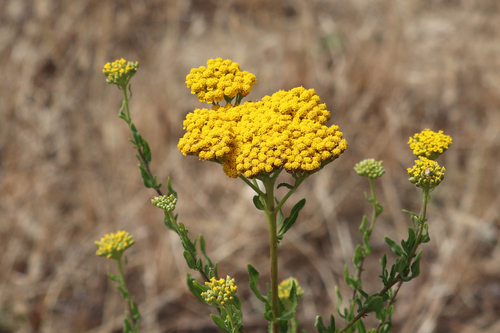
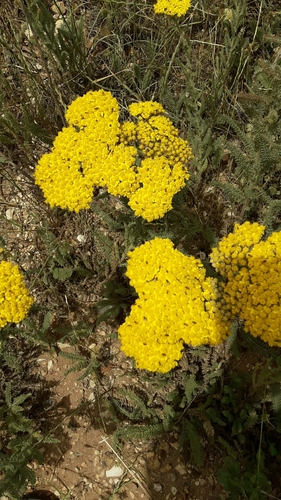
Scorzonera mollis
Bieb.

(c) Todd Boland, some rights reserved (CC BY)

(c) Al Losk (Lifebra), some rights reserved (CC BY-NC)

(c) Al Losk (Lifebra), some rights reserved (CC BY-NC)
What to Eat
Edible parts: Flowers, Leaves, Root
The root is edible cooked, and the leaves can be cooked and eaten. The flowers are eaten raw and have a scent of chocolate.
Where to Find It
It is a Mediterranean climate plant.
Asia, Europe, Turkey, Türkiye,
How to Identify
A perennial reaching 0.3 m (1 ft) tall. Hermaphroditic flowers appear June to July and are pollinated by insects. Thrives in light sandy, medium loamy, or heavy clay soils with good drainage. Tolerates mildly acidic, neutral, and mildly alkaline pH. Requires full sun and adapts to both dry and moist conditions. Hardy to UK zone 6.
How to Grow
Succeeds in any soil in sun or light shade.
Propagation: Sow seed in spring in a greenhouse, pricking out seedlings into relatively deep pots as soon as they are large enough to handle, to accommodate the taproot. If growth is strong, plant out in early summer; otherwise overwinter in the greenhouse and plant out in late spring the following year. Divide in autumn or as growth begins in spring. Larger divisions can go straight into permanent positions. Smaller divisions are best potted up and grown on in a lightly shaded cold frame, then planted out once well established in summer.
Medicinal Uses
None known.
Other Uses
None known.
Wikipedia
A perennial reaching 0.3 m (1 ft) tall. Hermaphroditic flowers appear June to July and are pollinated by insects. Thrives in light sandy, medium loamy, or heavy clay soils with good drainage. Tolerates mildly acidic, neutral, and mildly alkaline pH. Requires full sun and adapts to both dry and moist conditions. Hardy to UK zone 6.
Names & Synonyms
Sing, Spling, Vil, Yemlik
References (6)
- Dogan, A. & Tuzlaci, E., 2015, Wild Edible Plants of Pertek (Tunceli-Turkey). Marmara Pharmaceutical Journal 19: 126-135
- Ertug, F, Yenen Bitkiler. Resimli Türkiye Florası -I- Flora of Turkey - Ethnobotany supplement
- Lim, T. K., Edible Medicinal and Non-Medicinal Plants Volume 7 Flowers
- Plants for a Future database, The Field, Penpol, Lostwithiel, Cornwall, PL22 0NG, UK. http://www.scs.leeds.ac.uk/pfaf/
- Polat, R., et al, 2017, Survey of wild food plants for human consumption in Bingol, (Turkey). Indian Journal of Traditional Knowledge. Vol. 16(3) July 2017, pp. 378-384
- World Checklist of Useful Plant Species 2020. Royal Botanic Gardens, Kew