Sechium edule
(Jacquin) Swartz
Choko, Chayote
(c) wardej, some rights reserved (CC BY-NC)

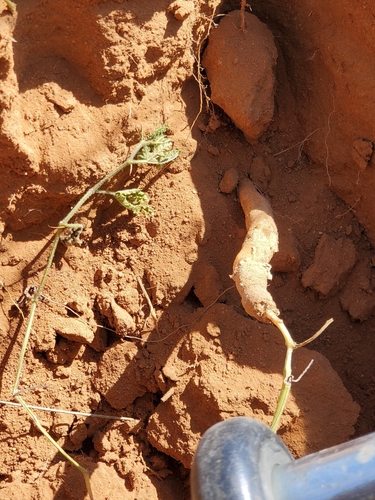
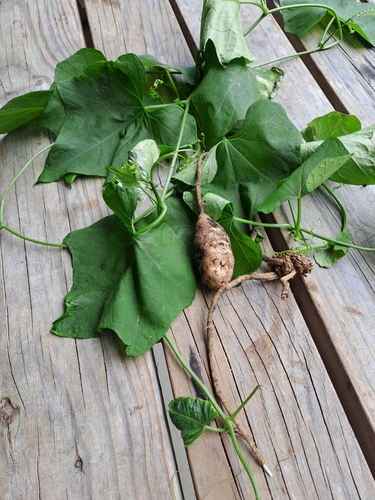
(c) Spencer Child, some rights reserved (CC BY-NC)

(c) Spencer Child, some rights reserved (CC BY-NC)
What to Eat
Edible parts: Fruit, Leaves, Seeds, Roots, Vegetable
The fruit can be eaten raw or cooked, with flavour ranging from bland and starchy to mildly sweet depending on the cultivar. It can be boiled or baked as a vegetable, or mixed with lime juice as an apple substitute in pies. Bland cultivars are used industrially as food fillers in pastes and sauces. Due to its low energy value, the fruit is used as a dietary food in hospitals, nursing homes, and as baby food. It is normally eaten before the seed has enlarged; the obovoid fruit grows up to 18cm long. The mature, protruding seeds are considered by some to be the best part of the fruit — nut-like in flavour, and when deep-fried they taste remarkably like french-fried potatoes. The seeds are a good source of protein. The starch-rich tubers, which can weigh up to 5 kilos, are eaten raw or cooked — boiled, baked, fried, or candied in syrup. Young leaves and stem tips are cooked as a vegetable, eaten like asparagus, and are a good source of iron, carotene, thiamine, riboflavin, and niacin. The flowers are also edible.
Where to Find It
A tropical and subtropical plant. Choko requires relative humidity of 80-85%, annual rainfall of at least 1500-2000 mm and average temperatures of 20-25°C with limits of 12-28°C. In equatorial tropical regions chokos will grow from sea level to about 2200 m altitude, but do best between 350 and 1000 m altitude. In Nepal they grow to about 2000 m altitude. In the lowlands it is best in shade. Chokos need a reasonably well drained soil. It can grow in arid places. It suits hardiness zones 9-12.
Africa, Argentina, Asia, Australia, Belize, Bermuda, Bolivia, Bougainville, Brazil, Cambodia, Cameroon, Central Africa, Central America, China, Colombia, Congo DR, Cook Islands, Costa Rica, Côte d'Ivoire, Cuba, Dominican Republic, East Africa, East Timor, Ecuador, El Salvador, Fiji, French Guiana, Ghana, Grenada, Guadeloupe, Guam, Guatemala, Guyana, Haiti, Hawaii, Himalayas, Honduras, India, Indochina, Indonesia, Ivory Coast, Jamaica, Japan, Kenya, Laos, Madagascar, Malawi, Malaysia, Mariana Islands, Mauritius, Mexico*, Myanmar, Nepal, Nicaragua, Niue, North America, Northeastern India, Pacific, Panama, Papua New Guinea, PNG, Peru, Philippines, Puerto Rico, Reunion, Sao Tome and Principe, SE Asia, Sierra Leone, Sikkim, Solomon Islands, South Africa, Southern Africa, South America, Sri Lanka, St Helena, St. Vincent and Grenadines, Taiwan, Tanzania, Tasmania, Thailand, Timor-Leste, Trinidad and Tobago, Uganda, USA, Vanuatu, Venezuela, Vietnam, West Africa, West Indies, Zimbabwe,
How to Identify
A herb. It is a pumpkin family plant. It is a vigorously growing climber that can last for several years. The vine can be up to 15 m long. It has strong tendrils which can attach to fences and trees so that the plant can climb well. The choko leaves are about 15-20 cm across and have a rough feel. The fleshy fruits contain only one large seed. The stems have furrows along them. The choko fruit is produced in the angle where the leaf joins the vines. Fruit can be up to 20 cm long and they are rough or irregular shaped on the outside. There are white and green fruited varieties. Some fruit have sharp spikes on the skin. Inside the fruit there is one seed about 4 cm long. The flowers are separate. Male flowers are in clusters and female flowers are on their own. A choko plant produces a large thickened root tuber and the plant can re-grow from this tuber and go on growing year after year. Fruit can be green or white and can have soft spines.
Nutrition Score: 39/100
| Part | Moisture | kJ | kcal | Protein | Vit A | Vit C | Iron | Zinc |
|---|---|---|---|---|---|---|---|---|
| Root | 80 | 331 | 79 | 2 | — | 19 | 0.8 | — |
| Leaves | 91 | 105 | 25 | 4 | 1515 | 24 | 1.4 | — |
| Fruit - boiled | 93.4 | 100 | 24 | 0.6 | 5 | 8 | 0.2 | 0.3 |
| Fruit - raw | 94 | 80 | 19 | 0.7 | 15 | 14 | 0.4 | 0.7 |
How to Grow
The entire fruit is planted as the seed cannot withstand drying out. It is planted flat and thinly covered with soil. Often chokos start to develop shoots and roots while they are still attached to the original plant. These eventually fall off and continue growing if they fall on soft moist dirt. A spacing 2 m apart along a fence is suitable. Trellis support is required. A well drained fertile soil is needed. Cuttings can be used for planting. Plants do not breed true and a large variability of fruit types can occur.
Propagation: The seed should be kept inside the fruit when sowing. Plant a mature fruit — with the germinating seed still inside — to two thirds of its length with the widest end facing down. Stem cuttings 15–20cm long can also be used; plant them in a shady position and keep moist until rooted.
Medicinal Uses
An infusion made from the shredded fruit is used to lower blood pressure. The tubers act as a potent diuretic and are also applied for pulmonary ailments and to relieve intestinal inflammation. The leaves are said to have cardiovascular-modifying and blood-pressure-lowering properties, and are also used to dissolve kidney stones.
Other Uses
Chayote can be grown as a climbing plant to provide shade for other crops and help prevent soil erosion, while also improving biodiversity and attracting beneficial insects. Fibres from the stem have been used to make baskets and hats, and, as reported from Ghana, as binding material in the construction of mud houses. The flowers are rich in nectar and pollen and attract a range of pollinators. The fruit is consumed by both humans and wildlife, and the dense foliage can provide some shelter for small animals. The plant also offers some shelter for invertebrates in the leaf litter and undergrowth.
Wikipedia
Source ↗A fast-growing perennial climber reaching 12 m tall and 0.5 m wide, hardy to UK zone 10. Produces flowers pollinated by bees and insects with parthenocarpic development. Self-fertile and noted for attracting wildlife. Grows in light to heavy soils, mildly acid to mildly alkaline, in semi-shade or full sun, preferring moist soil.
Production
Fruit can be picked starting 3-5 months after planting and continued for many months. The fruit can be stored for several weeks. Tips can be picked regularly. Annual yields of 75-300 fruit per plant are possible. Fruit can weigh 400 to 500 grams. Tubers of 5 kg weight have been recorded. These are normally produced during the second year of growth and after a time of arrested development such as a dry season.
Other Information
It is a commercially cultivated vegetable. The leaves are popular. Moderately common throughout the country of Papua New Guinea but most important in mid altitude areas.
Notes
There are 10 Sechium species. It has some anticancer properties. Possibly now Sicyos edulis Jacq.
Names & Synonyms
Achojcha, Alcaiota, Bulung jepang, Cayota, Chaco, Chayotera, Chayoteste, Chayotli, Chinchayote, Chitungula, Chocho, Choco, Chouchou, Chow-chow, Chuchu, Cidrayota, Ebisusuuti, Fak mao, Fak meo, Fat shau kwa, Fo shou gua, Gambas, Gayota, Goorakathee, Gorakha-buthi, Gorakha-thi, Guispui, Harp jeung kwa, Hayato uri, Huisquil, Iskos, Iskus, Iskut, Khaugai, Labu sia, Labu siem, Li gua, Lukeru mutin, Machiche, Mak soe, Nakula, Mchuchu, Ngowe, Papa del aire, Phak soe, Pis, Saiotta, Saosety, Sayote, Se-uak, Shuga, Sioko, Skush, Soga sai, Sumsum, Sun ren gua, Susut, Toluteipi, Vegetable pear, Walu jepan, Witzayohkiliti, Xuxu
References (107)
- Abbiw, D.K., 1990, Useful Plants of Ghana. West Africahnology Publications and the Royal Botanic Gardens, Kew. p 39
- Ambasta, S.P. (Ed.), 2000, The Useful Plants of India. CSIR India. p 563
- Anderson, E. F., 1993, Plants and people of the Golden Triangle. Dioscorides Press. p 220
- Arora, R. K., 2014, Diversity in Underutilized Plant Species - An Asia-Pacific Perspective. Bioversity International. p 50, 129
- Astrada, E., et al, 2007, Ethnobotany in the Cumbres de Monterrey National Park, Nuevo Leon, Mexico. Journal of Ethnobiology and Ethnomedicine 3:8
- Bianchini, F., Corbetta, F., and Pistoia, M., 1975, Fruits of the Earth. Cassell. p 106
- Bodner, C. C. and Gereau, R. E., 1988, A Contribution to Bontoc Ethnobotany. Economic Botany, 43(2): 307-369
- Burkill, H. M., 1985, The useful plants of west tropical Africa, Vol. 1. Kew.
- Burkill, I.H., 1966, A Dictionary of the Economic Products of the Malay Peninsula. Ministry of Agriculture and Cooperatives, Kuala Lumpur, Malaysia. Vol 2 (I-Z) p 2023
- Call, C. A., et al, 2004, Participatory Rural Appraisal in the Upland Ecosystem of Mt Malindang, Misamis Occidental, Philippines. Biodiversity Research Programme for Development in Mindanao. p 53
- Cheifetz, A., (ed), 1999, 500 popular vegetables, herbs, fruits and nuts for Australian Gardeners. Random House p 95
- Chin, H. F., 1999, Malaysian Vegetables in Colour. Tropical Press. p 70
- Chizmar Fernandez, C., et al, 2009, Plantas comestibles de Centroamerica. Instituto de Biodiversidad, Costa Rica. p 161
- Coe, F. G. & Anderson, G. J., 1997, Ethnobotany of the Miskitu of Eastern Nicaragua. Journal of Ethnobiology 17(2): 171-214
- Cruz, I. M., et al, 2015, Edible fruits and seeds in the State of Mexico. Revista Mexicana de Ciencias Agricolas. Vol. 6. Num. 2 pp 331-346
- Cundall, P., (ed.), 2004, Gardening Australia: flora: the gardener's bible. ABC Books. p 1328
- D'Ambrosio, U., & Puri, R. K., 2016, Foodways in transition: food plants, diet and local perceptions of change in a Costa Rican Ngäbe community. Journal of Ethnobiology and Ethnomedicine (2016) 12:3 p 24
- Diaz-Jose, J., et al, 2019, Traditional Knowledge of Edible Wild Plants Used by Indigenous Communities in Zongolica, Mexico. Ecology of Food and Nutrition.
- Ekman Herbarium records Haiti
- Engels, J.M.M., 2004. Sechium edule (Jacq.) Sw. [Internet] Record from Protabase. Grubben, G.J.H. & Denton, O.A. (Editors). PROTA (Plant Resources of Tropical Africa), Wageningen, Netherlands. < http://database.prota.org/search.htm>. Accessed 22 October 2009
- Esquinas-Alcazar, et al, 1983, Genetic Resources of Cucurbitaceae. International Board of Plant Genetic Resources.
- Facciola, S., 1998, Cornucopia 2: a Source Book of Edible Plants. Kampong Publications, p 88
- FAO, 1988, Traditional Food Plants, FAO Food and Nutrition Paper 42. FAO Rome p 433
- FAO, 1993, Valor Nutritivo Y Usis en Alimantacion humana de Algunis Cultivos Autoctonos Subexplotados de Mesoamerica. FAO, Santiago, Chile. p 82
- Foo, J.T.S.(ed), 1996, A Guide to Common Vegetables. Singapore Science Foundation. p 62
- Fl. Ind. occid. 2:1150. 1800
- French, B.R., 1986, Food Plants of Papua New Guinea, A Compendium. Asia Pacific Science Foundation p 100
- French, B.R., 2010, Food Plants of Solomon Islands. A Compendium. Food Plants International Inc. p 131
- Goode, P., 1989, Edible Plants of Uganda. FAO p 26
- Gouldstone, S., 1983, Growing your own Food-bearing Plants in Australia. Macmillan p 166
- Grubben, G. J. H. and Denton, O. A. (eds), 2004, Plant Resources of Tropical Africa 2. Vegetables. PROTA, Wageningen, Netherlands. p 456
- Guite, C., 2016, Study of wild edible plants associated with the Paite Tribe of Manipur, India. International Journal of Current Research. Vol. 8, Issue 11, pp. 40927-40932
- Hadfield, J., 2001, The A-Z of Vegetable Gardening in South Africa. Struik p 104
- Harkonen, M. & Vainio-Mattila, K., 1998, Some examples of Natural Products in the Eastern Arc Mountains. Journal of East African Natural History 87:265-278
- Hedrick, U.P., 1919, (Ed.), Sturtevant's edible plants of the world. p 601
- Hermandez Bermejo, J.E., and Leon, J. (Eds.), 1994, Neglected Crops. 1492 from a different perspective. FAO Plant Production and Protection Series No 26. FAO, Rome. p18, 79
- Hibbert, M., 2002, The Aussie Plant Finder 2002, Florilegium. p 289
- Hu, Shiu-ying, 2005, Food Plants of China. The Chinese University Press. p 709
- Jardin, C., 1970, List of Foods Used In Africa, FAO Nutrition Information Document Series No 2.p 100
- JSTOR Global Plants edible
- Kapelle, M., et al, 2000, Useful plants within a Campesino Community in a Costa Rican Montane Cloud Forest. Mountain Research and Development, 20(2): 162-171.
- Kar, A., et al, 2013, Wild Edible Plant Resources used by the Mizos of Mizoram, India. Kathmandu University Journal of Science, Engineering and Technology. Vol. 9, No. 1, July, 2013, 106-126
- Kays, S. J., and Dias, J. C. S., 1995, Common Names of Commercially Cultivated Vegetables of the World in 15 languages. Economic Botany, Vol. 49, No. 2, pp. 115-152
- Khanal, R., et al, 2014, Documenting abundance and use of underutilized plant species in the mid hill region of Nepal. ECOPRINT 21: 63-71, 2014
- Kiple, K.F. & Ornelas, K.C., (eds), 2000, The Cambridge World History of Food. CUP p 1750
- Krings, A. & Braham, R. R., 2005, Guide to Tendrillate Climbers of Costa Rican Mountains. Blackwell Publishing. p 67
- Kumar, A., et al, 2012, Ethnobotanical Edible Plant Biodiversity of Lepcha Tribes. Indian Forester, 138 (9):798-803
- Kuo, W. H. J., (Ed.) Taiwan's Ethnobotanical Database (1900-2000), http://tk.agron.ntu.edu.tw/ethnobot/DB1.htm
- Latham, P., 2004, Useful Plants of Bas-Congo province. Salvation Army & DFID p 250
- Lazarides, M. & Hince, B., 1993, Handbook of Economic Plants of Australia, CSIRO. p 215
- Lembogi Biologi Nasional, 1980, Sayur-sayuran. Balai Pustaka, Jakarta. p 116
- Lim, T. K., 2015, Edible Medicinal and Non Medicinal Plants. Volume 9, Modified Stems, Roots, Bulbs. Springer p 76
- Luczaj, L., et al, 2021, Wild food plants and fungi sold in the markets of Luang Prabang, Lao PDR. Journal of Ethnobiology and Ethnomedicine (2021) 17:6
- Macmillan, H.F. (Revised Barlow, H.S., et al), 1991, Tropical Planting and Gardening. Sixth edition. Malayan Nature Society. Kuala Lumpur. p 363
- Maisuthisakul, P., 2012, Phenolic Constituents and Antioxidant Properties of some Thai Plants. Chp. 9 in Book Phytochemicals - A Global Perspective of Their Role in Nutrition and Health
- Manandhar, N.P., 2002, Plants and People of Nepal. Timber Press. Portland, Oregon. p 421
- Mapes, C. & Basurto, F., 2016, Biodiversity and Edible Plants of Mexico. Chapter 5 in R. Lira, et al. (eds.), Ethnobotany of Mexico, Ethnobiology, Springer. p 107
- Martin, F.W. & Ruberte, R.M., 1979, Edible Leaves of the Tropics. Antillian College Press, Mayaguez, Puerto Rico. p 46, 190
- Medhi, P. & Borthakur, S. K., 2012, Phytoresources from North Cachur Hills of Assam -3: Edible plants sold at Hflong market. Indian Journal or Natural Products and Resources. 3(1) pp 84-109
- Menninger, E.A., 1977, Edible Nuts of the World. Horticultural Books. Florida p 108
- Monnerville, K., et al, 2001, Principal characteristics of Sechium edule Sw.. Fruits, Vol. 56, p. 155-167
- Njoroge, G. & Newton, L. E. 1994, Edible and Poisonous Species of Cucurbitaceaea in the Central Highlands of Kenya. Journal of East African Natural History. 83:101-115
- Norrington, L., & Campbell, C., 2001, Tropical Food Gardens. Bloomings Books. p 45
- Nyadanu, D., et al, 2015, Agro-biodiversity and challenges of on-farm conservation: the case of plant genetic resources of neglected and underutilized crop species in Ghana. Genet. Resourc. Crop Evol. 62(7):
- Ochse, J.J. et al, 1931, Vegetables of the Dutch East Indies. Asher reprint. p 209
- Oomen, H.A.P.C., & Grubben, G.J.H., 1978, Tropical Leaf Vegetables in Human Nutrition, Communication 69, Department of Agricultural research, RTI Amsterdam, p 36, 57, 66, 104
- Owen, S., 1993, Indonesian Food and Cookery, INDIRA reprints. p 88
- Pawera, L., et al, 2020, Wild Food Plants and Trends in Their Use: From Knowledge and Perceptions to Drivers of Change in West Sumatra, Indonesia, Foods. 2020, 9, 1240
- Peekel, P.G., 1984, (Translation E.E.Henty), Flora of the Bismarck Archipelago for Naturalists, Division of Botany, Lae, PNG. p 551, 552
- Pena, F. B., et al, 1998, Los quelites de la Sierra Norte de Puebla, Mexico: Inventory Y Formas de Preparacion. Bol. Soc. Bot. Mexico 62:49-62
- Pham-Hoang Ho, 1999, An Illustrated Flora of Vietnam. Nha Xuat Ban Tre. p 576
- Phon, P., 2000, Plants used in Cambodia. © Pauline Dy Phon, Phnom Penh, Cambodia. p 553
- Piedra-Malagón, E. M. et al, 2022, Edible native plants of the Gulf of Mexico Province. Biodiversity Data Journal 10: e80565 p 17
- Purseglove, J.W., 1968, Tropical Crops Dicotyledons, Longmans. p 134
- Rafael Lira Saade. 1996. Chayote. Sechium edule (Jacq.) Sw. Promoting the conservation and use of underutilized and neglected crops. 8. Institute of Plant Genetics and Crop Plant Research, Gatersleben/International Plant Genetic Resources Institute, Rome, Italy.
- Razanameharizaka, J., et al, 2022, Catalogue Legumes Traditionnels de Madagascar. Université d’Antananarivo, Antananarivo (101), Madagascar. Vol. 1. p 39
- Roa, J. A. G. & Boada, D. S. G., 2018, Fundación para el Fortalecimiento de la Fruticultura y Plantas Alimenticias no Convencionales en Colombia.
- Royal Botanic Gardens, Kew (1999). Survey of Economic Plants for Arid and Semi-Arid Lands (SEPASAL) database. Published on the Internet; http://www.rbgkew.org.uk/ceb/sepasal/internet [Accessed 16th April 2011]
- Rubaihayo, E. B., Conservation and use of traditional vegetables in Uganda. Bioversity International.
- Ruiters-Welcome, A. K., 2019, Food plants of southern Africa. Ph.D. thesis. Univ. of Johannesburg p 50
- Savita, et al, 2006, Studies on wild edible plants of ethnic people in east Sikkim. Asian J. of Bio Sci. (2006) Vol. 1 No. 2 : 117-125
- Schneider, E., 2001, Vegetables from Amaranth to Zucchini: The essential reference. HarperCollins. p 178
- Sharma, B.B., 2005, Growing fruits and vegetables. Publications Division. Ministry of Information and broadcasting. India. p 169
- Smith, K., 1998. Growing Uncommon Fruits and Vegetables. New Holland. p 41
- Smith, P.M., 1979, Choko, in Simmonds, N.W., (ed), Crop Plant Evolution. Longmans. London. p 306
- Solomon, C., 2001, Encyclopedia of Asian Food. New Holland. p 96
- Stanley, T. D. & Ross, E. M., 1986, Flora of south-eastern Queensland Volume 2. Queensland Government p 107
- Staples, G.W. and Herbst, D.R., 2005, A tropical Garden Flora. Bishop Museum Press, Honolulu, Hawaii. p 263 (Drawing)
- Sukenti, K., et al, 2016, Ethnobotanical study on local cuisine of the Sasak tribe in Lombok Island, Indonesia. Journal of Ethnic Foods. 3 (2016) 189-200 p 198
- Terra, G.J.A., 1973, Tropical Vegetables. Communication 54e Royal Tropical Institute, Amsterdam, p 71, 74
- Tindall, H.D., & Williams, J.T., 1977, Tropical Vegetables and their Genetic Resources, International Board for Plant Genetic Resources, Rome, p 52
- Tindall, H.D., 1983, Vegetables in the tropics. Macmillan p. 182
- Torre, de la, L., et al, 2008, Enciclopedia de las Plantas Útiles del Ecuador. Herbario QCA. Pontificia Universidad Católica del Ecuador. p 301
- Tredgold, M.H., 1986, Food Plants of Zimbabwe. Mambo Press. p 14
- USDA, ARS, National Genetic Resources Program. Germplasm Resources Information Network - (GRIN). [Online Database] National Germplasm Resources Laboratory, Beltsville, Maryland. Available: www.ars-grin.gov/cgi-bin/npgs/html/econ.pl (10 April 2000)
- van Wyk, B., 2005, Food Plants of the World. An illustrated guide. Timber press. p 342
- van Wyk, Be., & Gericke, N., 2007, People's plants. A Guide to Useful Plants of Southern Africa. Briza. p 56
- Walter, A. & Lebot, V., 2007, Gardens of Oceania. ACIAR Monograph No. 122. p 215
- Welcome, A. K. & Van Wyk, B.-E., 2019, An inventory and analysis of the food plants of southern Africa. South African Journal of Botany 122 (2019) 136–179
- Wiersema, J. H. & Leon, B., 2013, World Economic Plants. A Standard Reference CRC Press. 2nd Ed. p 624
- Williamson, J., 2005, Useful Plants of Malawi. 3rd. Edition. Mdadzi Book Trust. p 222
- Wiriadinata, H., 1995, Ethnobotany of Economic Plants in the Baliem Valley, Jayawijaya, Irian Jaya, Indonesian Institute of Science, Bogor, Indonesia
- Woodward, P., 2000, Asian Herbs and Vegetables. Hyland House. p 121
- World Checklist of Useful Plant Species 2020. Royal Botanic Gardens, Kew (As Sicyos edulis)
- Yang, Si-Lin and Walters, T. W., 1992, Ethnobotany and the Economic role of the Cucurbitaceae of China. Economic Botany, Vol. 46, No. 4, pp. 349-367
- Zaldivar, M. E., et al, 2002, Species Diversity of Edible Plants Grown in Homegardens of Chibehan Amerindians from Costa Rica. Human Ecology, Vol. 30, No. 3, pp. 301-316
- Zuchowski W., 2007, Tropical Plants of Costa Rica. A Zona Tropical Publication, Comstock Publishing. p 174 Zona Tropical Publication, Comstock Publishing. p 174