Serratula coronata
L.
Crown sawwort

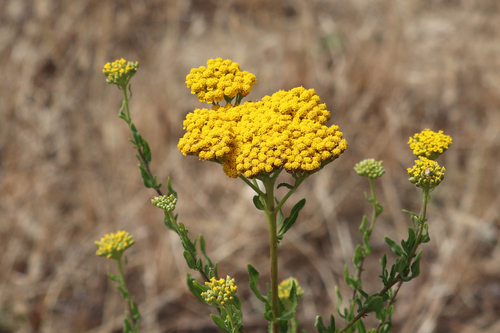
(c) Мария Филатова, some rights reserved (CC BY-NC), uploaded by Мария Филатова

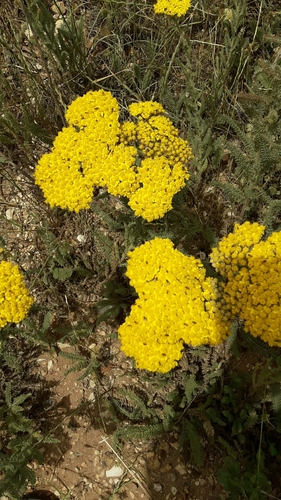
(c) Svetlana Nesterova, some rights reserved (CC BY-NC)
What to Eat
Edible parts: Leaves
Young leaves can be harvested and eaten cooked.
Where to Find It
It is a temperate plant. It grows on the edges of forests on mountain slopes between 100-1,600 m above sea level in north China.
Asia, Central Asia, China, Europe, Japan, Kazakhstan, Korea, Kyrgyzstan, Mongolia, Russia,
How to Identify
A robust herb. It keeps growing from year to year. It grows 50-140 cm high. The branches appear at the uppermost leaf axil. There are leaves at the base and along the stem. The leaves are 40 cm long by 12 cm wide. They are divided into narrow segments along the stalk. There are 3-8 segments that are unequal in opposite sides. There are teeth along the edge.
How to Grow
Succeeds in a sunny position in most well-drained soils. Suitable for the wildflower garden, where it can naturalize. This species is sometimes separated into S. coronata and S. wolffii. Andrae. - a species that is found in Romania and also in southern and central Russia.
Propagation: Sow seed in spring in a greenhouse, barely covering it, and ensure the compost does not dry out. Prick out seedlings into individual pots when large enough to handle and plant out in early summer if sufficiently developed; otherwise overwinter in a greenhouse or cold frame and plant out the following year after the last expected frosts. For division in spring, larger portions can go directly into permanent positions, while smaller divisions are best potted up and grown on in a lightly shaded cold frame until well established, then planted out in summer.
Medicinal Uses
None known
Other Uses
None known Special Uses
Wikipedia
A perennial herb reaching 1.5 m tall, hardy to UK zone 5. Produces flowers from August to October with seeds maturing during the same period. The plant is hermaphroditic and insect-pollinated. It thrives in light sandy, medium loamy, and heavy clay soils with mildly acid to basic pH. Requires full sun and prefers moist conditions.
Names & Synonyms
References (3)
- Hu, Shiu-ying, 2005, Food Plants of China. The Chinese University Press. p 744
- Plants for a Future database, The Field, Penpol, Lostwithiel, Cornwall, PL22 0NG, UK. http://www.scs.leeds.ac.uk/pfaf/
- Urgamal, M., Oyuntsetseg, B., Nyambayar, D. & Dulamsuren, Ch. 2014. Conspectus of the vascular plants of Mongolia. (Editors: Sanchir, Ch. & Jamsran, Ts.). Ulaanbaatar, Mongolia. “Admon“ Press. 334pp. (p. 199-230).