Solanum aculeastrum
Dunal
Goat bitter apple, Poison apple
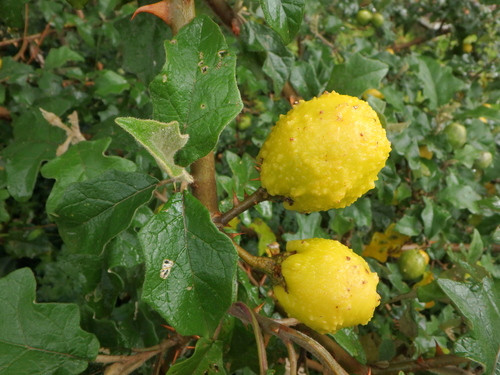
(c) Pádraic Flood, some rights reserved (CC BY-NC-SA), uploaded by Pádraic Flood
(c) Botanica, some rights reserved (CC BY-NC)
What to Eat
Edible parts: Fruit, Caution, Leaves
The fruit is eaten but is bitter, though some edible selections have been made.
Known Hazards
Where to Find It
A tropical plant. It prefers rich moist soils. It does best in a protected shady position. It is drought and frost tender. It grows naturally in wooded grassland. It grows between 1,050-2,100 m above sea level. In Nigeria it grows to 2,300 m.
Africa, America, Australia, Brazil, Cameroon, Central Africa, East Africa, Eswatini, Ethiopia, Kenya, Malawi, Mozambique, Nigeria, Rwanda, South Africa, Southern Africa, Sudan, Swaziland, Uganda, West Africa, Zimbabwe,
How to Identify
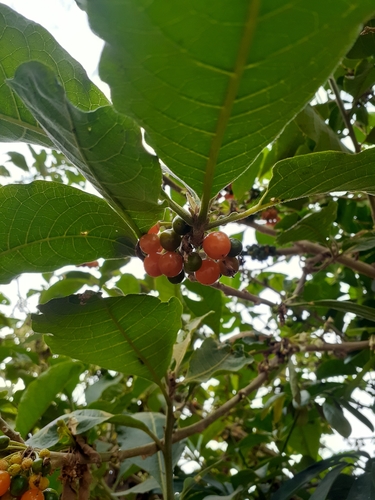
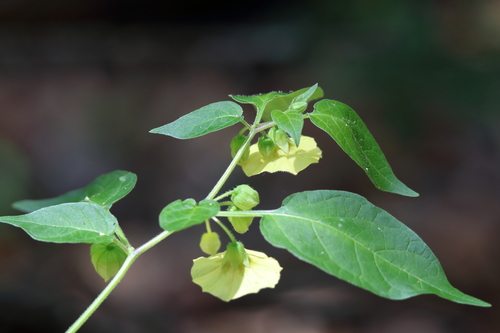
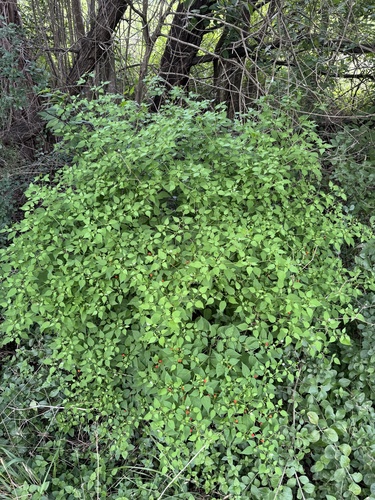
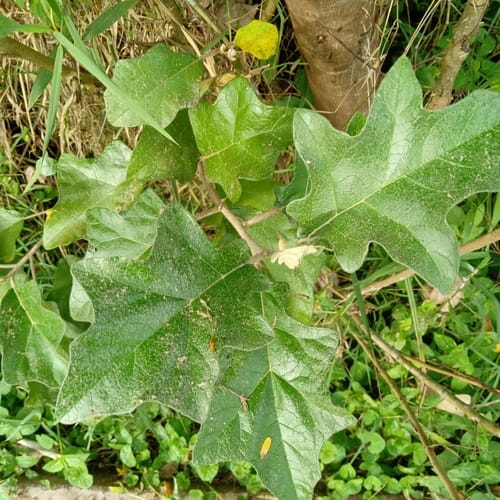
A shrub or small tree. It grows to 4 m high. The stem is erect and prickly. The bark is greyish-brown. The leaves are green and with lobes. The leaves are deep green above and white and woolly underneath. The leaves are 4.5-14 cm long by 3-11 cm wide. The flowers are white and star shaped. The fruit are orange to brownish berries. They are 5 cm long.
How to Grow
Plants are grown from seed.
Medicinal Uses
Because of its dense growth and prickly nature, soda apple is used as a hedge and living barrier for containing livestock. It is often used as a soap replacement, as it is high in saponin. Traditional Zulu practices use the fruit - fresh, boiled, or charred - in herbal medicine to treat a wide variety of afflictions, including cancer, toothaches, and ringworm. The Taita tribe of southern Kenya use the ripe yellow fruit to treat paronychia. The roots are chewed and, the sap ingested to alleviate stomach aches.
Wikipedia
Source ↗Solanum aculeastrum is commonly known as soda apple, sodaapple nightshade, goat apple, poison apple, or more ambiguously as "bitter-apple". It is a poisonous nightshade species from Africa and only distantly related to true apples. The term "soda apple" probably derives from "Sodom apple", modified due to the fruit's detergent properties.
Production
It is fast growing.
Notes
There are about 1400 Solanum species. There are about 700 in tropical America and about 100 in Africa.
Names & Synonyms
Mtuma, Mtundu wa matungwi, Omotugunda
References (17)
- Bodkin, F., 1991, Encyclopedia Botanica. Cornstalk publishing, p 933
- A. L. P. P. de Candolle, Prodr. 13(1):366. 1852
- Burkill, H. M., 1985, The useful plants of west tropical Africa, Vol. 5. Kew.
- Chapman, J. D. & Chapman, H. M., 2001, The Forest Flora of Taraba and Andamawa States, Nigeria. WWF & University of Canterbury. p 203
- Dale, I. R. and Greenway, P. J., 1961, Kenya Trees and Shrubs. Nairobi. p 538
- East African Herbarium records, 1981,
- Jardin, C., 1970, List of Foods Used In Africa, FAO Nutrition Information Document Series No 2.p 101
- Mutie, F. M., et al, 2023, Important Medicinal and Food Taxa (Orders and Families) in Kenya, Based on Three Quantitative Approaches. Plants 2023, 12, 1145
- Palgrave, K.C., 1996, Trees of Southern Africa. Struik Publishers. p 820
- Peters, C. R., O'Brien, E. M., and Drummond, R.B., 1992, Edible Wild plants of Sub-saharan Africa. Kew. p 186
- Ruiters-Welcome, A. K., 2019, Food plants of southern Africa. Ph.D. thesis. Univ. of Johannesburg p 103
- Samuels, J., 2015, Biodiversity of Food Species of the Solanaceae Family: A Preliminary Taxonomic Inventory of Subfamily Solanoideae. Resources 2015, 4. 277-322
- Swaziland's Flora Database http://www.sntc.org.sz/flora
- von Katja Rembold, 2011, Conservation status of the vascular plants in East African rain forests. Dissertation Universitat Koblenz-Landau p 182
- Welcome, A. K. & Van Wyk, B.-E., 2019, An inventory and analysis of the food plants of southern Africa. South African Journal of Botany 122 (2019) 136–179
- White, F., Dowsett-Lemaire, F. and Chapman, J. D., 2001, Evergreen Forest Flora of Malawi. Kew. p 553
- World Checklist of Useful Plant Species 2020. Royal Botanic Gardens, Kew