Solanum commersonii
Dunal
Uruguay potato
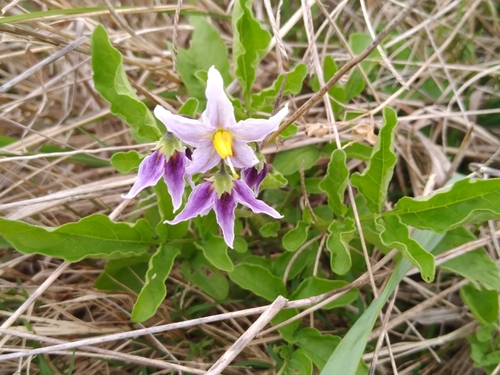
(c) Adriana Machado, some rights reserved (CC BY), uploaded by Adriana Machado
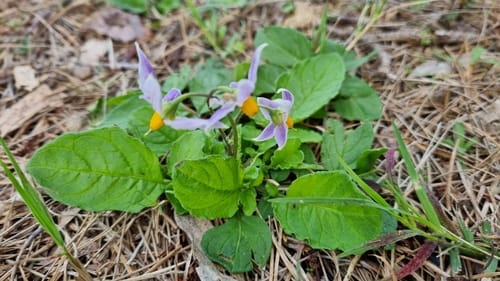
(c) Griselda Carreras, some rights reserved (CC BY-NC)
What to Eat
Edible parts: Tuber, Root
The tubers and roots are eaten.
Where to Find It
It is a subtropical plant. In Argentina it grows below 400 m above sea level.
Argentina, Brazil, Paraguay, South America, Uruguay,
How to Identify
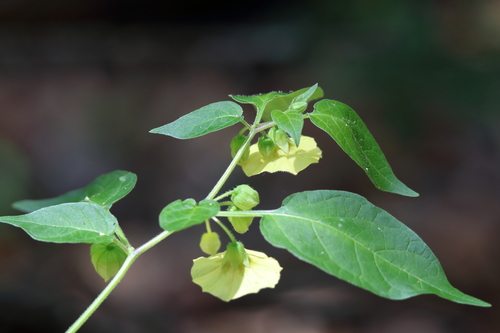
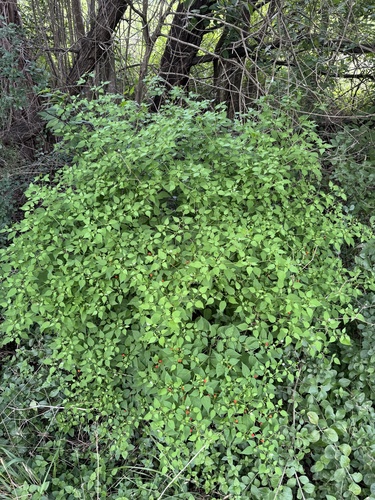
A herb. It keeps growing from year to year. It grows 15-30 cm tall. The tubers are 2 cm across. The leaves have leaflets along the stalk. The leaves are 8-12 cm long with 3-7 leaflets. The fruit are oval or cone shape and 3 cm across by 2.5 cm wide.
How to Grow
It can be grown from seeds or tubers.
Wikipedia
Source ↗Solanum commersonii is a species of wild potato in the family Solanaceae. It is native to southern Brazil, Uruguay, and northeastern Argentina, and has been introduced to Mauritius. It is a crop wild relative useful in potato breeding for its resistance to root knot nematode, soft rot, blackleg, bacterial wilt (Ralstonia solanacearum), verticillium wilt, Potato virus X, tobacco etch virus, common scab, and late blight (caused by Phytophthora infestans), and for its frost tolerance and ability to cold acclimate.
Notes
There are about 1400 Solanum species.
Names & Synonyms
Batata-selvagem, Batata-silvestre, Batatilla purgante, Papa cimarrona, Papa del campo, Papa silvestre
References (4)
- Hedrick, U.P., 1919, (Ed.), Sturtevant's edible plants of the world. p 613
- Macmillan, H.F. (Revised Barlow, H.S., et al), 1991, Tropical Planting and Gardening. Sixth edition. Malayan Nature Society. Kuala Lumpur. p 368
- Malezas Comestibles del Cono Sur, INTA, 2009, Buernos Aires
- J. L. M. Poiret, Encycl. suppl. 3:746. 1814