Solanum dasyphyllum
Schumach. & Thonn.

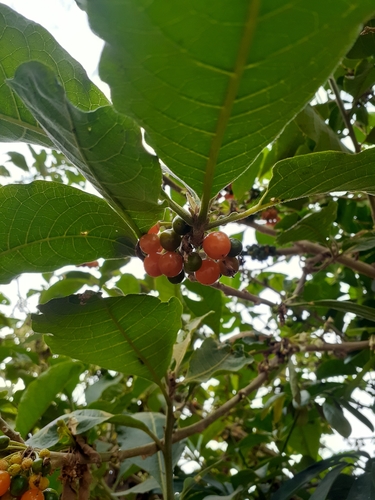
(c) Sergey_Cher, some rights reserved (CC BY-NC), uploaded by Sergey_Cher

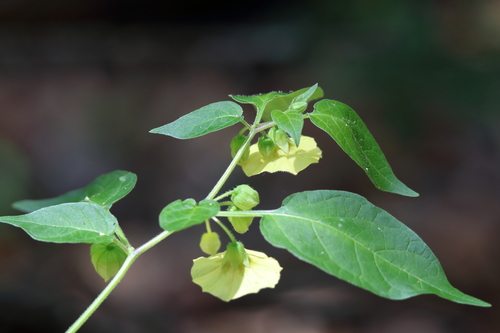
(c) Peter Vos, some rights reserved (CC BY-NC), uploaded by Peter Vos

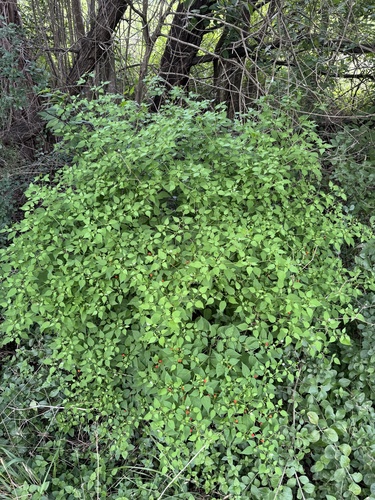
(c) kizkizito, some rights reserved (CC BY-NC)
What to Eat
Edible parts: Fruit, Leaves
The leaves are boiled and eaten, though they are only occasionally consumed. The fruit is also edible.
Known Hazards
Where to Find It
A tropical plant. It is grown throughout tropical Africa. It grows in seasonally flooded forests.
Africa, Benin, Burkina Faso, Central Africa, Central African Republic, CAR, Congo, East Africa, Ethiopia, Gabon, Ghana, Guinea-Bissau, Sao Tome and Principe, Senegal, Sierra Leone, Uganda, West Africa,
How to Identify
A herb or semi-woody shrub in the nightshade family that grows up to 1.5 m high and may have prickles. It is found throughout tropical Africa, particularly in seasonally flooded forests.
How to Grow
Propagation: Seed - sow in trays in a nursery. Prick out the seedlings into individual pots when they are large enough to handle and grow them on fast. Plant them out when 10cm or more tall.
Medicinal Uses
The plant is used to counter poisoning by Strophanthus spp.. The fruit is sometimes used to treat tooth ailments. The mouth is washed with a decoction of the fruit for 3 - 4 days at daybreak and dusk.
Other Information
The leaves are only occasionally eaten.
Notes
There are about 1400 Solanum species.
Names & Synonyms
Achikolpo, Garenti, Nakati nume y'akyalo, Turkit
References (13)
- Abbiw, D.K., 1990, Useful Plants of Ghana. West African uses of wild and cultivated plants. Intermediate Technology Publications and the Royal Botanic Gardens, Kew. p 41
- Beskr. Guin. pl. 126. 1827
- Burkill, H. M., 1985, The useful plants of west tropical Africa, Vol. 5. Kew.
- Busson, 1965,
- Dalziel, 1937 (As Solanum duplosinuatum)
- Dansi, A., et al, 2008, Traditional leafy vegetables and their use in the Benin Republic. Genet Resour Crop Evol (2008) 55:1239–1256
- Dansi, A., et al, 2009, Traditional leafy vegetables in Benin: folk nomenclature, species under threat and domestication. Acta Bot. Gallica 156(2), 183-199
- Goode, P., 1989, Edible Plants of Uganda. FAO p 26
- Jardin, C., 1970, List of Foods Used In Africa, FAO Nutrition Information Document Series No 2.p 102
- Kidane, B., et al, 2014, Wild and semi-wild leafy vegetables used by the Maale and Ari ethnic communities in southern Ethiopia. Genetic Resour Crop Evol. Springer. p 8
- Peters, C. R., O'Brien, E. M., and Drummond, R.B., 1992, Edible Wild plants of Sub-saharan Africa. Kew. p 186
- World Checklist of Useful Plant Species 2020. Royal Botanic Gardens, Kew
- Yimer, A., et al, 2021, Ethnobotanical study of wild edible plants used by Meinit Ethnic Community at Bench-Maji Zone, Southwest Ethiopia. Research Square. p 6