Solanum ferox
L.
Hairy-fruited eggplant

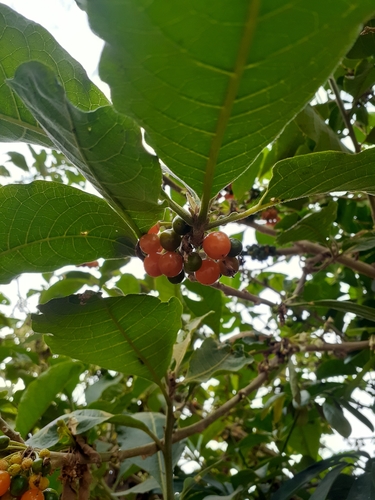
(c) Dewald du Plessis, some rights reserved (CC BY-NC)

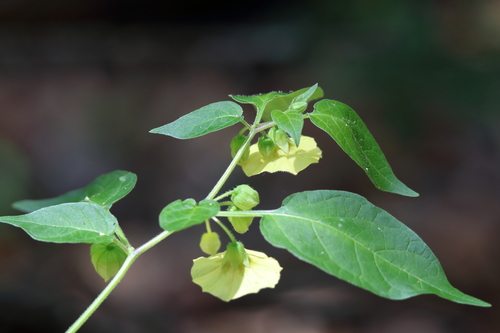
(c) Dewald du Plessis, some rights reserved (CC BY-NC)

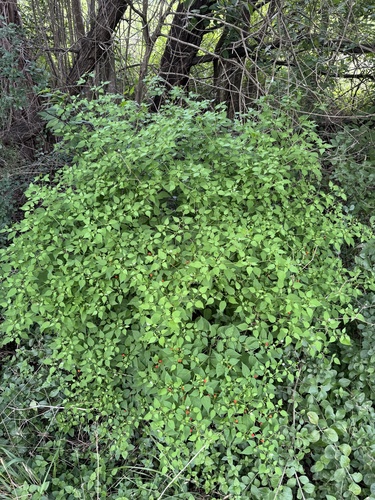
(c) Dewald du Plessis, some rights reserved (CC BY-NC)
What to Eat
Edible parts: Fruit, Seeds, Vegetable
The fruit is used in sour relish (becoming more acidic as it ripens) and in curries. Seeds are also edible.
Where to Find It
A tropical plant.
Asia, Australia, Brunei, India, Indochina, Indonesia, Malaysia, Myanmar, Northeastern India, Pacific, Papua New Guinea, PNG, Philippines, SE Asia, Thailand,
How to Identify
A small prickly shrub. It grows 1-2 m tall. The flowers are white. The fruit are orange and fuzzy. They are 5 cm across.
Nutrition Score: 36/100
| Part | Moisture | kJ | kcal | Protein | Vit A | Vit C | Iron | Zinc |
|---|---|---|---|---|---|---|---|---|
| Fruit | 78.8 | 259 | 62 | 1.8 | — | 0 | 4.5 | 5.7 |
Other Information
It is a commercially cultivated vegetable.
Notes
There are about 1400 Solanum species. There are 4 different plants named Solanum ferox with 4 different authorities.
Names & Synonyms
Anachundai, Balbalusangi, Bangko, Garbhada, Haladigulla anesundegida, Hepi sokran, Kotayeng, Khunthai, Ma uk muak, Molakkai, Mulakkayi, Nbabawk, Rambegun, Sin-hkayan, Sin-kadi, Talong gubat, Tarabi, Terong asam, Terong bulu, Theso keho, Titabhekuri, Velutha vazuthana
References (18)
- Ambasta, S.P. (Ed.), 2000, The Useful Plants of India. CSIR India. p 580
- Arora, R. K., 2014, Diversity in Underutilized Plant Species - An Asia-Pacific Perspective. Bioversity International. p 51
- Baishya, S. Kr., et al, 2013, Survey of Wild Edible Fruits of Dhubri District, Assam, India. Plant Archives Vol 13 (1): 155-158
- Barua, U., et al, 2007, Wild edible plants of Majuli island and Darrang districts of Assam. Indian Journal of Traditional Knowledge 6(1) pp 191-194
- Burkill, I.H., 1966, A Dictionary of the Economic Products of the Malay Peninsula. Ministry of Agriculture and Cooperatives, Kuala Lumpur, Malaysia. Vol 2 (I-Z) p 2079
- Ethnobotany of Karbis. Chapter 4 in p 101
- Facciola, S., 1998, Cornucopia 2: a Source Book of Edible Plants. Kampong Publications, p 236
- Herklots,
- Hoe, V. B. & Siong, K. H., 1999, The nutritional value of indigenous fruit and vegetables in Sarawak. Asia Pacific J. Clin. Nutr. 8(1):24-31
- Kays, S. J., and Dias, J. C. S., 1995, Common Names of Commercially Cultivated Vegetables of the World in 15 languages. Economic Botany, Vol. 49, No. 2, pp. 115-152
- Milow, P., et al, 2013, Malaysian species of plants with edible fruits or seeds and their evaluation. International Journal of Fruit Science. 14:1, 1-2
- Peekel, P.G., 1984, (Translation E.E.Henty), Flora of the Bismarck Archipelago for Naturalists, Division of Botany, Lae, PNG. p 494, 497
- Pegu, R., et al, 2013, Ethnobotanical study of Wild Edible Plants in Poba Reserved Forest, Assam, India. Research Journal of Agriculture and Forestry Sciences 1(3):1-10
- Plants of Papua New Guinea LAE herbarium record
- Smith, P.M., 1979, Solanums, in Simmonds, N.W., (ed), Crop Plant Evolution. Longmans. London. p 322
- Teron, R. & Borthakur, S. K., 2016, Edible Medicines: An Exploration of Medicinal Plants in Dietary Practices of Karbi Tribal Population of Assam, Northeast India. In Mondal, N. & Sen, J.(Ed.) Nutrition and Health among tribal populations of India. p 155
- Terra, G.J.A., 1973, Tropical Vegetables. Communication 54e Royal Tropical Institute, Amsterdam, p 76
- Uphof,