Solanum macrocarpon
L.
Native eggplant, African eggplant

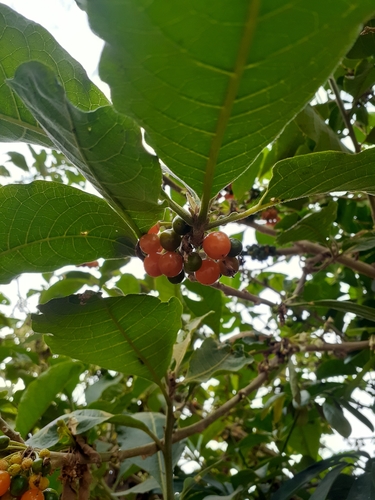
(c) flint_jack, some rights reserved (CC BY-NC)
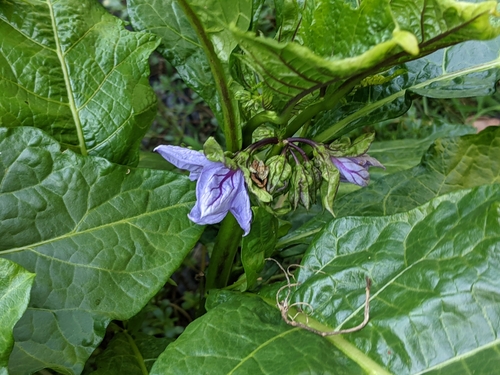
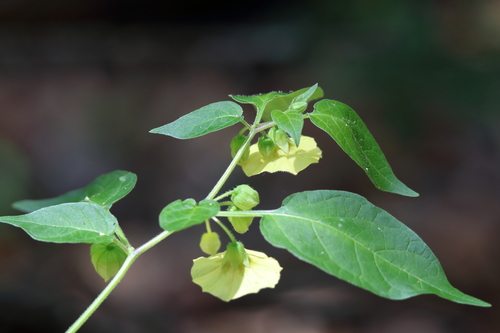
(c) accidentalshrike, some rights reserved (CC BY-NC), uploaded by accidentalshrike
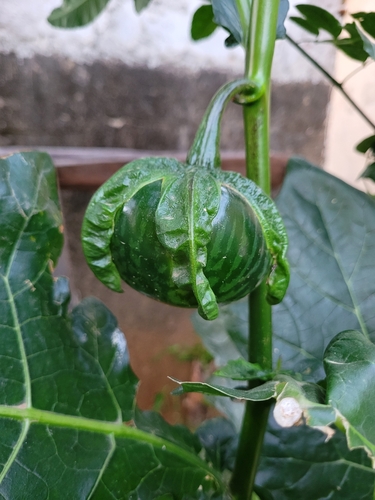
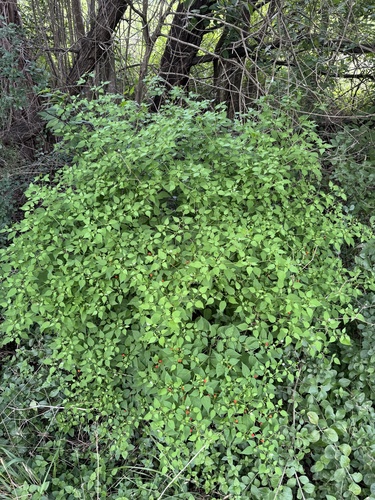
(c) Gabriel Bonfa, some rights reserved (CC BY-NC-ND), uploaded by Gabriel Bonfa
What to Eat
Edible parts: Leaves, Fruit, Flowers, Vegetable
Solanum macrocarpon is consumed in the various regions of the world where it is found. The parts of the plant that is consumed are the fruits and its young leaves. While taste of both the leaves and the fruit are very bitter they have a high nutrient yield. The fruit's crunchy texture and mild flavor make it unique. It can be consumed raw without removing the skin. Typically, the Vietnamese eggplant has a slightly bitter taste, but the bitterness may become stronger when the eggplant is over-ripe. The Vietnamese eggplant is very neutral smelling when raw, and develops an earthy scent when cooked. Vietnamese eggplants are used in Vietnamese cuisine in stir fries, soups and salads. They are also eaten raw or pickled.
Known Hazards
Where to Find It
A tropical plant. It suits the hot humid tropics. It grows up to 1,765 m above sea level. It can grow in arid places.
Africa, Angola, Asia, Benin, Cameroon, Central Africa, Congo DR, Comoros, Côte d'Ivoire, East Africa, Egypt, Ghana, Guinea, Guinée, Guinea-Bissau, India, Indonesia, Ivory Coast, Kenya, Madagascar, Malawi, Malaysia, Mauritius, Mali, Mozambique, Nigeria, North Africa, Northeastern India, Sao Tome and Principe, SE Asia, Seychelles, Sierra Leone, South Africa, Southern Africa, Sri Lanka, Sudan, Tanzania, Togo, Uganda, West Africa, Zambia, Zimbabwe,
How to Identify
An annual plant. It can keep groing for some years. The leaves are dark green and glossy. The leaf stalk is not well defined as the leaf blade runs down into the stalk. Leaves are generally not very hairy. The flowers are purple or sometimes white. The flowers are large. The fruit are are round and greenish white but become orange-yellow or brown when fully ripe. They are hard or firm with long calyces around the fruit.
Nutrition Score: 45/100
| Part | Moisture | kJ | kcal | Protein | Vit A | Vit C | Iron | Zinc |
|---|---|---|---|---|---|---|---|---|
| Leaves | 86 | 176 | 42 | 4.6 | — | 65 | 6 | — |
| Fruit - mature | 89 | 168 | 40 | 1.4 | — | — | — | — |
How to Grow
Seeds can be grown in a nursery then transplanted.
Propagation: Seed - sow in a seedbed or in containers. Presoaking the seeds in hydrogen peroxide for 24 hours generally improves germination. Plant out into their permanent positions when about 6 - 8cm tall.
Medicinal Uses
The roots, leaves, and fruit of S. macrocarpon contain medicinal qualities. In Nigeria, the fruit is used as a laxative, and as a means to treat cardiac diseases. The flowers are chewed on to clean teeth. In Sierra Leone the leaves are heated and then are chewed to ease throat pain. In Kenya the roots are boiled and the juice is then consumed to kill any hookworms in the stomach. The root is also used for bronchitis, body aches, asthma, and speed up the process of healing wounds. The seeds of S. macrocarpon crushed to treat toothaches. Promising molluscicidal and schistosomicidal activities were displayed for the S. macrocarpon extracts and fractions which are attributed to the glycoalkaloid content.
Other Uses
The leaves are chewed to clean the teeth. The flowers and fruits are used.
Wikipedia
Source ↗Solanum macrocarpon otherwise known as the African eggplant (Yoruba: Igba) (Igbo language/ Igbo): añara), Surinamese eggplant (Sranang Tongo: Antroewa / Antruwa) or Vietnamese eggplant (Vietnamese: cà pháo, fire-cracker eggplant) is a plant of the family Solanaceae. S. macrocarpon is a tropical perennial plant that is closely related to the eggplant. S. macrocarpon originated from West Africa, but is now widely distributed in Central and East Africa. The plant also grows in the Caribbean, South America, and some parts of Southeast Asia. S. macrocarpon is widely cultivated for its use as a food, its medicinal purposes, and as an ornamental plant.
Production
Plants produce fruit over 60 to 120 days from planting. The unripe fruit or leaves are plucked off the plant.
Other Information
It is a commercially cultivated vegetable.
Notes
There are about 1400 Solanum species.
Names & Synonyms
Akwaseho, Angivy, Atropo, Brembe, Bugorra, Bundom-dabu, Bussu, Chilo, Couve preta, Culuta Ete-eri, Djagato-bussu, Ede, Gboma eggplant, Igbo, Jacatu, Jagatu-de-lobo, Kade, Kpatakpako, Lezo, Mankessim, Mucussa, N'djaktu, N'sacraha, N'tabactu, Nakati nume, Ojagato-buruure, Ojagato-de-rato, Terong engkol, Terong gayung, Terong kalapa, Tikann'te, Tikawounfanti
References (51)
- Abbiw, D.K., 1990, Useful Plants of Ghana. West African uses of wild and cultivated plants. Intermediate Technology Publications and the Royal Botanic Gardens, Kew. p 35
- Achigan-Dako, E, et al (Eds), 2009, Catalogue of Traditional Vegetables in Benin. International Foundation for Science.
- Agea, J. G., et al 2011, Wild and Semi-wild Food Plants of Bunyoro-Kitara Kingdom of Uganda: etc. Environmental Research Journal 5(2) 74-86
- Amagloh, F. K. & Nyarko, E. S., 2012, Mineral Nutrient Content of Commonly Consumed Leafy Vegetables in Northern Ghana. African Hournal of Food, Agriculture, Nutrition and Development. Vol. 12(3): p 6397
- Burkill, H. M., 1985, The useful plants of west tropical Africa, Vol. 5. Kew.
- Burkill, I.H., 1966, A Dictionary of the Economic Products of the Malay Peninsula. Ministry of Agriculture and Cooperatives, Kuala Lumpur, Malaysia. Vol 2 (I-Z) p 2080
- Busson, 1965,
- Catarino, L., et al, 2016, Ecological data in support of an analysis of Guinea-Bissau's medicinal flora. Data in Brief 7 (2016):1078-1097
- Dalziel, 1937,
- Dansi, A., et al, 2008, Traditional leafy vegetables and their use in the Benin Republic. Genet Resour Crop Evol (2008) 55:1239–1256
- East African Herbarium records, 1981,
- Facciola, S., 1998, Cornucopia 2: a Source Book of Edible Plants. Kampong Publications, p 237
- FAO, 1988, Traditional Food Plants, FAO Food and Nutrition Paper 42. FAO Rome p 450, 461
- Gbile, Z. O. and Adesina, S. K., 1988, Nigerian Solanum Species of Economic Importance. Annals of the Missouri Botanical Garden, Vol. 75, No. 3. p 864
- Godfrey, J. et al, 2013, Harvesting, preparation and preservation of commonly consumed wild and semi-wild food plants in Bunyoro-Kitara Kingdom, Uganda. Int. J. Med. Arom. Plants. Vol.3 No.2 pp 262-282
- Goode, P., 1989, Edible Plants of Uganda. FAO p 26
- Grubben, G. J. H. and Denton, O. A. (eds), 2004, Plant Resources of Tropical Africa 2. Vegetables. PROTA, Wageningen, Netherlands. p 484
- Heyne, K., 1927, p 1345
- Jardin, C., 1970, List of Foods Used In Africa, FAO Nutrition Information Document Series No 2.p 102
- Kays, S. J., and Dias, J. C. S., 1995, Common Names of Commercially Cultivated Vegetables of the World in 15 languages. Economic Botany, Vol. 49, No. 2, pp. 115-152
- Kiple, K.F. & Ornelas, K.C., (eds), 2000, The Cambridge World History of Food. CUP p 1803
- Koni, J. M. & Bostein, K., 2008, Noms et usages des plantes utiles chez les Nsong, DR Congo. University of Gothenburg. Department of Oriental and African Languages. p 32
- Latham, P., 2004, Useful Plants of Bas-Congo province. Salvation Army & DFID p 259
- Lautenschläger, T., et al, 2018, First large-scale ethnobotanical survey in the province of Uíge, northern Angola. Journal of Ethnobiology and Ethnomedicine (2018) 14:51
- Lembogi Biologi Nasional, 1980, Sayur-sayuran. Balai Pustaka, Jakarta. p 110
- Long, C., 2005, Swaziland's Flora - siSwati names and Uses http://www.sntc.org.sz/flora/
- Mant. pl. 2:205. 1771
- Martin, F.W. & Ruberte, R.M., 1979, Edible Leaves of the Tropics. Antillian College Press, Mayaguez, Puerto Rico. p 76, 220
- Maundu, P. et al, 1999, Traditional Food Plants of Kenya. National Museum of Kenya. 288p
- Medhi, P. & Borthakur, S. K., 2012, Phytoresources from North Cachur Hills of Assam -3: Edible plants sold at Hflong market. Indian Journal or Natural Products and Resources. 3(1) pp 84-109
- Milow, P., et al, 2013, Malaysian species of plants with edible fruits or seeds and their evaluation. International Journal of Fruit Science. 14:1, 1-2
- Nyadanu, D., et al, 2015, Agro-biodiversity and challenges of on-farm conservation: the case of plant genetic resources of neglected and underutilized crop species in Ghana. Genet. Resourc. Crop Evol. 62(7):
- Ochse, J. J. et al, 1931, Vegetables of the Dutch East Indies. Asher reprint. p 679
- Okigbo, B.N., Vegetables in Tropical Africa, in Opena, R.T. & Kyomo, M.L., 1990, Vegetable Research and development in SADCC countries. Asian Vegetable Research and development Centre. Taiwan. p 45
- Onuminya, T. O., et al, 2017, Comparative proximate and Phytochemical Analysis of leafy vegetables in Lagos State. Nig. J. Pure and Applied Sci. Vol. 30 Issue 3: p 3097f
- Oomen, H.A.P.C., & Grubben, G.J.H., 1978, Tropical Leaf Vegetables in Human Nutrition, Communication 69, Department of Agricultural research, RTI Amsterdam, p 36, 66, 81, 100
- Peters, C. R., O'Brien, E. M., and Drummond, R.B., 1992, Edible Wild plants of Sub-saharan Africa. Kew. p 187
- Razanameharizaka, J., et al, 2022, Catalogue Legumes Traditionnels de Madagascar. Université d’Antananarivo, Antananarivo (101), Madagascar. Vol. 1. p 58
- Royal Botanic Gardens, Kew (1999). Survey of Economic Plants for Arid and Semi-Arid Lands (SEPASAL) database. Published on the Internet; http://www.rbgkew.org.uk/ceb/sepasal/internet [Accessed 11th June 2011]
- Samuels, J., 2015, Biodiversity of Food Species of the Solanaceae Family: A Preliminary Taxonomic Inventory of Subfamily Solanoideae. Resources 2015, 4. 277-322
- Segnon, A. C. & Achigan-Dako, E. G., 2014, Comparative analysis of diversity and utilization of edible plants in arid and semi-arid areas in Benin. Journal of Ethnobiology and Ethnomedicine 2014, 10:80
- Smith, F. I. and Eyzaquirre, P., 2007, African leafy vegetables: Their role in the World Health Organization's global Fruit and Vegetables Initiative. AJFAND, Vol. 7 No. 3
- Tanaka,
- Terra, G.J.A., 1973, Tropical Vegetables. Communication 54e Royal Tropical Institute, Amsterdam, p 73, 75
- Tindall, H.D., & Williams, J.T., 1977, Tropical Vegetables and their Genetic Resources, International Board for Plant Genetic Resources, Rome, p 106
- Tindall, H.D., 1983, Vegetables in the Tropics, Macmillan p 363
- USDA, ARS, National Genetic Resources Program. Germplasm Resources Information Network - (GRIN). [Online Database] National Germplasm Resources Laboratory, Beltsville, Maryland. Available: www.ars-grin.gov/cgi-bin/npgs/html/econ.pl (10 April 2000)
- Weinberger, K., Msuya J., 2004, Indigenous Vegetables in Tanzania. Significance and Prospects. Technical Bulletin No. 31 AVRDC, Taiwan/FAO p 4
- Wiersema, J. H. & Leon, B., 2013, World Economic Plants. A Standard Reference CRC Press. 2nd Ed. p 645
- World Checklist of Useful Plant Species 2020. Royal Botanic Gardens, Kew
- Zon, A.P.M. van der, Grubben, G.J.H., 1976, Les legumes-feuilles spontanes et cultives du Sud-Dahomey, Communication 65, Royal Tropical Institute, Amsterdam, p 91