Solanum orbiculatum
Poir.
Round-leaf nightshade
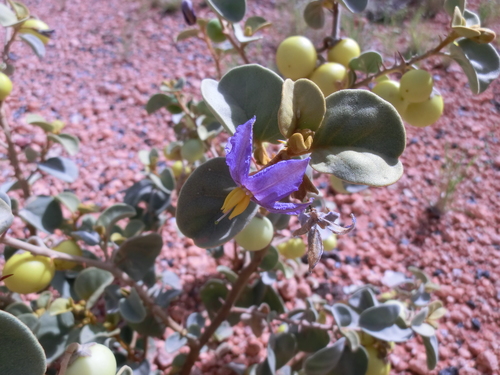
SolanaceaeFruit
iNaturalist · cc-by-nc
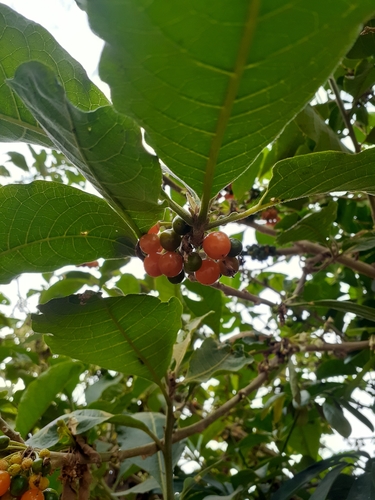
(c) Alejandro López, some rights reserved (CC BY-NC), uploaded by Alejandro López
(c) Alejandro López, some rights reserved (CC BY-NC), uploaded by Alejandro López

iNaturalist · cc-by
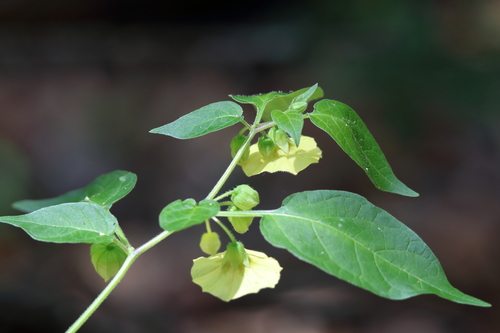
(c) Tim Hammer, some rights reserved (CC BY), uploaded by Tim Hammer
(c) Tim Hammer, some rights reserved (CC BY), uploaded by Tim Hammer

iNaturalist · cc-by-nc
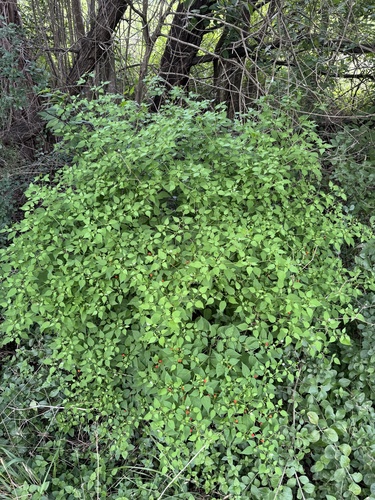
(c) Caro Telfer, some rights reserved (CC BY-NC), uploaded by Caro Telfer
(c) Caro Telfer, some rights reserved (CC BY-NC), uploaded by Caro Telfer
What to Eat
Edible parts: Fruit
The fruit is eaten.
Where to Find It
It grows on a range of soils. It grows in temperate to subtropical places. It can grow in arid places.
Australia*,
Countries: Australia
How to Identify
A shrub of the Solanaceae family growing 0.3–1.5 m high with purple and violet flowers. It grows in temperate to subtropical and arid regions on a range of soils.
Notes
There are about 1400 Solanum species.
Names & Synonyms
Itunypa, Tjantu
References (8)
- Bindon, P., 1996, Useful Bush Plants. Western Australian Museum. p 234
- Cancilla, D., 2018, Ethnobotanical and Ethnozoological Values Desktop Assessment - Eliwana Project. p 45
- Cherikoff V. & Isaacs, J., The Bush Food Handbook. How to gather, grow, process and cook Australian Wild Foods. Ti Tree Press, Australia p 120, 191
- Lang, P. J., et al, 1986, Anangu Pitjantjatjara Lands Biological Survey. p 42
- Latz, P.K., 1996, Bushfires and Bushtucker: Aboriginal plant use in Central Australia. IAD Press Alice Springs p 279
- Low, T., 1992, Bush Tucker. Australia’s Wild Food Harvest. Angus & Robertson. p 67
- Paczkowska, G . & Chapman, A.R., 2000, The Western Australian Flora. A Descriptive Calatogue. Western Australian Herbarium. p 538
- Samuels, J., 2015, Biodiversity of Food Species of the Solanaceae Family: A Preliminary Taxonomic Inventory of Subfamily Solanoideae. Resources 2015, 4. 277-322