Solanum phureja
Juz. & Bukasov
Phureja
(c) Robert Koller, some rights reserved (CC BY-NC)
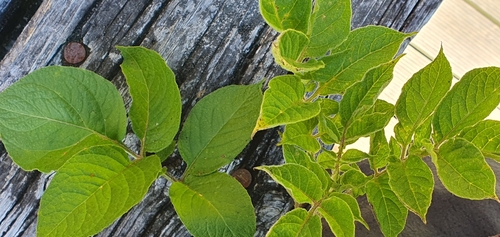
(c) Chris Ecroyd, some rights reserved (CC BY-NC)
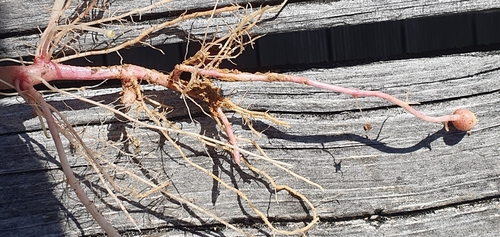
(c) Chris Ecroyd, some rights reserved (CC BY-NC)
What to Eat
Edible parts: Root, Tuber
The tubers are cooked and eaten. They are high in vitamin C, starch, and protein, and have a stronger flavour and firmer texture than the cultivated potato, Solanum tuberosum.
Known Hazards
Where to Find It
A tropical plant. It grows at lower altitudes and sprouts quickly. This allows 2 or more plantings each year. This means it needs to be in a continuously mild climate. They are adapted to short day locations and cannot tolerate frost.
Bolivia, Colombia, Ecuador, Peru, South America, Venezuela,
How to Identify
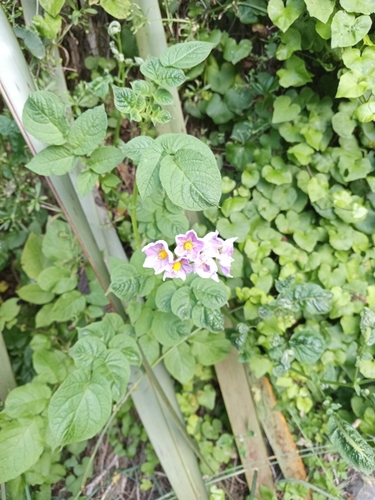
A herb. It is a potato relative. It has 2 sets of chromosomes. [or Solanum tuberosum Phureja Group]
How to Grow
Succeeds in most soils. Dislikes wet or heavy clay soils. Prefers a slightly acid soil, the tubers are subject to scab on limy soils or those deficient in humus. Yields best on a fertile soil rich in organic matter. This plant is one of the S. American species of potatoes. It is not frost hardy but can probably be grown in much the same way as potatoes are grown by planting out the tubers in spring and harvesting in the autumn. It is cultivated for its tubers in the Andes, there are many named varieties. Plants might have strict daylength requirements and may yield poorly in temperate zones because they need short-days in order to induce tuber-formation. Tubers can be harvested in 3 - 4 months from planting out. Tubers from this species lack a period of dormancy, a useful trait in warmer climates than Britain where 2 - 3 crops can be grown but it makes the plant very problematic for temperate areas. This potato has become popular in the Netherlands because of its resistance to disease. (The report does not say if it is grown there or imported.) A diploid species, it probably arose from S. stenotomum through selection for short dormancy. It has been hybridized with the common potato to impart greater heat tolerance to that species.
Propagation: Sow seed in early spring in a warm greenhouse. Prick seedlings out into a fairly rich compost as soon as they are large enough to handle and grow them on quickly. Plant out after the last expected frosts. Alternatively, propagate by division. Harvest tubers in autumn once frost has cut back the top-growth, store in a cool, frost-free place over winter, and replant in April.
Medicinal Uses
None known
Other Uses
None known
Wikipedia
Source ↗Ullucu is a tender perennial herb. It grows in well-drained sandy, loamy, or clay soils with neutral to slightly alkaline pH. The plant tolerates semi-shade or full sun and prefers consistently moist soil conditions.
Other Information
It is cultivated in some places.
Notes
There are about 1400 Solanum species.
Names & Synonyms
References (7)
- Grun, P., 1990, The Evolution of Cultivated Potatoes. Economic Botany, Vol. 44, No. 3, Supplement: New Perspectives on the Origin and Evolution of New World Domesticated Plants pp. 39-55
- Hermandez Bermejo, J.E., and Leon, J. (Eds.), 1994, Neglected Crops. 1492 from a different perspective. FAO Plant Production and Protection Series No 26. FAO, Rome. p 31
- Plants for a Future database, The Field, Penpol, Lostwithiel, Cornwall, PL22 0NG, UK. http://www.scs.leeds.ac.uk/pfaf/
- Samuels, J., 2015, Biodiversity of Food Species of the Solanaceae Family: A Preliminary Taxonomic Inventory of Subfamily Solanoideae. Resources 2015, 4. 277-322
- Trudy vsecouz. sezda genetike 3:605. 1929 (Proc. U.S.S.R.Congr. Genet.)
- USDA, ARS, National Genetic Resources Program. Germplasm Resources Information Network - (GRIN). [Online Database] National Germplasm Resources Laboratory, Beltsville, Maryland. Available: www.ars-grin.gov/cgi-bin/npgs/html/econ.pl (10 April 2000)
- Velasquez-Milla, D., et al, 2011, Ecological and socio-cultural factors influencing in situ conservation of crop diversity by traditional Andean households in Peru. Journal of Ethnobiology and Ethnomedicine 7:40