Solanum pseudolulo
Heiser
Lulo comun, Lulo de perro

(c) Juan Manuel de Roux, some rights reserved (CC BY-NC), uploaded by Juan Manuel de Roux

(c) IKAl, some rights reserved (CC BY-SA)
(c) Mateo Hernandez Schmidt, some rights reserved (CC BY-NC-SA), uploaded by Mateo Hernandez Schmidt
What to Eat
Edible parts: Fruit
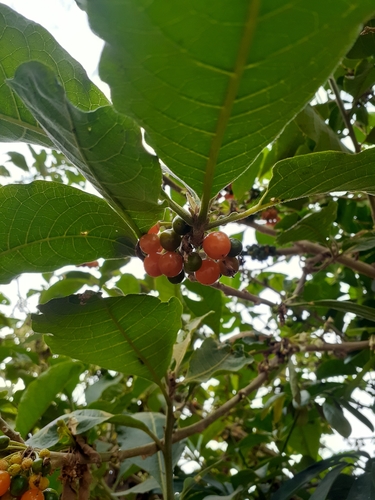
Fruit - raw. Pale yellow pulp, it is used to make refreshing drinks. The quality of the juice is generally considered to be inferior to the naranjilla (Solanum quitoense). The fruit is rather variable, some forms are tart and delicious whilst others rather bland. The globose, orange or yellow-orange fruit is 2 - 4cm in diameter.
Known Hazards
Where to Find It
A tropical plant. It does well in sunny locations.
Andes, Australia, Colombia, Ecuador, Peru, South America,
How to Identify
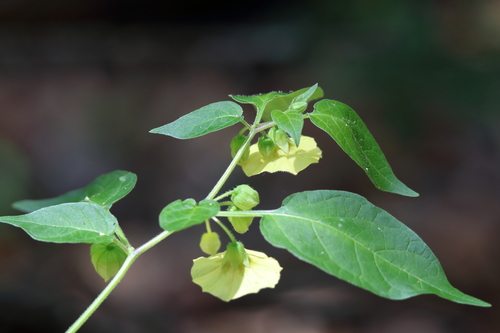
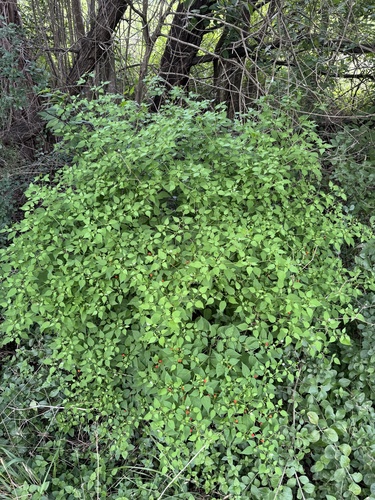
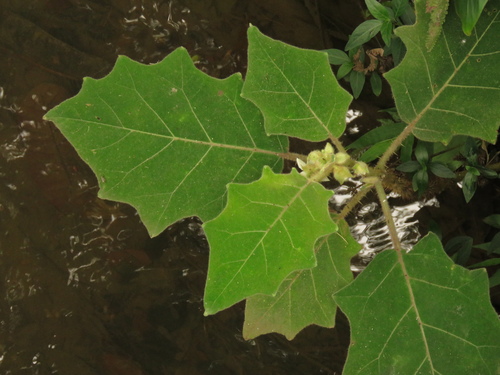
A large herb or small shrub. The leaves are heart shaped. The leaves and stems have short hairs. It can also have sharp spines. The fruit has short hairs that are easy rubbed off. The fruit are green when unripe and turn yellow or orange when ripe. The fruit has cream coloured flesh. It has many small seeds.
How to Grow
Prefers a sunny position, but can succeed in light shade. The plant hybridizes with Solanum quitoense to produce fertile hybrids.
Propagation: Seed - sow in trays in a nursery. Prick out the seedlings into individual pots when they are large enough to handle and grow them on fast. Plant them out when 10cm or more tall. Cuttings of half-ripe wood. Very easy, the cuttings root within a couple of weeks.
Wikipedia
Source ↗Solanum pseudolulo is a subtropical perennial plant from northwestern South America. The pseudolulo is a large herbaceous plant or a small shrub, with heart-shaped leaves. The leaves and stems of the plant are covered in short hairs, and the entire plant is often covered in sharp spines. Occasionally known as lulo de perro, the pseudolulo bears edible fruit, but is rarely cultivated. Instead, the plant proliferates as a weedy species at medium-altitude locations in Colombia and Ecuador. The fruit is generally regarded as inferior to the true lulo - naranjilla - but the fruit is occasionally sold in markets, and the plant is generally tolerated as a garden intruder. Unlike the lulo/naranjilla, the pseudolulo thrives in sunnier locations. The fruit is a large berry, green when unripe, ripening to yellow or yellow-orange. The orange or yellow flesh is filled with an abundance of small seeds. The fruit is covered with hairs which detach when the fruit has ripened. Some botanists consider the pseudolulo to be worthy of investigation as an agricultural fruit plant.
Other Information
Fruit are sold in local markets.
Notes
There are about 1400 Solanum species. It can be hybridised with naranjilla.
Names & Synonyms
Cun-cuna, Falso lulo
References (8)
- Facciola, S., 1998, Cornucopia 2: a Source Book of Edible Plants. Kampong Publications, p 237
- 1996, California Rare Fruit Growers, Inc. Pepino dulce Fruit fact
- Kermath, B. M., et al, 2014, Food Plants in the Americas: A survey of the domesticated, cultivated and wild plants used for Human food in North, Central and South America and the Caribbean. On line draft. p 823
- Lopez-Diago, D. & Garcia, N., 2021, Wild edible fruits of Colombia. Biota ColomBiana 22 (2) p 52
- Morton, Julia F., 1987, Fruits of Warm Climates. Creative Resources Systems, Inc. . p. 428
- Reis, S. V. and Lipp, F. L., 1982, New Plant Sources for Drugs and Foods from the New York Botanical Garden herbarium. Harvard. p 273
- Roa, J. A. G. & Boada, D. S. G., 2018, Fundación para el Fortalecimiento de la Fruticultura y Plantas Alimenticias no Convencionales en Colombia.
- Samuels, J., 2015, Biodiversity of Food Species of the Solanaceae Family: A Preliminary Taxonomic Inventory of Subfamily Solanoideae. Resources 2015, 4. 277-322