Solanum terminale
Forsk.

(c) Troos van der Merwe, some rights reserved (CC BY-NC), uploaded by Troos van der Merwe
(c) Marco Schmidt, some rights reserved (CC BY-NC-SA), uploaded by Marco Schmidt

(c) Bart Wursten, some rights reserved (CC BY-NC), uploaded by Bart Wursten
What to Eat
Edible parts: Leaves
The leaves are eaten.
Known Hazards
Where to Find It
A tropical plant. It grows at the edges of forests and along streams and in rocky places.
Africa, Angola, Arabia, Cameroon, Central Africa, Central African Republic, CAR, Comoros, Congo, East Africa, Eswatini, Ethiopia, Guinea, Guinée, Guinea-Bissau, Kenya, Malawi, Middle East, Mozambique, Rwanda, Sao Tome and Principe, South Africa, Southern Africa, Swaziland, West Africa, Yemen, Zambia, Zimbabwe,
How to Identify
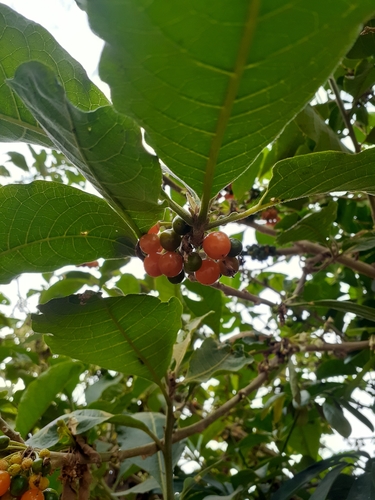
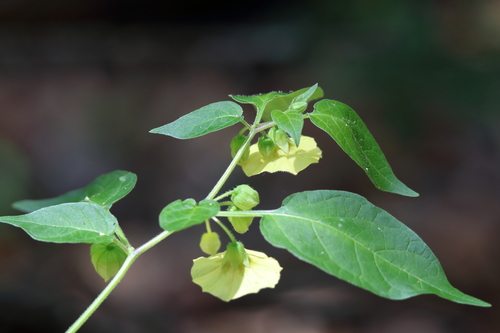
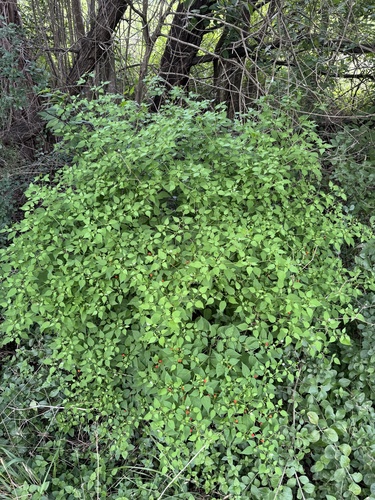
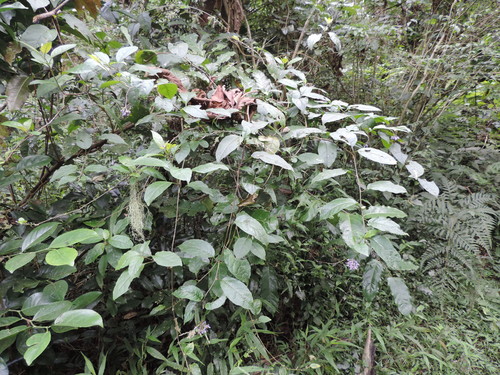
A woody climber. It grows 3-15 m long. The branches are hairy. The leaves are single. The leaf blade is 2-14 cm long by 1-7 cm wide. There are many flowers in a head. The fruit are orange or red and 5-10 mm across.
How to Grow
Propagation: Seed - sow in trays in a nursery. Prick out the seedlings into individual pots when they are large enough to handle and grow them on fast. Plant them out when 10cm or more tall. Cuttings of half-ripe wood. Very easy, the cuttings root within a couple of weeks.
Medicinal Uses
A leaf extract is drunk as an abortion-inducing drug and in Rwanda and Uganda it is drunk to induce labour in childbirth. A maceration of the leaves is used as a body wash, and also taken orally, in the treatment of kwashiorkor. A root decoction is filtered and applied as an enema as a mild purgative for children. A root extract is drunk as a stimulant and to induce sweating.
Other Uses
The stems are used as tying material when constructing fences and traditional buildings.
Notes
There are about 1400 Solanum species.
Names & Synonyms
References (5)
- Fowler, D. G., 2007, Zambian Plants: Their Vernacular Names and Uses. Kew. p 85
- Jardin, C., 1970, List of Foods Used In Africa, FAO Nutrition Information Document Series No 2.p 103
- Martin, F.W. & Ruberte, R.M., 1979, Edible Leaves of the Tropics. Antillian College Press, Mayaguez, Puerto Rico. p 220
- Terra, G.J.A., 1973, Tropical Vegetables. Communication 54e Royal Tropical Institute, Amsterdam, p 73
- World Checklist of Useful Plant Species 2020. Royal Botanic Gardens, Kew