Solidago canadensis
L.
Canadian Golden-rod
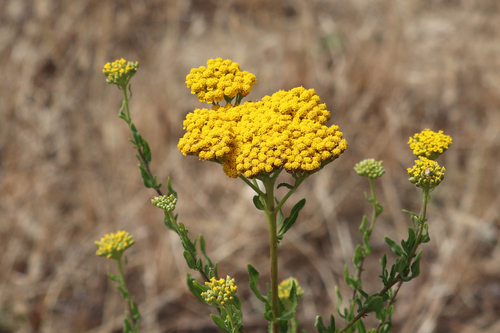
(c) Mark Kluge, some rights reserved (CC BY-NC), uploaded by Mark Kluge

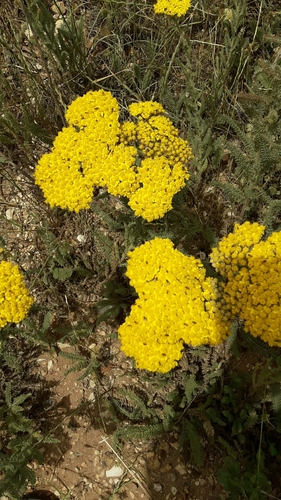
(c) Lyudmila Ivanova, some rights reserved (CC BY-NC), uploaded by Lyudmila Ivanova

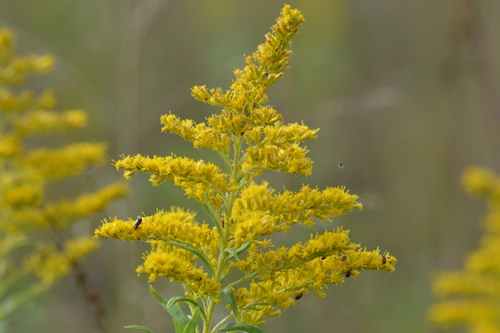
(c) Léo-Guy de Repentigny, some rights reserved (CC BY-NC), uploaded by Léo-Guy de Repentigny
What to Eat
Edible parts: Leaves, Seeds, Roots, Flowers - tea, Flowers
Young leaves and flowering stems can be cooked. The seed can be used as a thickener in soups, though it is very small and best reserved as a survival food when other options are exhausted. A tea can be brewed from the flowers, the leaves, or both.
Known Hazards
Where to Find It
It is a temperate plant. It suits hardiness zones 3-9.
Africa, Asia, Australia, Canada, Caucasus, China, Dominican Republic, Georgia, Hawaii, India, Indonesia, Luxembourg, North America, Pacific, SE Asia, Slovenia, Sri Lanka, Tasmania, USA, West Indies,
How to Identify
A herb which keeps growing from year to year. It has underground stems or rhizomes and also runners or stolons. The stems are erect. They grow 1.5 m high. The leaves are alternate and simple. They are 10 cm long. They do not have stalks. The leaves have teeth along the edges. The flower head is open and branched. The heads are in line on one side of the branching head. The flowers are yellow.
How to Grow
Succeeds in any moderately fertile moisture retentive soil in sun or semi-shade. Grows well in heavy clay soils. A rather greedy plant, it is apt to impoverish the soil. The flowers attract butterflies and moths. The plant also attracts various beneficial insects such as ladybirds, lacewings and hoverflies to the garden, these insects will help to control insect pests in the garden.
Propagation: Sow seed in spring in a cold frame, barely covering it and keeping the compost moist. Prick out into individual pots when large enough to handle and grow on through the first winter in pots. Plant out into permanent positions in spring or early summer. Divide plants in spring or autumn; larger divisions can go straight into permanent positions. Smaller divisions are best potted up and grown on in a lightly shaded cold frame until well established, then planted out in summer.
Medicinal Uses
Goldenrod is a safe and gentle remedy for a number of disorders. The root is applied as a poultice to burns. An infusion of the dried powdered herb acts as an antiseptic. The blossoms are analgesic, astringent, and febrifuge; they have been chewed with the juice slowly swallowed to treat sore throats. A tea from the flowers treats diarrhoea, body pains, fevers, and snakebites. The plant contains quercitin, reported to be useful in treating haemorrhagic nephritis, and rutin, used for capillary fragility. It also contains saponins that are antifungal and act specifically against the Candida fungus responsible for vaginal and oral thrush, and phenolic glycosides that are anti-inflammatory. The leaves and flowering tops are anthelmintic, anti-inflammatory, antiseptic, aromatic, astringent, carminative, diaphoretic, mildly diuretic, febrifuge, and stimulant. Used internally, goldenrod helps with urinary infections, chronic catarrh, skin diseases, influenza, whooping cough, and bladder and kidney stones. Due to its mild action it is suitable for treating gastro-enteritis in children and makes an excellent mouthwash for thrush. The plant is gathered in summer and dried for later use. The seed is anticoagulant, astringent, and carminative. A homeopathic remedy made from the plant is used for kidney and bladder disorders, rheumatism, and arthritis. The German Commission E Monographs approve Solidago canadensis for urinary tract infections and kidney and bladder stones.
Other Uses
Mustard, orange, and brown dyes can be obtained from the whole plant. The plant is the source of 'Canadian goldenrod' oil, likely an essential oil.
Wikipedia
Source ↗Solidago canadensis, known as Canada goldenrod or Canadian goldenrod, is an herbaceous perennial plant of the family Asteraceae. It forms colonies of upright growing plants, with many small yellow flowers in a branching inflorescence held above the foliage. It is native to northeastern and north-central North America and is an invasive plant in other parts of the continent and several areas worldwide, including Eurasia.
Notes
There are about 100 Solidago species.
Names & Synonyms
Kanadska zlata rozga, Q'vavilts'vrila, Solidago emas
References (21)
- Ambasta, S.P. (Ed.), 2000, The Useful Plants of India. CSIR India. p 583
- Beckstrom-Sternberg, Stephen M., and James A. Duke. "The Foodplant Database." http://probe.nalusda.gov:8300/cgi-bin/browse/foodplantdb.(ACEDB version 4.0 - data version July 1994)
- Bremness, L., 1994, Herbs. Collins Eyewitness Handbooks. Harper Collins. p 218
- Bussman, R. W., et al, 2021, Unity in diversity—food plants and fungi of Sakartvelo (Republic of Georgia), Caucasus. Journal of Ethnobiology and Ethnomedicine (2021) 17:72 p 7
- Cundall, P., (ed.), 2004, Gardening Australia: flora: the gardener's bible. ABC Books. p 1351
- Esperanca, M. J., 1988. Surviving in the wild. A glance at the wild plants and their uses. Vol. 2. p 232
- Facciola, S., 1998, Cornucopia 2: a Source Book of Edible Plants. Kampong Publications, p 42
- Hibbert, M., 2002, The Aussie Plant Finder 2002, Florilegium. p 292
- http://www.botanic-gardens-ljubljana.com/en/plants
- Kermath, B. M., et al, 2014, Food Plants in the Americas: A survey of the domesticated, cultivated and wild plants used for Human food in North, Central and South America and the Caribbean. On line draft. p 828
- Lamp, C & Collet F., 1989, Field Guide to Weeds in Australia. Inkata Press. p 281
- Lazarides, M. & Hince, B., 1993, Handbook of Economic Plants of Australia, CSIRO. p 225
- Lim, T. K., Edible Medicinal and Non-Medicinal Plants Volume 7 Flowers
- MacKinnon, A., et al, 2009, Edible & Medicinal Plants of Canada. Lone Pine. p 342
- Moerman, D. F., 2010, Native American Ethnobotany. Timber Press. p 536
- Paczkowska, G. & Chapman, A.R., 2000, The Western Australian Flora. A Descriptive Catalogue. Western Australian Herbarium. p 176
- Plants for a Future database, The Field, Penpol, Lostwithiel, Cornwall, PL22 0NG, UK. http://www.scs.leeds.ac.uk/pfaf/
- Sp. pl. 2:878. 1753
- Staples, G.W. and Herbst, D.R., 2005, A tropical Garden Flora. Bishop Museum Press, Honolulu, Hawaii. p 170
- Sukarya, D. G., (Ed.) 2013, 3,500 Plant Species of the Botanic Gardens of Indonesia. LIPI p 1135
- www.ediblewildfood.com