Solidago canadensis subsp. scabra
(Muhl.) Torr. & A. Gray
Canadian goldenrod
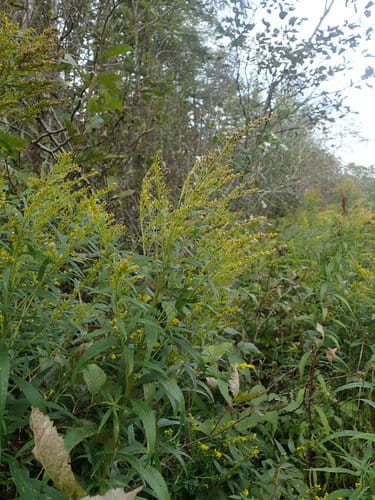
iNaturalist · cc-by-nc
(c) Colin Chapman-Lam, some rights reserved (CC BY-NC)
(c) Colin Chapman-Lam, some rights reserved (CC BY-NC)

iNaturalist · cc-by-nc
(c) Lyudmila Ivanova, some rights reserved (CC BY-NC), uploaded by Lyudmila Ivanova
(c) Lyudmila Ivanova, some rights reserved (CC BY-NC), uploaded by Lyudmila Ivanova
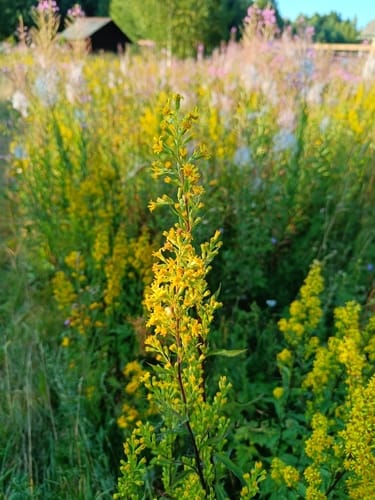
iNaturalist · cc-by-nc
(c) Kirill, some rights reserved (CC BY-NC)
(c) Kirill, some rights reserved (CC BY-NC)
What to Eat
Edible parts: Leaves, Seeds
Where to Find It
It is a temperate plant.
Canada, Hawaii, North America, Pacific, USA,
Countries: Antigua & Barbuda, Australia, Barbados, Bahamas, Belize, Canada, Costa Rica, Cuba, Dominica, Dominican Republic, Fiji, Micronesia, Grenada, Guatemala, Honduras, Haiti, Jamaica, Kiribati, St Kitts & Nevis, St Lucia, Marshall Islands, Mexico, Nicaragua, Nauru, New Zealand, Panama, Papua New Guinea, Puerto Rico, Palau, Solomon Islands, El Salvador, Tonga, Trinidad & Tobago, Tuvalu, United States, St Vincent, Vanuatu, Samoa
How to Identify
A herbaceous plant in the aster family (Asteraceae) found in temperate regions. The leaves and seeds are edible portions of this species.
Wikipedia
Source ↗Solidago canadensis, known as Canada goldenrod or Canadian goldenrod, is an herbaceous perennial plant of the family Asteraceae. It forms colonies of upright growing plants, with many small yellow flowers in a branching inflorescence held above the foliage. It is native to northeastern and north-central North America and is an invasive plant in other parts of the continent and several areas worldwide, including Eurasia.
Notes
There are about 100 Solidago species.
References (2)
- Fl. N. Amer. 2:224. 1842
- Plants for a Future database, The Field, Penpol, Lostwithiel, Cornwall, PL22 0NG, UK. http://www.scs.leeds.ac.uk/pfaf/