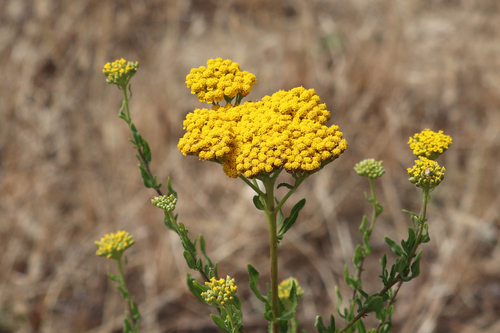
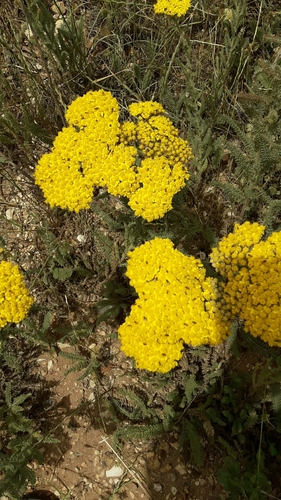
Solidago japonica
Kitam.
Akino-Kirin-So

Wikimedia Commons - Ivar Leidus

Wikimedia Commons - H. Zell
What to Eat
Edible parts: Leaves
Boiled leaves are used in sauces.
Where to Find It
It is a temperate plant.
Asia, Japan,
How to Identify
A perennial goldenrod with hermaphroditic flowers pollinated by insects. Tolerates light sandy, medium loamy, and heavy clay soils (including heavy clay) across mildly acidic to mildly alkaline pH ranges. Grows in semi-shade or full sun and prefers moist soil. Notable for attracting wildlife.
How to Grow
We have very little information on this species and do not know if it will succeed in Britain, though judging by its native range it should succeed outdoors in many parts of the country. The following notes are based on the general needs of the genus. Succeeds in any moderately fertile moisture retentive soil in sun or semi-shade. Grows well in heavy clay soils. A rather greedy plant, it is apt to impoverish the soil. The plant attracts various beneficial insects such as ladybirds, lacewings and hoverflies to the garden, these insects will help to control insect pests in the garden.
Propagation: Sow seed in spring in a cold frame, barely covering it and keeping the compost moist. Prick out into individual pots when large enough to handle and grow on through the first winter in pots. Plant out into permanent positions in spring or early summer. Divide in spring or autumn; larger divisions can go straight into permanent positions. Smaller divisions are best potted up and grown on in a lightly shaded cold frame until well established, then planted out in summer.
Medicinal Uses
An infusion of the dried powdered herb can be used as an antiseptic.
Other Uses
Mustard, orange, and brown dyes can be obtained from the whole plant.
Wikipedia
Source ↗A perennial goldenrod with hermaphroditic flowers pollinated by insects. Tolerates light sandy, medium loamy, and heavy clay soils (including heavy clay) across mildly acidic to mildly alkaline pH ranges. Grows in semi-shade or full sun and prefers moist soil. Notable for attracting wildlife.
Notes
There are about 100 Solidago species.
Names & Synonyms
References (2)
- Altschul, S.V.R., 1973, Drugs and Foods from Little-known Plants. Notes in Harvard University Herbaria. Harvard Univ. Press. Massachusetts. no. 4568
- Plants for a Future database, The Field, Penpol, Lostwithiel, Cornwall, PL22 0NG, UK. http://www.scs.leeds.ac.uk/pfaf/