Solidago odora
Aiton
Sweet goldenrod, Blue mountain tea

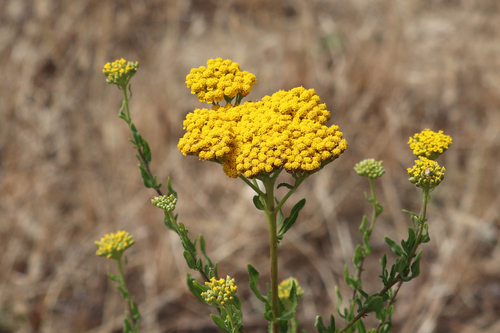
(c) Turner Brockman, some rights reserved (CC BY-SA)
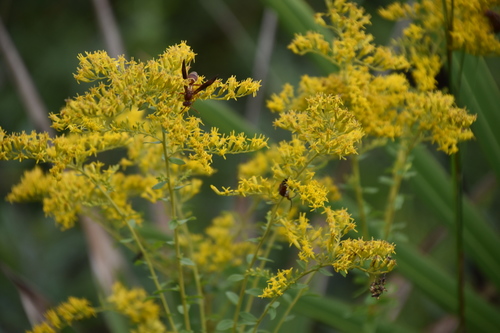
(c) Tom Palmer, some rights reserved (CC BY-NC), uploaded by Tom Palmer

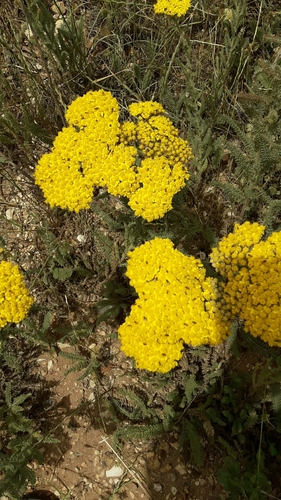
(c) Turner Brockman, some rights reserved (CC BY-SA)
What to Eat
Edible parts: Leaves, Seeds, Flowers - tea
Leaves can be eaten cooked, and the blossoms are used as a flavouring. The seed is also edible, though it is very small and fiddly to harvest. Dried leaves and fully expanded flowers make an aromatic, anise-flavoured tea.
Where to Find It
It is a temperate plant. It suits hardiness zones 3-9.
North America, USA,
How to Identify
A perennial herb growing to 1.2 m (4 ft) with hermaphrodite flowers pollinated by insects. Flowers from July to August. Hardy to UK zone 3. Grows in light sandy, medium loamy, and heavy clay soils, including poor soils, preferring well-drained conditions. Tolerates mildly acidic, neutral, and basic soil pH. Adapts to semi-shade or full sun and prefers dry or moist soil. Attracts wildlife.
How to Grow
Succeeds in any moderately fertile moisture retentive soil in sun or semi-shade. Tolerant of very poor sandy soils. Grows well in heavy clay soils. A rather greedy plant, it is apt to impoverish the soil. The bruised leaves have a smell like a mixture of sassafras and aniseed. The plant attracts various beneficial insects such as ladybirds, lacewings and hoverflies to the garden, these insects will help to control insect pests in the garden.
Propagation: Sow seed in spring in a cold frame, barely covering it, and keep the compost from drying out. Prick seedlings into individual pots once large enough to handle, overwinter them in the pots, and plant out in spring or early summer. Divide in spring or autumn. Larger divisions can go directly into permanent positions; smaller ones are best potted up and grown on in a lightly shaded cold frame until well established before planting out in summer.
Medicinal Uses
An infusion of the dried powdered herb is antiseptic. The leaves produce a pleasant-tasting tea that is mildly astringent, carminative, diaphoretic, diuretic, febrifuge, and stimulant, useful for treating coughs, colds, dysentery, and intestinal ulceration. The essential oil has been used as a diuretic for infants, as a local application for headaches, and to treat flatulence and vomiting. The flowers are aperient, astringent, and tonic, and an infusion of them benefits conditions such as gravel, urinary obstruction, and simple dropsy. Chewing the root can help treat sore mouths.
Other Uses
The plant yields an anise-scented essential oil used medicinally and in perfumery, particularly for scenting soaps. Mustard, orange, and brown dyes can be obtained from the whole plant. The plant attracts wildlife and is suitable for food forest plantings.
Wikipedia
Source ↗Solidago odora, the sweet goldenrod, anisescented goldenrod or fragrant goldenrod, is a North American species of goldenrod within the family Asteraceae. The plant is native to the United States and Mexico, found in every coastal state from Veracruz to New Hampshire and as far inland as Ohio, Missouri, and Oklahoma. It flowers from July through October. It can be found in habitats such as live oak woodlands, loblolly pine-sweetgum stands, and slashpine savannas. Subspecies include: Solidago odora subsp. odora - most of species range Solidago odora subsp. chapmanii (Gray) Semple - Florida and Southern Georgia only As a traditional medicine, Solidago odora has a variety of ethnobotanical uses, especially by the Cherokee. The leaves, which smell of licorice when crushed, can be made into a tea.
Notes
There are about 100 Solidago species.
Names & Synonyms
Plumero amarillo
References (12)
- Beckstrom-Sternberg, Stephen M., and James A. Duke. "The Foodplant Database." http://probe.nalusda.gov:8300/cgi-bin/browse/foodplantdb.(ACEDB version 4.0 - data version July 1994) (As Solidago suaveolens)
- Bremness, L., 1994, Herbs. Collins Eyewitness Handbooks. Harper Collins. p 218
- Facciola, S., 1998, Cornucopia 2: a Source Book of Edible Plants. Kampong Publications, p 42
- Hedrick, U.P., 1919, (Ed.), Sturtevant's edible plants of the world. p 626
- Hort. kew. 3:214. 1789
- Jackes, D. A., 2007, Edible Forest Gardens
- Kermath, B. M., et al, 2014, Food Plants in the Americas: A survey of the domesticated, cultivated and wild plants used for Human food in North, Central and South America and the Caribbean. On line draft. p 828
- Kiple, K.F. & Ornelas, K.C., (eds), 2000, The Cambridge World History of Food. CUP p 1779
- Lim, T. K., Edible Medicinal and Non-Medicinal Plants Volume 7 Flowers
- Plants for a Future database, The Field, Penpol, Lostwithiel, Cornwall, PL22 0NG, UK. http://www.scs.leeds.ac.uk/pfaf/
- Saunders, C.F., 1948, Edible and Useful Wild Plants. Dover. New York. p 147
- Tucker, A. O., Maciarello, M. J. and Clancy, K., 1999, Sweet Goldenrod (Solidago odora, Asteraceae): A Medicine, Tea and State Herb. Economic Botany, Vol. 53, No. 3, pp. 281-284