Sonchus asper
(L.) Hill
Rough sowthistle, Spiny Sowthistle

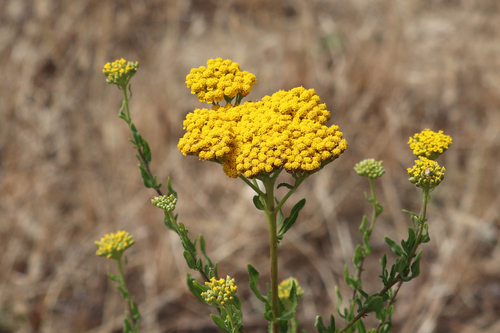
(c) Sara Navarro, some rights reserved (CC BY), uploaded by Sara Navarro

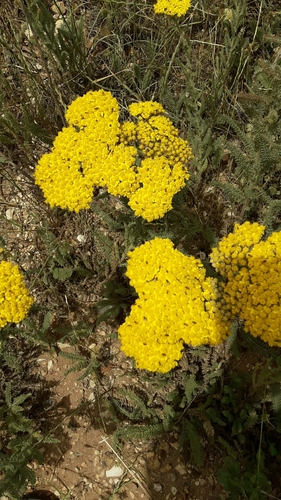
(c) Marco Grandis, some rights reserved (CC BY-NC), uploaded by Marco Grandis
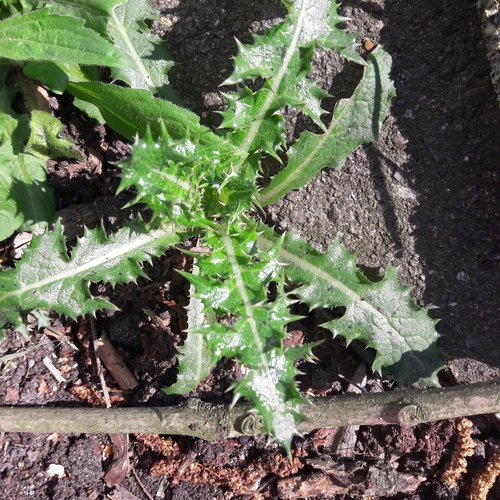
no rights reserved, uploaded by Damiano Oldoni
What to Eat
Edible parts: Leaves, Seeds, Vegetable
Tender young leaves and stem tops can be eaten raw or cooked, added to salads or used like spinach. The young leaves have a mild, agreeable flavour. Before eating or cooking the stems, they should be bruised and the bitter milky juice washed out. The peeled stems can also be eaten raw like celery.
Where to Find It
It grows in temperate and subtropical regions. In Nepal plants grow between 1000-1800 m altitude. They grow on moist, neglected ground. It suits sandy soils. In Africa it grows between 750-2,550 m above sea level. In Argentina it grows from sea level to 2,500 m above sea level. Tasmania Herbarium.
Afghanistan, Africa, Alaska, Albania, Algeria, Andorra, Angola, Argentina, Asia, Australia, Bahamas, Bahrain, Balkans, Belarus, Belgium, Bhutan, Bolivia, Botswana, Brazil, Britain, Bulgaria, Burkina Faso, Cameroon, Canada, Canary is., Caucasus, Central Asia, Chad, Chile, China, Congo DR, Crete, Croatia, Cyprus, Czech Republic, Denmark, Djibouti, Dominican Republic, East Africa, Easter Island, Ecuador, Egypt, Eritrea, Eswatini, Ethiopia, Europe*, Falklands, Finland, France, Georgia, Germany, Greece, Guyana, Haiti, Hawaii, Himalayas, Hungary, Iceland, India, Indochina, Indonesia, Iran, Iraq, Ireland, Italy, Jamaica, Japan, Kazakhstan, Korea, Kyrgyzstan, Lebanon, Lesotho, Libya, Luxembourg, Madagascar, Malawi, Mauritius, Mediterranean, Middle East, Mongolia, Morocco, Mozambique, Namibia, Nepal, Netherlands, New Guinea, New Zealand, Nicaragua, Nigeria, Norfolk Is., North Africa, North America, Northeastern India, Norway, Pacific, Pakistan, Palestine, Panama, Papua New Guinea, PNG, Paraguay, Poland, Portugal, Puerto Rico, Qatar, Romania, Russia, Rwanda, Saudi Arabia, Scandinavia, SE Asia, Senegal, Siberia, Sicily, Slovenia, Somalia, South Africa, South America, Southern Africa, Spain, Sri Lanka, St Helena, Sudan, Swaziland, Sweden, Switzerland, Syria, Taiwan, Tajikistan, Tasmania, Thailand, Tibet, Tonga, Tunisia, Turkey, Türkiye, Turkmenistan, Ukraine, Uruguay, USA, Uzbekistan, Venezuela, Vietnam, West Indies, Yemen, Zambia, Zimbabwe,
How to Identify
An erect annual herb. It grows to 1 m high. The stems are hollow. There is milky sap when the stems are cut. There are some glands on the upper parts. The leaves are 5-15 cm long. The leaves half clasp the stem. They have rounded ear like structures at the base. The edges can be spiny or have teeth. The plants are bluish-green. The flower heads are yellow. They are 1-2 cm across. They are crowded in irregular heads. The fruit is a dry fruit.
Nutrition Score: 45/100
| Part | Moisture | kJ | kcal | Protein | Vit A | Vit C | Iron | Zinc |
|---|---|---|---|---|---|---|---|---|
| Leaves | 86 | 111 | 27 | 3.3 | — | 63 | 3 | 0.9 |
How to Grow
Plants are grown from seed.
Propagation: Sow seed in spring or late summer directly in situ.
Medicinal Uses
The plant can be pounded and applied as a poultice to wounds and boils.
Other Uses
None known Special Uses
Wikipedia
Source ↗Sonchus asper, the prickly sow-thistle, rough milk thistle, spiny sowthistle, sharp-fringed sow thistle, or spiny-leaved sow thistle, is a widespread flowering plant in the tribe Cichorieae within the family Asteraceae.
Other Information
It is a minor vegetable.
Notes
There are about 60 Sonchus species.
Names & Synonyms
Bhattal, Cardedda spinusa, Casigno, Cecevede, Cerraja brava, Cerraja espinosa, Chorte, Cicerbica, Cicerbita, Crespino, Didhi, Dodal, Dodhak, Dodhi, Dudala, Gnedhap, Hrapava škrbinka, Ikigeembegeembe, Kasni, Malai booti, Mhatara, Prickly sowthistle, Puha tiotio, Ghench'o. Ghich'a, Rauroroa, Sevone, Shashe, Soon latti, Sut dikeni, Thumbai, Tifaf, Zuccho
References (85)
- Al-Sodany, Y. M., et al, 2013, Medicinal Plants in Saudi Arabia: I. Sarrwat Mountains at Taif, KSA. Academic Journal of Plant Sciences 6 (4): 134-145
- Ambasta, S.P. (Ed.), 2000, The Useful Plants of India. CSIR India. p 584
- Beckstrom-Sternberg, Stephen M., and James A. Duke. "The Foodplant Database." http://probe.nalusda.gov:8300/cgi-bin/browse/foodplantdb.(ACEDB version 4.0 - data version July 1994)
- Bhattarai, S and Chaudary, R. P., 2009, Wild Edible Plants Used by the People of Manang District, Central Nepal. Ecology of Food and Nutrition, 48:1-20
- Biscotti, N. & Pieroni, A., 2015, The hidden Mediterranean diet: wild vegetables traditionally gathered and consumed in the Gargano area, Apulia, SE Italy. Acta Societatis Botanicorum Poloniae 84 (3): 327-338
- Biscotti, N. et al, 2018, The traditional food use of wild vegetables in Apulia (Italy) in the light of Italian ethnobotanical literature. Italian Botanist 5:1-24
- Blamey, M and Grey-Wilson, C., 2005, Wild flowers of the Mediterranean. A & C Black London. p 466
- Blanco-Salas, J., et al, 2019, Wild Plants Potentially Used in Human Food in the Protected Area “Sierra Grande de Hornachos” of Extremadura (Spain). Sustainability 2019, 11, 456
- Brit. herb. 47. 1756
- Bowser, M., 2017, Handout on Edible Plants of the Kenai Peninsula. USFWS Kenai National Wildlife Refuge p 10
- Bussman, R. W., et al, 2016, A comparative ethnobotany of Khevsureti, Samtskhe-Javakheti, Tusheti, Svaneti, and Racha-Lechkhumi, Republic of Georgia (Sakartvelo), Caucasus. Journal of Ethnobiology and Ethnomedicine (2016) 12:4
- Bussman, R. W., et al, 2021, Unity in diversity—food plants and fungi of Sakartvelo (Republic of Georgia), Caucasus. Journal of Ethnobiology and Ethnomedicine (2021) 17:72 p 7
- Cherikoff V. & Isaacs, J., The Bush Food Handbook. How to gather, grow, process and cook Australian Wild Foods. Ti Tree Press, Australia p 196
- Cribb, A.B. & J.W., 1976, Wild Food in Australia, Fontana. p 129
- Crowe, A., 1997, A Field Guide to the Native Edible Plants of New Zealand. Penguin. p 99
- Curtis, W.M., 1963, The Students Flora of Tasmania Vol 2 p 390
- Dashorst, G.R.M., and Jessop, J.P., 1998, Plants of the Adelaide Plains & Hills. Botanic Gardens of Adelaide and State Herbarium. p 152
- Diaz-Betancourt, M., et al, 1999, Weeds as a future source for human consumption. Rev. Biol. Trop. 47(3):329-338)
- Dolina, K. & Luczaj, L., 2014, Wild food plants used on the Dubrovnik coast (south-eastern Croatia) Acta Soc Bot Pol 83(3):175–181
- Duke, J.A., 1992, Handbook of Edible Weeds. CRC Press. p 186
- Ertug, F, Yenen Bitkiler. Resimli Türkiye Florası -I- Flora of Turkey - Ethnobotany supplement
- Facciola, S., 1998, Cornucopia 2: a Source Book of Edible Plants. Kampong Publications, p 42
- Flora of Australia Volume 49, Oceanic Islands 1, Australian Government Publishing Service, Canberra. (1994) p 372
- Gangwar, A. K. & Ramakrishnan, P. S., 1990, Ethnobotanical Notes on Some Tribes of Arunachal Pradesh, Northeastern India. Economic Botany, Vol. 44, No. 1 pp. 94-105
- Gautam, R. S., et al, 2022, Ethnobotanical Review of Wild Edible Plants of Nepal. Journal of Natural History Museum Volume 32, 2021-22 p 107
- Geraci, A., et al, 2018, The wild taxa utilized as vegetables in Sicily (Italy): a traditional component of the Mediterranean diet. Journal of Ethnobiology and Ethnomedicine (2018) 14:14
- Gott, B & Conran, J., 1991, Victorian Koorie Plants. PO Box 666 Hamilton, Victoria 3300, Australia. p 41
- Grubben, G. J. H. and Denton, O. A. (eds), 2004, Plant Resources of Tropical Africa 2. Vegetables. PROTA, Wageningen, Netherlands. p 511
- Hadjichambis, A. C., et al, 2007, Wild and semi-domesticated food plant consumption in seven circum-Mediterranean areas. International Journal of Food Sciences and Nutrition. 2007, 1-32.
- Harris, S., Buchanan, A., Connolly, A., 2001, One Hundred Islands: The Flora of the Outer Furneaux. Tas Govt. p 231
- http://www.botanic-gardens-ljubljana.com/en/plants
- https://www.fireflyforest.com/flowers/category/edible-plants/ Edible Plants – Southeastern Arizona Wildflowers and Plants
- Hunter, J. T. & Sheringham, P., 2006, Vegetation and Floristics of Melville Range Nature Reserve. A Report to the New South Wales Parks and Wildlife Service. p 181
- Hussey, B.M.J., Keighery, G.J., Cousens, R.D., Dodd, J., Lloyd, S.G., 1997, Western Weeds. A guide to the weeds of Western Australia. Plant Protection Society of Western Australia. p 106
- Hyde-Wyatt, B.H. & Morris D.I., 1975, Tasmanian Weed Handbook. Dept of Ag Tasmania. p 35
- Irving, M., 2009, The Forager Handbook, A Guide to the Edible Plants of Britain. Ebury Press p 159
- Jardin, C., 1970, List of Foods Used In Africa, FAO Nutrition Information Document Series No 2.p 104
- Kang, Y., et al, 2012, Wild food plants and wild edible fungi in two valleys on the Qinling Mountains (Shaanxi, central China) Journal of Ethnobiology and Ethnomedicine; 9:26
- Kargioglu, M. et al, 2010, Traditional Uses of Wild Plants in the Middle Aegean Region. Human Ecology 38:429-450
- Kayabasi, N. P., et al, 2018, Wild edible plants and their traditional use in the human nutrition in Manyas (Turkey). Indian Journal of Traditional Knowledge. Vol. 17(2), April 2018, pp 299-306
- Kew Plants of the World Online
- Kiple, K.F. & Ornelas, K.C., (eds), 2000, The Cambridge World History of Food. CUP p 1855
- Lazarides, M. & Hince, B., 1993, Handbook of Economic Plants of Australia, CSIRO. p 224
- Lentini, F. and Venza, F., 2007, Wild food plants of popular use in Sicily. J Ethnobiol Ethnomedicine. 3: 15
- Low, T., 1991, Wild Herbs of Australia and New Zealand. Angus & Robertson. p 33
- Luczaj, L. et al, 2012, Wild food plant use in 21st century Europe: the disappearance of old traditions and the search for new cuisines involving wild edibles. Acta Soc Bot Pol 81(4):359–370
- MacKinnon, A., et al, 2009, Edible & Medicinal Plants of Canada. Lone Pine. p 333
- Magwede, K., van Wyk, B.-E., & van Wyk, A. E., 2019, An inventory of Vhavenḓa useful plants. South African Journal of Botany 122 (2019) 57–89
- Mahklouf, M. H., 2019, Ethnobotanical Study of Edible Wild Plants in Libya. European Journal of Ecology. 5(2): 30-40
- Majeed, M., et al, 2021, Gathered Wild Food Plants among Diverse Religious Groups in Jhelum District, Punjab, Pakistan. Foods 2021, 10, 594.
- Malezas Comestibles del Cono Sur, INTA, 2009, Buernos Aires
- Manandhar, N.P., 2002, Plants and People of Nepal. Timber Press. Portland, Oregon. p 433
- Martin, F.W. & Ruberte, R.M., 1979, Edible Leaves of the Tropics. Antillian College Press, Mayaguez, Puerto Rico. p 186
- Michael, P., 2007, Edible Wild Plants and Herbs. Grub Street. London. p 224
- Moerman, D. F., 2010, Native American Ethnobotany. Timber Press. p 537
- Nassif, F., & Tanji, A., 2013, Gathered food plants in Morocco: The long forgotten species in Ethnobotanical Research. Life Science Leaflets 3:17-54
- Nebel, S., Pieroni, A. & Heinrich, M., 2006, Ta cho`rta: Wild edible greens used in the Graecanic area in Calabria, Southern Italy. Appetite 47 (2006) 333–342
- Neogi, B., Prasad, M. N. V. and Rao, R. R., 1989, Ethnobotany of Some Weeds of Khasi and Garo Hills, Meghalaya, Northeastern India. Economic Botany 43(4): 471-479
- Norton, J., et al, 2009, An Illustrated Checklist of the Flora of Qatar. UNESCO Office in Doha.
- Ochse, J.J. et al, 1931, Vegetables of the Dutch East Indies. Asher reprint. p 142
- Paczkowska, G. & Chapman, A.R., 2000, The Western Australian Flora. A Descriptive Catalogue. Western Australian Herbarium. p 176
- Paoletti, M.G., Dreon, A.L., and Lorenzoni, G.G., 1995, Pistic, Traditional Food from Western Friuli, NE Italy. Economic Botany 49(1) pp 26-30
- Pasta, S., et al, 2020, An Updated Checklist of the Sicilian Native Edible Plants: Preserving the Traditional Ecological Knowledge of Century-Old Agro-Pastoral Landscapes. Frontiers in Plant Science. Volume 11|Article 388
- Pickering, H., & Roe, E., 2009, Wild Flowers of the Victoria Falls Area. Helen Pickering, London. p 40
- Pieroni, A., 1999, Gathered wild food plants in the Upper Valley of the Serchio River (Garfagnana), Central Italy. Economic Botany 53(3) pp 327-341
- Plants for a Future database, The Field, Penpol, Lostwithiel, Cornwall, PL22 0NG, UK. http://www.scs.leeds.ac.uk/pfaf/
- Plants of Haiti Smithsonian Institute http://botany.si.edu
- Ruiters-Welcome, A. K., 2019, Food plants of southern Africa. Ph.D. thesis. Univ. of Johannesburg p 37
- Sansanelli, S., et al, 2014, Wild food plants traditionall consumed in the area of Bologna (Emilia Romagna region, Italy). Journal of Ethnobiology and Ethnomedicine 10:69
- Sansanelli, S., et al, 2017, Ethnobotanical survey of wild food plants traditionally collected and consumed in the Middle Agri Valley (Basilicata region, southern Italy). Journal of Ethnobiology and Ethnomedicine (2017) 13:50
- Singh, B., et al, 2012, Wild edible plants used by Garo tribes of Nokrek Biosphere Reserve in Meghalaya, India. Indian Journal of Traditional Knowledge. 11(1) pp 166-171
- Skinner, G. & Brown, 1981, C., Simply Living. A gatherer's guide to New Zealand's fields, forests and shores. Reed. p 23
- Swaziland's Flora Database http://www.sntc.org.sz/flora
- Tasmanian Herbarium Vascular Plants list p 14
- Tardio, J., et al, Ethnobotanical review of wild edible plants in Spain. Botanical J. Linnean Soc. 152 (2006), 27-71
- Terra, G.J.A., 1973, Tropical Vegetables. Communication 54e Royal Tropical Institute, Amsterdam, p 76
- Thakur, D., et al, 2017, Why they eat, what they eat: patterns of wild edible plants consumption in a tribal area of Western Himalaya. Journal of Ethnobiology and Ethnomedicine (2017) 13:70
- Turner, N. J. et al, 2011, Edible and Tended Wild Plants, Traditional Ecological Knowledge and Agroecology. Critical Reviews in Plant Sciences, 30:198-225
- Upson, R., & Lewis R., 2014, Updated Vascular Plant Checklist and Atlas for the Falkland Islands. Falklands Conservation and Kew.
- Vernon, R., 1983, Field Guide to Important Arable Weeds of Zambia. Dept of Agriculture, Chilanga, Zambia. p 94
- Wehmeyer, A. S, 1986, Edible Wild Plants of Southern Africa. Data on the Nutrient Contents of over 300 species
- Welcome, A. K. & Van Wyk, B.-E., 2019, An inventory and analysis of the food plants of southern Africa. South African Journal of Botany 122 (2019) 136–179
- World Checklist of Useful Plant Species 2020. Royal Botanic Gardens, Kew
- Yuncker, T.G., 1959, Plants of Tonga, Bernice P. Bishop Museum, Hawaii, Bulletin 220. p 270
- Zizka, G., 1991, Flowering Plants of Easter Island. Palmarum Hortus Francofurtensis