Struchium sparganophorum
(L.) O. Kuntze
Water Bitterleaf
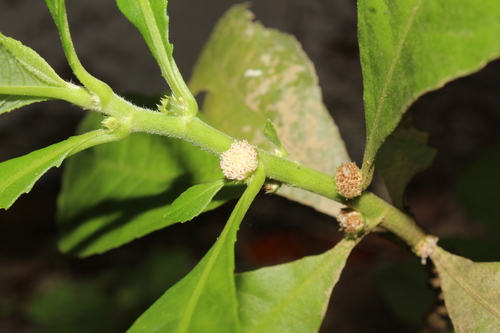
(c) Sébastien SANT, some rights reserved (CC BY-NC), uploaded by Sébastien SANT
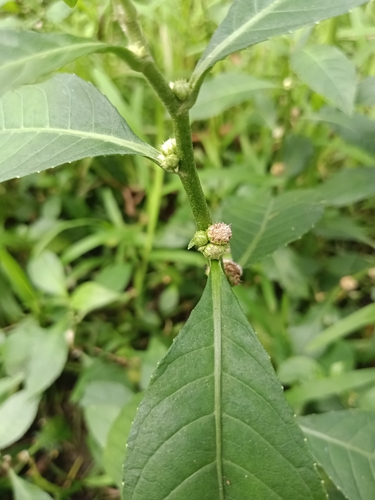
(c) renjus box, some rights reserved (CC BY), uploaded by renjus box

(c) Marco Schmidt, some rights reserved (CC BY-NC-SA), uploaded by Marco Schmidt
What to Eat
Edible parts: Leaves, Vegetable
The young leaves are used as a pot herb and vegetable.
Known Hazards
Where to Find It
A tropical plant. It grows in damp places across West Africa.
Africa, American Samoa, Asia, Benin, Brazil, Burkina Faso, Caribbean, Central Africa, Central America, Congo, Côte d'Ivoire, Dominica, Equatorial Guinea, Ghana, Ivory Coast, Malaysia, Nicaragua, Nigeria, Panama, Sao Tome and Principe, SE Asia, Senegal, Sierra Leone, South America, West Africa,
How to Identify
An annual herb. It is somewhat succulent. It can be erect or lie over. It grows 1.3 m high. The flowers can be white or pink.
How to Grow
Plants can be grown by seeds.
Medicinal Uses
A tea made from the whole plant is taken as a treatment for headaches, colds, wheezing, asthma and backache. The juice of the whole plant is rubbed on cuts and ulcers. The leaves are used to treat children's convulsions. The juice of the leaves is administered orally or rectally for treating thrush.
Other Uses
The plant invades rice-paddies in Malaya and forms a useful part of the weeds turned in as green manure.
Other Information
It is a commercially cultivated vegetable.
Names & Synonyms
Imondo, Kilifien, Muzivien, Sufein, Toloman, Yerba de faja
References (18)
- Abbiw, D.K., 1990, Useful Plants of Ghana. West African uses of wild and cultivated plants. Intermediate Technology Publications and the Royal Botanic Gardens, Kew. p 41
- Achigan-Dako, E, et al (Eds), 2009, Catalogue of Traditional Vegetables in Benin. International Foundation for Science.
- Boedecker, J., et al, 2014, Dietary contribution of Wild Edible Plants to women’s diets in the buffer zone around the Lama forest, Benin – an underutilized potential. Food Sec. 6:833–849
- Burkill, H. M., 1985, The useful plants of west tropical Africa, Vol. 1. Kew.
- Epenhuijsen C.W. van., 1974, Growing Native vegetables in Nigeria. FAO Rome, p 90
- FAO Corporate Document Repository. The Major Significance of 'Minor' Forest Products. Appendix 3
- Grubben, G. J. H. and Denton, O. A. (eds), 2004, Plant Resources of Tropical Africa 2. Vegetables. PROTA, Wageningen, Netherlands. p 565 (As Sparganophorus sparganophora)
- Jardin, C., 1970, List of Foods Used In Africa, FAO Nutrition Information Document Series No 2.p 105
- JSTOR Global Plants edible
- Kays, S. J., and Dias, J. C. S., 1995, Common Names of Commercially Cultivated Vegetables of the World in 15 languages. Economic Botany, Vol. 49, No. 2, pp. 115-152
- Martin, F.W. & Ruberte, R.M., 1979, Edible Leaves of the Tropics. Antillian College Press, Mayaguez, Puerto Rico. p 186
- N'Danikou, S. et al, 2010, Eliciting Local Values of Wild Edible Plants in Southern Bénin to Identify Priority Species for Conservation. Economic Botany, 20(10), 2011, pp. 1–15.
- Okigbo, B.N., Vegetables in Tropical Africa, in Opena, R.T. & Kyomo, M.L., 1990, Vegetable Research and development in SADCC countries. Asian Vegetable Research and development Centre. Taiwan. p 38
- Oniang’o, R., Grum, M. and Obel-Lawson, E., editors. 2008. Developing African leafy vegetables for improved nutrition. Regional workshop, 6-9 December 2005. Rural Outreach Program, Nairobi, Kenya. p 3
- Revis. gen. pl. 1:366. 1891
- Smith, F. I. and Eyzaquirre, P., 2007, African leafy vegetables: Their role in the World Health Organization's global Fruit and Vegetables Initiative. AJFAND, Vol. 7 No. 3
- World Checklist of Useful Plant Species 2020. Royal Botanic Gardens, Kew
- Zeven, A. C. & de West, J. M. J., 1982, Dictionary of cultivated plants and their regions of diversity. Wageningen. p 123