Tacca palmata
Blume
Gadung tikus, Tacca

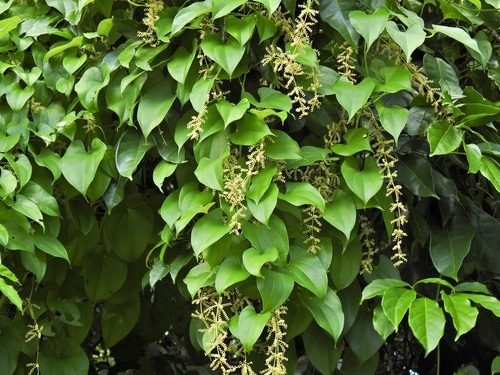
(c) Miko Jatmiko, some rights reserved (CC BY-NC), uploaded by Miko Jatmiko

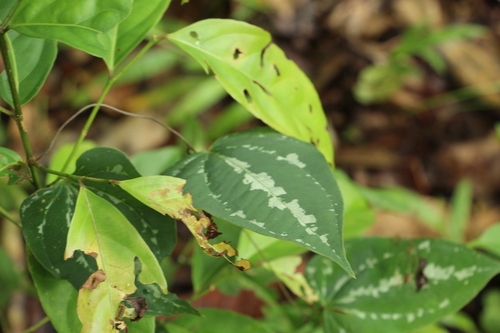
(c) Lukito H. K. Hadi, some rights reserved (CC BY-NC)
What to Eat
Edible parts: Starch
The tubers are processed for starch.
Where to Find It
A tropical plant. It suits seasonally moist and dry climates. It needs a fertile, humus-rich, well-drained soil. It needs a neutral to acid pH. It suits bright shade. It suits hardiness zones 10-12.
Asia, East Timor, Indonesia, Malaysia, SE Asia, Timor-Leste,
How to Identify
A herb which has tubers and is dormant for part of the year. It grows 40 cm high. The leaves are at the base and are divided like fingers on a hand. They have 5 lobes. The leaves are 15-20 cm long. The leaf stalks is 30 cm long. The flowers are black to purple. They are nodding. The 2 main bracts are erect. There are 2 smaller bracts below. There are no threadlike bracts.
Wikipedia
Source ↗Tacca palmata is a plant in the Dioscoreaceae family, native to Borneo, Cambodia, Indonesia, Malaysia, New Guinea, Philippines, Sulawesi, Sumatra, Thailand, and Vietnam. It was first described by Carl Ludwig Blume in 1827.
Notes
Also put in the family Taccaceae.
Names & Synonyms
Suweg
References (5)
- Cowie, I, 2006, A Survey of Flora and vegetation of the proposed Jaco-Tutuala-Lore National Park. Timor-Lests (East Timor) www.territorystories.nt/gov.au p 55
- Hedrick, U.P., 1919, (Ed.), Sturtevant's edible plants of the world. p 638
- Lembaga Biologi Nasional, 1977, Ubi-Ubian, Balai Pustaka, Jakarta. p 26
- Llamas, K.A., 2003, Tropical Flowering Plants. Timber Press. p 356
- Trimanto, & Hapsari L., 2016, Botanical survey in thirteen montane forests of Bawean Island Nature Reserve, East Java Indonesia: Conservation status, bioprospecting and potential tourism. Biodiversitas 17: 832-846.