Trapa bicornis
Osbeck
Water caltrop, Chinese water chestnut

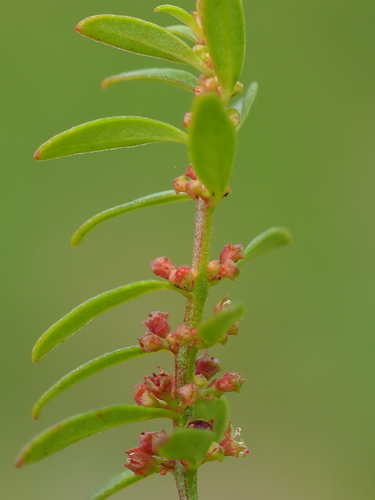
(c) 艸目伊, some rights reserved (CC BY-NC)

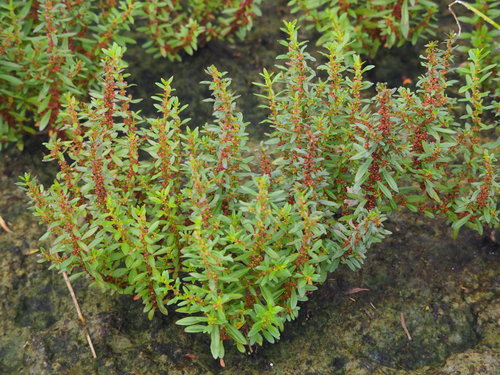
(c) 艸目伊, some rights reserved (CC BY-NC)

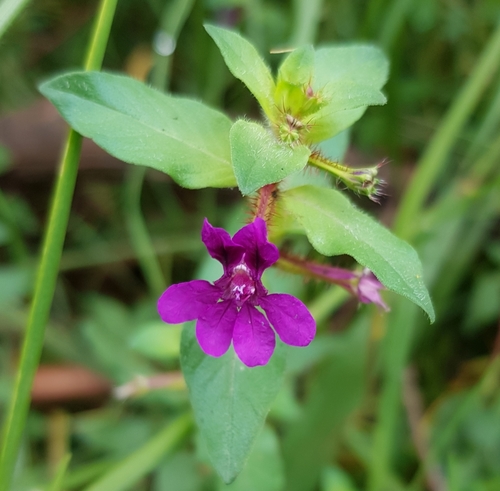
(c) 艸目伊, some rights reserved (CC BY-NC)
What to Eat
Edible parts: Seeds, Vegetable
The seed is edible when cooked. It has a crunchy texture and a bland flavour. The seed is rich in starch, but contains a harmful principle in its raw state that is destroyed by cooking. Once cooked, the seed can also be dried and ground into a powder.
Known Hazards
Where to Find It
A tropical plant. It grows in still water in warm places. It is cultivated in ponds and canals in rice areas in southern China. It grows in wetlands.
Asia, Bangladesh, China, Cambodia, India, Indochina, Japan, Laos, SE Asia, Vietnam,
How to Identify
A herb which grows in water. It keeps growing from year to year. It has 2 kinds of leaves. The leaves under the water are long and like threads. The floating leaves form rings. They are broad and angular. The leaf stalk to them is swollen in the middle. The fruit are shiny, black nuts which have 2 horns. They are about 6 cm wide. These develop under the leaves near the centre of the plant.
How to Grow
An aquatic plant, floating by means of inflated petioles, it succeeds in still or slowly-flowing water requiring a position in full sun and a slightly acidic water with a rich planting medium. Plants require a high summer temperature in order to perform well, they are not frost hardy. Some botanists regard this species as no more than a part of the one highly polymorphic species T. natans. This species was used for food in Neolithic Britain.
Propagation: Harvest seed in late summer and store it overwinter in a jar of water in a cool but frost-free location. The seed loses viability rapidly if allowed to dry out. In spring, sow one seed per pot and submerge under a few centimetres of water.
Medicinal Uses
The flowers are astringent and useful in cases of flux. The fruit is used in the treatment of fever and sunstroke. The plant as a whole has anticancer, antipyretic, and tonic properties.
Other Uses
None known
Wikipedia
Source ↗A perennial aquatic plant hardy to UK zone 5. Hermaphroditic with both male and female organs. Grows in light sandy, medium loamy, and heavy clay soils with mildly acidic to neutral pH. Requires full sun and can grow submerged in water.
Other Information
It is a commercially cultivated vegetable.
Notes
There are 8-15 (30) Trapa species. Also as Trapaceae.
Names & Synonyms
Black Ling, Horn-nut, Ling kio, Ling nut, Singhara nut, Wu Ling
References (24)
- Arora, R. K., 2014, Diversity in Underutilized Plant Species - An Asia-Pacific Perspective. Bioversity International. p 109
- Bianchini, F., Corbetta, F., and Pistoia, M., 1975, Fruits of the Earth. Cassell. p 228
- Burkill, I.H., 1966, A Dictionary of the Economic Products of the Malay Peninsula. Ministry of Agriculture and Cooperatives, Kuala Lumpur, Malaysia. Vol 2 (I-Z) p 2212
- Dagb. Ostind. resa 191. 1757
- Dahlen, M., 1995, A Cook's Guide to Chinese Vegetables. The Guidebook Company. p 100
- Flora Malesiana Vol 13 p 43 (As Trapa bispinosa)
- Gouldstone, S., 1983, Growing your own Food-bearing Plants in Australia. Macmillan p 183
- Heywood, V.H., Brummitt, R.K., Culham, A., and Seberg, O. 2007, Flowering Plant Families of the World. Royal Botanical Gardens, Kew. p 196 (Family)
- Hu, Shiu-ying, 2005, Food Plants of China. The Chinese University Press. p 583
- Kays, S. J., and Dias, J. C. S., 1995, Common Names of Commercially Cultivated Vegetables of the World in 15 languages. Economic Botany, Vol. 49, No. 2, pp. 115-152
- Kiple, K.F. & Ornelas, K.C., (eds), 2000, The Cambridge World History of Food. CUP p 1876
- Macmillan, H.F. (Revised Barlow, H.S., et al) 1991, Tropical Planting and Gardening. Sixth edition. Malayan Nature Society. Kuala Lumpur. p 310, 357
- Plants for a Future database, The Field, Penpol, Lostwithiel, Cornwall, PL22 0NG, UK. http://www.scs.leeds.ac.uk/pfaf/
- Rashid, H. E., 1977, Geography of Bangladesh. Westview. p 347
- Romanowski, N., 2007, Edible Water Gardens. Hyland House. p 41
- Schneider, E., 2001, Vegetables from Amaranth to Zucchini: The essential reference. HarperCollins. p 694
- Slocum, P.D. & Robinson, P., 1999, Water Gardening. Water Lilies and Lotuses. Timber Press. p 67 (As Trapa bispinosa)
- Terra, G.J.A., 1973, Tropical Vegetables. Communication 54e Royal Tropical Institute, Amsterdam, p 79
- USDA, ARS, National Genetic Resources Program. Germplasm Resources Information Network - (GRIN). [Online Database] National Germplasm Resources Laboratory, Beltsville, Maryland. Available: www.ars-grin.gov/cgi-bin/npgs/html/econ.pl (10 April 2000)
- Valder, P., 1999, The Garden Plants of China. Florilegium. p 235
- van Wyk, B., 2005, Food Plants of the World. An illustrated guide. Timber press. p 185
- Wickens, G.E., 1995, Edible Nuts. FAO Non-wood forest products. FAO, Rome. p158
- Wiersema, J. H. & Leon, B., 2013, World Economic Plants. A Standard Reference CRC Press. 2nd Ed. p 692
- Zhang, Y., et al, 2014, Diversity of wetland plants used traditionally in China: a literature review. Journal of Ethnobiology and Ethnomedicine. 10:72