Trapa natans
L.
Caltrops, Jesuit Nut, Water Caltrops

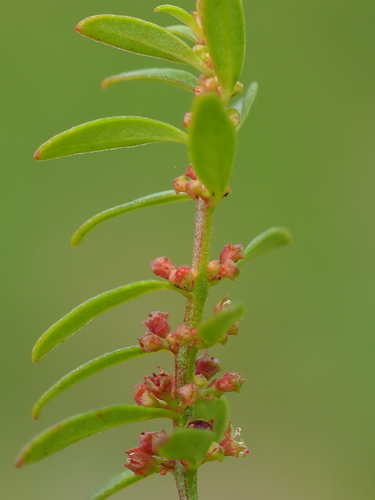
(c) juniorre, some rights reserved (CC BY-NC), uploaded by juniorre

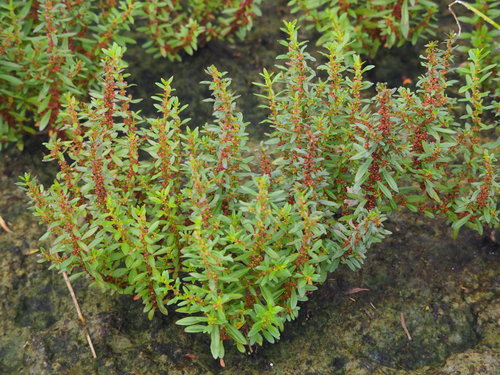
(c) Sergey Yeliseev, some rights reserved (CC BY-NC-ND)
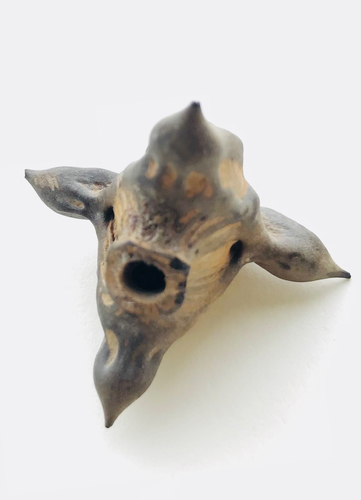
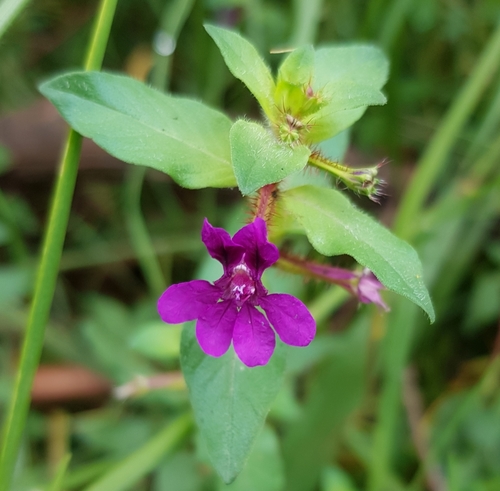
(c) Nykyta, some rights reserved (CC BY-NC), uploaded by Nykyta
What to Eat
Edible parts: Seeds, Kernel, Nuts, Vegetable, Leaf stalk
The seed can be eaten raw, cooked, or dried and ground into a flour. Its flavour is sweet, floury, and pleasant — comparable to sweet chestnuts. Nutritional content varies across reports: one source lists up to 50% starch; another records 16% starch and 3% protein; a third gives 15% protein and 7.5% fat. At least one report notes that the raw nut contains toxins that are destroyed by cooking.
Known Hazards
Where to Find It
It is a temperate plant. It grows in warm, still water. It grows in wetlands. In China it grows from sea level to 2,700 m above sea level. It suits hardiness zones 5-8.
Africa, Albania, Algeria, Asia, Australia, Austria, Balkans, Bangladesh, Belarus, Bosnia, Botswana, Bulgaria, Burkina Faso, Canada, China, Czech Republic, East Africa, Europe, Finland, France, Germany, Greece, Hungary, India, Indochina, Indonesia, Iran, Italy, Japan, Korea, Laos, Malaysia, Mediterranean, Middle East, Mozambique, Myanmar, Namibia, Nigeria, North Africa, North America, Northeastern India, Pakistan, Philippines, Poland, Romania, Russia, SE Asia, Slovakia, Slovenia, South Africa, Southern Africa, Spain, Switzerland, Taiwan, Thailand, Tunisia, Turkey, Türkiye, Ukraine, USA, Vietnam, West Africa, Yugoslavia,
How to Identify
An annual plant which grows in water. It can be 60-75 cm across. The leaves occur in rosettes. They are diamond shaped. The leaves have shiny pale green surfaces. The veins are easy to see. There are teeth around the edge. The leaf stalks are fleshy and spongy. They are 4-20 cm long. The fruit are heart-shaped and brown. It is a soft, juicy, fleshy receptacle.
How to Grow
A water plant, growing in water up to 60cm deep. Requires a sunny position in slightly acidic water. Dislikes calcium rich water. Prefers a rich soil. Plants are hardy in all but the coldest parts of Britain. A perennial, but it is best grown as an annual in Britain. Some botanists regard this species as the only genuine member of the genus, all other species considered to be no more than a part of this one highly polymorphic species. Occasionally cultivated for its edible seed, there is at least one named variety. 'Su Zhou' is a form with red-coloured fruit. The edible tubers are typically harvested in late summer to early autumn. Water Chestnut usually flowers in summer. Water Chestnut grows quickly, often forming dense mats in suitable aquatic environments.
Propagation: Harvest seed in late summer and store it overwinter in a jar of water in a cool but frost-free location. The seed loses viability rapidly if allowed to dry out. In spring, sow one seed per pot and submerge under a few centimetres of water.
Medicinal Uses
The fruits are used in the preparation of liniments to treat elephantiasis, pestilent fevers, rheumatism, sores, sunburn, and other skin complaints.
Other Uses
Water chestnut can be used in wetland restoration projects as a water-loving plant, contributing to habitat creation and water quality improvement. The seeds are sometimes used as beads in necklaces and rosaries. The plant can grow free-floating or rooted in the mud in shallow water, and is also capable of growing out of water in very wet, muddy soils. It is grown as an ornamental in aquaria and outdoor ponds. The flowers attract pollinators including bees, providing nectar and pollen. The edible nuts serve as a food source for wildlife, and the plant's dense foliage provides some shelter for invertebrates in the aquatic environment where it grows.
Wikipedia
A perennial aquatic plant growing at a fast rate, hardy to UK zone 5. Hermaphroditic and self-fertile. Flowers June to July. Grows in light sandy, medium loamy, and heavy clay soils with mildly acidic to neutral pH. Requires full sun and thrives in water; can also grow in very wet, muddy soils out of water. Free-floating or rooting in shallow mud. Attracts wildlife. Suitable for wetland restoration and ornamental pond use.
Production
It bears in 1 year. In NE India fruit are available in November to December.
Other Information
It is a commercially cultivated vegetable. It can be a staple food. Fruit are sold in local markets.
Notes
The plant is prohibited in the USA. Also put in the family Trapaceae.
Names & Synonyms
Dyavolski oreh, Ekota, European water chestnut, Heikak, Heikak yeli, Horn nut, Inyiwa, Ling-chio, Mak ka chap, Niu tou ma, Njefu, Paniphal, Pani singada, Pemak-pe, Rasac, Saligot, Shinghada, Sojom, Sugreng, Sukestanesi, Sulyom, Vodni orešek
References (55)
- Bianchini, F., Corbetta, F., and Pistoia, M., 1975, Fruits of the Earth. Cassell. p 228
- Bodkin, F., 1991, Encyclopedia Botanica. Cornstalk publishing, p 990
- Brahma, S., et al, 2013, Wild edible fruits of Kokrajhar district of Assam, North-East India, Asian Journal of Plant Science and Research 3(6):95-100
- Brickell, C. (Ed.), 1999, The Royal Horticultural Society A-Z Encyclopedia of Garden Plants. Convent Garden Books. p 1020
- Cundall, P., (ed.), 2004, Gardening Australia: flora: the gardener's bible. ABC Books. p 1427
- Denes, A., et al, 2012, Wild plants used for food by Hungarian ethnic groups living in the Carpathian Basin. Acta Societatis Botanicorum Poloniae 81 (4): 381-396
- Devi, O.S., P. Komor & D. Das, 2010, A checklist of traditional edible bio-resources from Ima markets of Imphal Valley, Manipur, India. Journal of Threatened Taxa 2(11): 1291-1296
- Devi, O. S., et al, 2021, Wild edible plants associated with the people of Thoubal Khunou village and its migrated villagers. Int. J. Adv. Res. Biol. Sci. 8(9): 72-90
- Ertug, F, Yenen Bitkiler. Resimli Türkiye Florası -I- Flora of Turkey - Ethnobotany supplement
- Facciola, S., 1998, Cornucopia 2: a Source Book of Edible Plants. Kampong Publications, p 241
- Gouldstone, S., 1983, Growing your own Food-bearing Plants in Australia. Macmillan p 183
- Hedrick, U.P., 1919, (Ed.), Sturtevant's edible plants of the world. p 652
- Hibbert, M., 2002, The Aussie Plant Finder 2002, Florilegium. p 301
- Hossain, U. & Rahman, A., 2018, Study and quantitative analysis of wild vegetable floral diversity available in Barisal district, Bangladesh. Asian J. Med. Biol. Res. 2018, 4 (4), 362-371
- http://www.botanic-gardens-ljubljana.com/en/plants
- Hu, Shiu-ying, 2005, Food Plants of China. The Chinese University Press. p 584
- Jain et al, 2011, Dietary Use and Conservation Concern of Edible Wetland Plants at Indo-Burma Hotspot: A Case Study from Northeast India. Journal of Ethnobiology and Ethnomedicine 7:29 p 8
- Jardin, C., 1970, List of Foods Used In Africa, FAO Nutrition Information Document Series No 2.p 37
- Kays, S. J., and Dias, J. C. S., 1995, Common Names of Commercially Cultivated Vegetables of the World in 15 languages. Economic Botany, Vol. 49, No. 2, pp. 115-152
- Kermath, B. M., et al, 2014, Food Plants in the Americas: A survey of the domesticated, cultivated and wild plants used for Human food in North, Central and South America and the Caribbean. On line draft. p 872
- Kiple, K.F. & Ornelas, K.C., (eds), 2000, The Cambridge World History of Food. CUP p 1876
- Kiran, K. C., et al, 2019, Diversity and Seasonal Availability of Potential Wild Edible Plants from Vidarbha Region of Maharashtra State, India. Int.J.Curr.Microbiol.App.Sci (2019) 8(2): 1434-1446
- Luczaj, L., 2012, Ethnobotanical review of wild edible plants of Slovakia. Acta Societatis Botanicorum Poloniae 81(4):245-255
- Luczaj, L., et al, 2021, Wild food plants and fungi sold in the markets of Luang Prabang, Lao PDR. Journal of Ethnobiology and Ethnomedicine (2021) 17:6
- Łukasz Łuczaj and Wojciech M Szymański, 2007, Wild vascular plants gathered for consumption in the Polish countryside: a review. J Ethnobiol Ethnomedicine. 3: 17
- Luczaj, L. et al, 2012, Wild food plant use in 21st century Europe: the disappearance of old traditions and the search for new cuisines involving wild edibles. Acta Soc Bot Pol 81(4):359–370
- Meitei, L. R., et al, 2022, An ethnobotanical study on the wild edible plants used by forest dwellers in Yangoupokpi Lokchao Wildlife Sanctuary, Manipur, India. Ethnobotany Research and Application 23:15
- Mishra, N., et al, 2016, Indigenous knowledge in utilization of wetland plants in Bhadrak district, Odisha, India. Indian Journal of Natural Products and Resources. Vol. 7(1) pp. 82-89
- Misra S. & Misra M., 2016, Ethnobotanical and Nutritional Evaluation of Some Edible Fruit Plants of Southern Odisha, India. International Journal of Advances in Agricultural Science and Technology, Vol.3 Issue.1, March- 2016, pg. 1-30
- Nedelcheva A., 2013, An ethnobotanical study of wild edible plants in Bulgaria. EurAsian Journal of BioSciences 7, 77-94
- Plants for a Future database, The Field, Penpol, Lostwithiel, Cornwall, PL22 0NG, UK. http://www.scs.leeds.ac.uk/pfaf/
- Rahangdale, D.R. & Rahangdale, S.S., 2014, Potential Wild Edible Plant Resources from Maharashtra Future Prospects for their Conservation and Improvement. Life Science Leaflets. http://lifesciencesleaflets.ning.com
- Reddy, B. M., 2012, Wild edible plants of Chandrapur district, Maharashtra, India. Indian Journal of Natural Products and Resources. 3(1) pp 110-117
- Redzic, S. J., 2006, Wild Edible Plants and their Traditional Use in the Human Nutrition in Bosnia-Herzegovina. Ecology of Food and Nutrition, 45:189-232
- Romanowski, N., 2007, Edible Water Gardens. Hyland House. p 41
- Ruiters-Welcome, A. K., 2019, Food plants of southern Africa. Ph.D. thesis. Univ. of Johannesburg p 74
- Sainty, G., and Jacobs, S., 2003, Waterplants in Australia. A Field Guide. Sainty Books. p 54
- Shah, G.L., 1984, Some economically important plant of Salsette Island near Bombay. J. Econ. Tax. Bot. Vol. 5 No. 4 pp 753-765
- Simkova, K. et al, 2014, Ethnobotanical review of wild edible plants used in the Czech Republic. Journal of Applied Botany and Food Quality 88, 49-67
- Slocum, P.D. & Robinson, P., 1999, Water Gardening. Water Lilies and Lotuses. Timber Press. p 67
- Sp. pl. 1:120. 1753
- Swapna, M. M. et al, 2011, A review on the medicinal and edible aspects of aquatic and wetland plants of India. J. Med. Plants Res. 5 (33) pp. 7163-7176
- Tanaka,
- Ulian, T., et al, 2020, Unlocking plant resources to support food security and promote sustainable agriculture. Plants, People, Planet. 2020;2:421–445.
- USDA, ARS, National Genetic Resources Program. Germplasm Resources Information Network - (GRIN). [Online Database] National Germplasm Resources Laboratory, Beltsville, Maryland. Available: www.ars-grin.gov/cgi-bin/npgs/html/econ.pl (10 April 2000)
- Vanhanen, S. & Pesonen, P., 2015, Wild plant gathering in Stone Age Finland. Quaternary International xxx (2015) 1-13
- van Wyk, B., 2005, Food Plants of the World. An illustrated guide. Timber press. p 185
- Wang, C., et al, 2009, Effect of micronization on functional properties of the water caltrop (Trapa taiwanensis Nakai) pericarp. Food Chemistry 113: 970-974 (As Trapa taiwanensis)
- Welcome, A. K. & Van Wyk, B.-E., 2019, An inventory and analysis of the food plants of southern Africa. South African Journal of Botany 122 (2019) 136–179
- Wickens, G.E., 1995, Edible Nuts. FAO Non-wood forest products. FAO, Rome. p 49, 158
- Wiersema, J. H. & Leon, B., 2013, World Economic Plants. A Standard Reference CRC Press. 2nd Ed. p 692
- Williams, D., 2017, Ainu Ethnobiology. Contributions in Ethnobiology. Society of Ethnobiology. p 143
- World Checklist of Useful Plant Species 2020. Royal Botanic Gardens, Kew
- www.ethnobiomed.com
- Zhang, Y., et al, 2014, Diversity of wetland plants used traditionally in China: a literature review. Journal of Ethnobiology and Ethnomedicine. 10:72 (As Trapa bicornus)